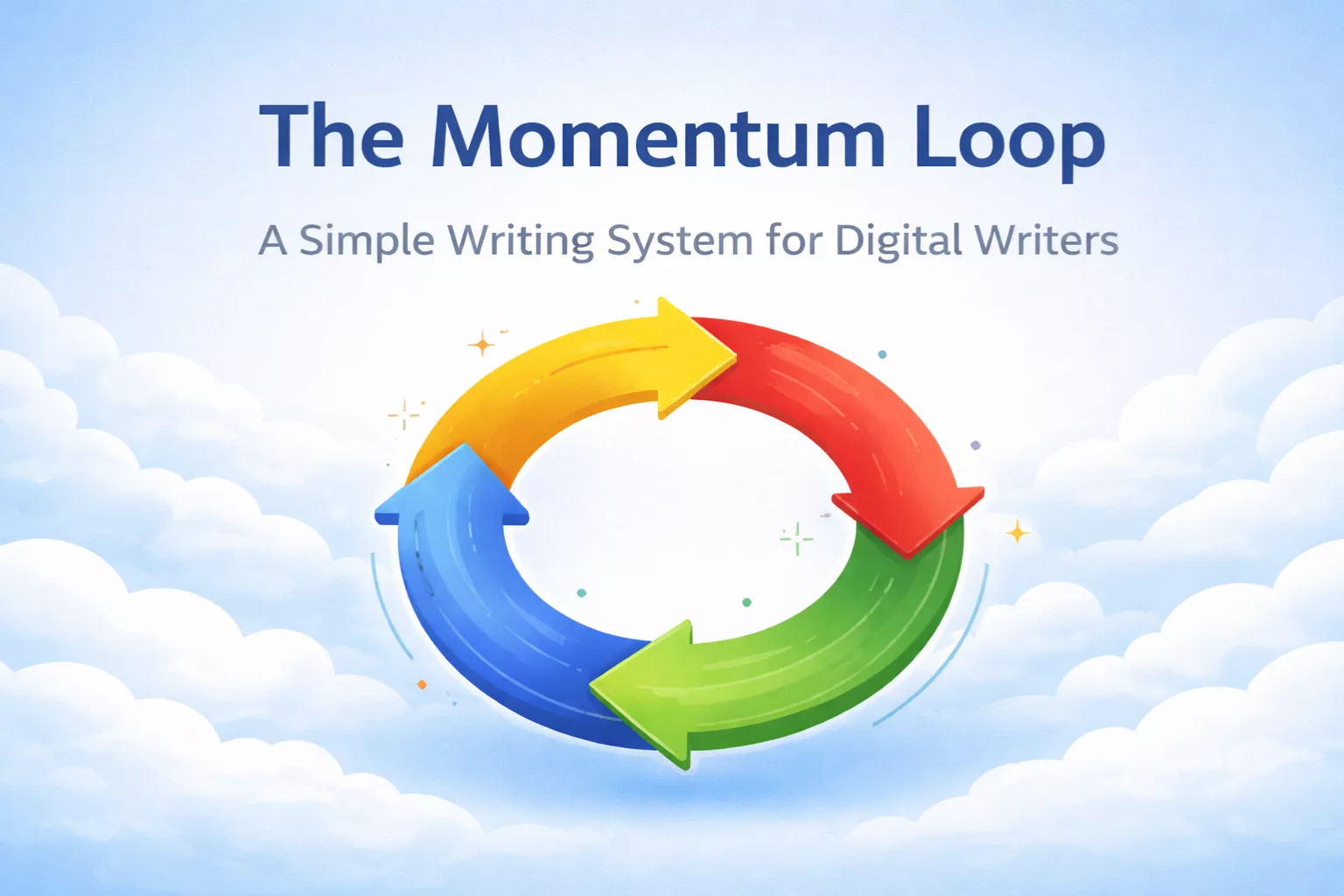
When I first started writing online, I thought the hardest part would be finding ideas. Turns out that wasn’t the real problem.
The real problem was confusion.
Every article I read gave different advice. Some said focus on SEO. Others said storytelling matters most. Then someone else talked about content strategy or publishing schedules. It felt like I needed to learn ten different skills before writing my first real article.
After a while I realized something simple. Most beginner writers don’t struggle because they lack ideas. They struggle because they don’t have a clear process.
That’s where the Momentum Loop came from.
Instead of trying to master everything at once, the Momentum Loop focuses on four parts of writing that actually move things forward:
- Clarity.
- Connection.
- Structure.
- Continuity.
Once those four things start working together, writing stops feeling complicated. You begin to build momentum instead of hesitation.
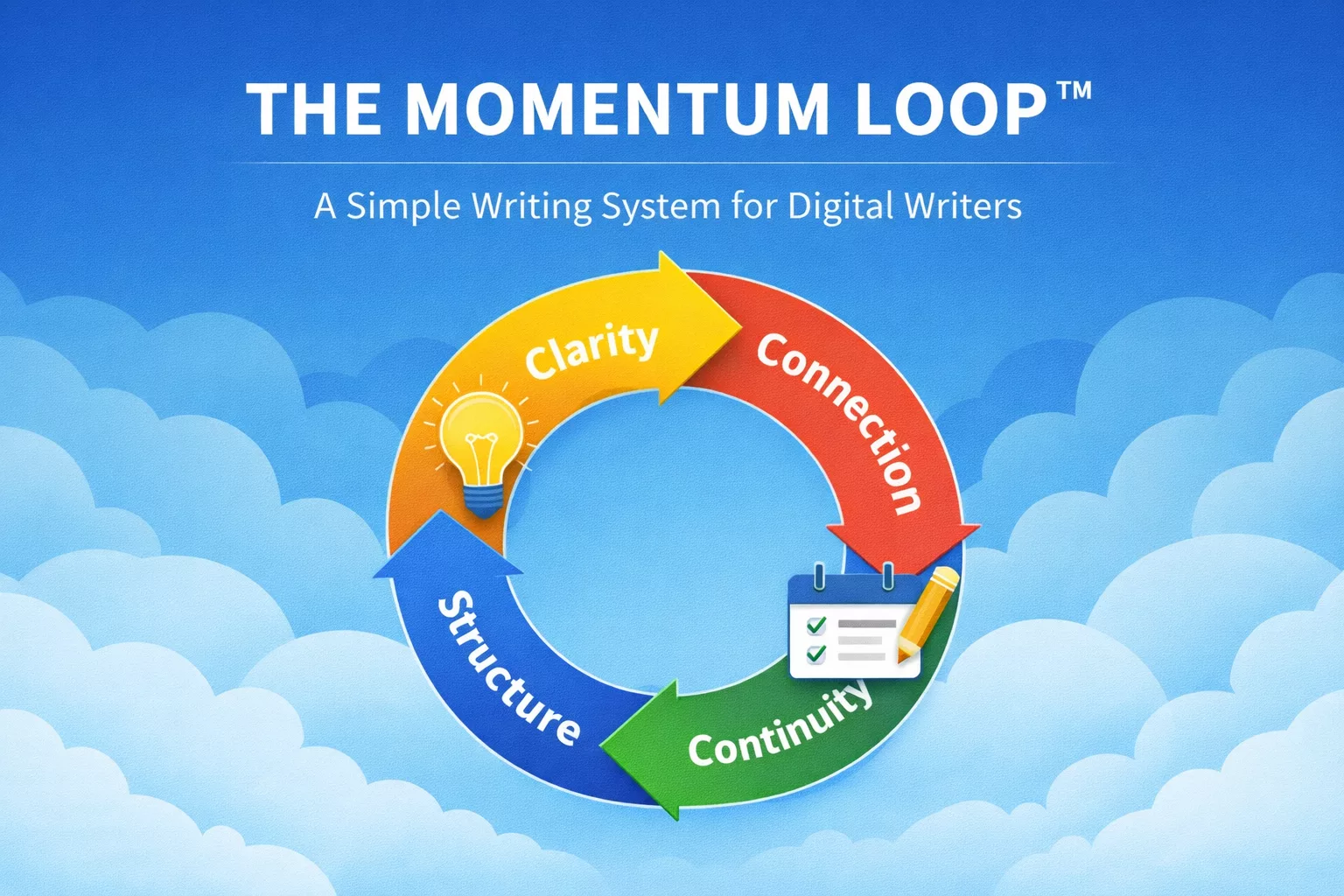
The Momentum Loop is a simple writing system for beginner digital writers. It focuses on four core elements that help writers create clear and helpful content while building consistency over time.
- Clarity – write one clear idea for one reader
- Connection – help the reader feel understood
- Structure – organize ideas so they are easy to follow
- Continuity – publish consistently to build momentum
Together these four elements create a repeatable writing cycle that helps digital writers improve with every article.
What Is the Momentum Loop?
The Momentum Loop is a simple writing system designed to help digital writers improve through small, repeatable steps.
Instead of chasing dozens of techniques, the system focuses on four elements that make writing easier and more effective.
- Clarity means knowing what you want to say and who you are saying it to.
- Connection helps readers feel understood so they continue reading.
- Structure organizes your ideas so they are easy to follow.
- Continuity builds consistency so your writing skills improve over time.
Think of it like a cycle.
Clarity leads to connection. Connection improves structure. Structure supports continuity.
Then the loop repeats. Each article you write strengthens the next one.
The Momentum Loop ™ Model
Why I Created the Momentum Loop?
One thing I kept noticing when talking with new writers was how overwhelmed they felt.
They wanted to write articles, start blogs, build audiences, or even freelance. But every piece of advice seemed to introduce another complicated strategy.
SEO frameworks. Content calendars. Funnel design. Audience segmentation.
None of those ideas are wrong. The problem is that beginners often encounter them all at once. That overload slows everything down.
The Momentum Loop was created as a response to that problem.
Instead of trying to understand the entire online writing ecosystem, this system focuses on the core habits that make writing easier and more consistent. When those habits become natural, everything else starts fitting into place.
How the Momentum Loop Helps You Start Digital Writing?
Most beginner writers don’t stop because they lack motivation.
They stop because they don’t know what step comes next.
One day they research keywords. The next day they try writing an article. Then they spend hours editing or second guessing the structure. Eventually writing starts to feel exhausting.
The Momentum Loop removes that uncertainty.
Each stage of the loop gives you something simple to focus on while writing. Instead of juggling multiple strategies, you follow a sequence that improves your writing step by step.
- Clarity keeps your message focused.
- Connection keeps the reader interested.
- Structure organizes your ideas.
- Continuity helps you keep publishing.
That rhythm turns writing into a manageable process instead of a complicated project.
Step 1: Clarity
Everything in the Momentum Loop begins with clarity.
Before writing anything, you need to understand the main idea you want to communicate and the reader you are writing for.
Early in my writing journey I made the classic mistake of trying to speak to everyone. I thought broader topics would attract more readers.
The opposite happened.
My writing became vague. Readers couldn’t tell if the article was meant for them.
Clarity fixed that problem.
Once you write for a specific reader and focus on one clear idea, the rest of the article becomes much easier to develop.
The One Reader Rule
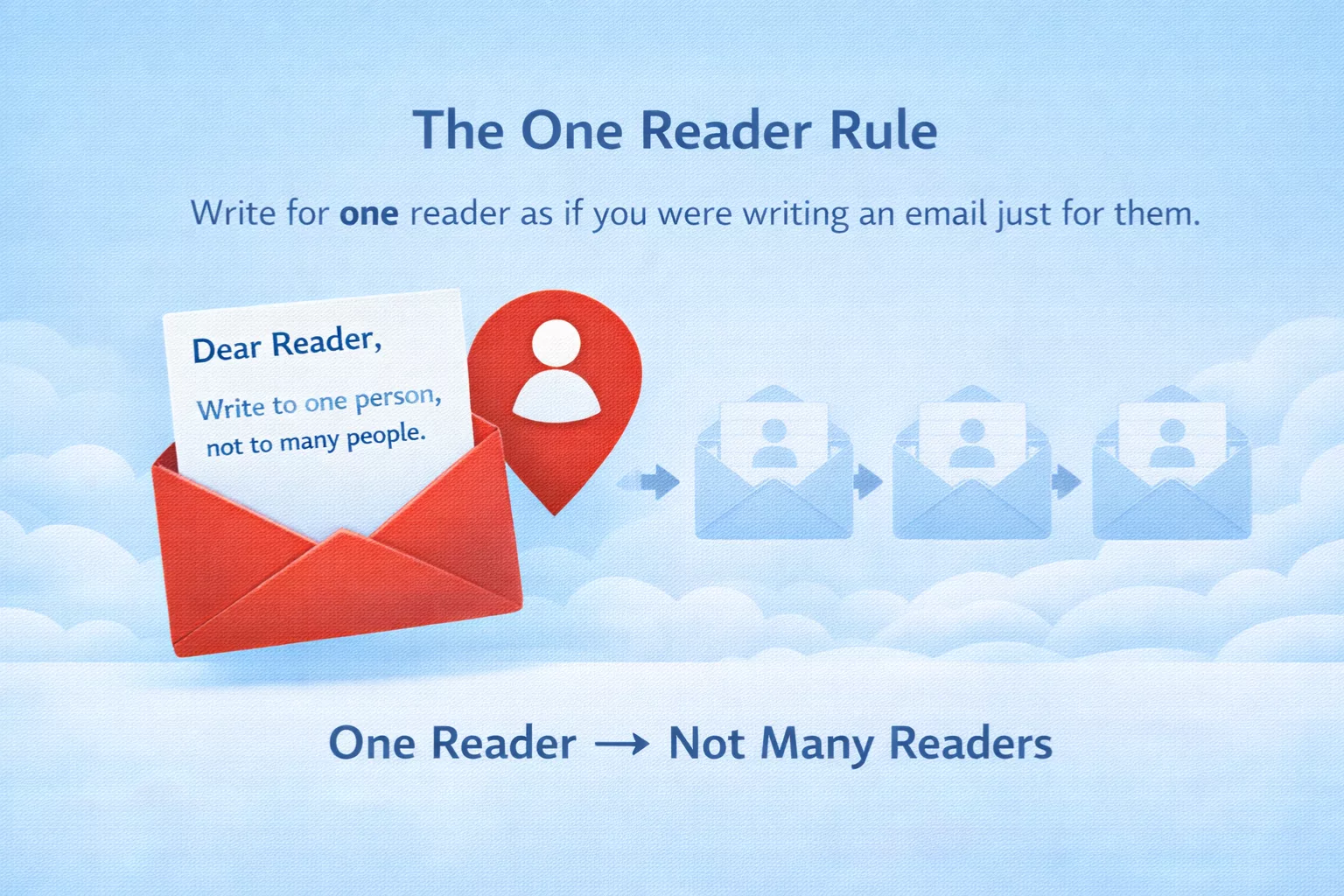
The One Reader Rule is one of the simplest techniques I’ve ever used.
Instead of imagining a large audience, write as if you are explaining something to a single person.
This small mental shift improves your tone immediately.
Your sentences become more natural, your explanations become clearer, and your writing starts to sound like a conversation instead of a lecture.
Step 2: Connection
Clarity tells readers what the article is about. Connection gives them a reason to keep reading.
Readers stay engaged when they feel like the writer understands their situation.
Sometimes that happens through examples. Sometimes it happens through stories or shared frustrations.
When readers recognize their own struggles inside your writing, something interesting happens. They stop scanning and start paying attention.
Connection turns information into something relatable.
The One Sentence Promise

One trick I learned over time is to summarize the benefit of an article in a single sentence.
That sentence becomes a quiet promise to the reader.
If someone understands what they will gain from reading your article, they are far more likely to stay engaged until the end.
It also helps the writer stay focused while creating the content.
Step 3: Structure
Structure is the part of writing many beginners underestimate.
Great ideas can still confuse readers if the article jumps from one point to another without a clear path.
Early on I wrote articles that contained good information but felt messy. I would start explaining something, then remember another idea and suddenly change direction.
The reader had no map.
Structure solved that.
Once your ideas follow a logical progression, readers move through the article without effort.
The 3-Beat Copy Structure
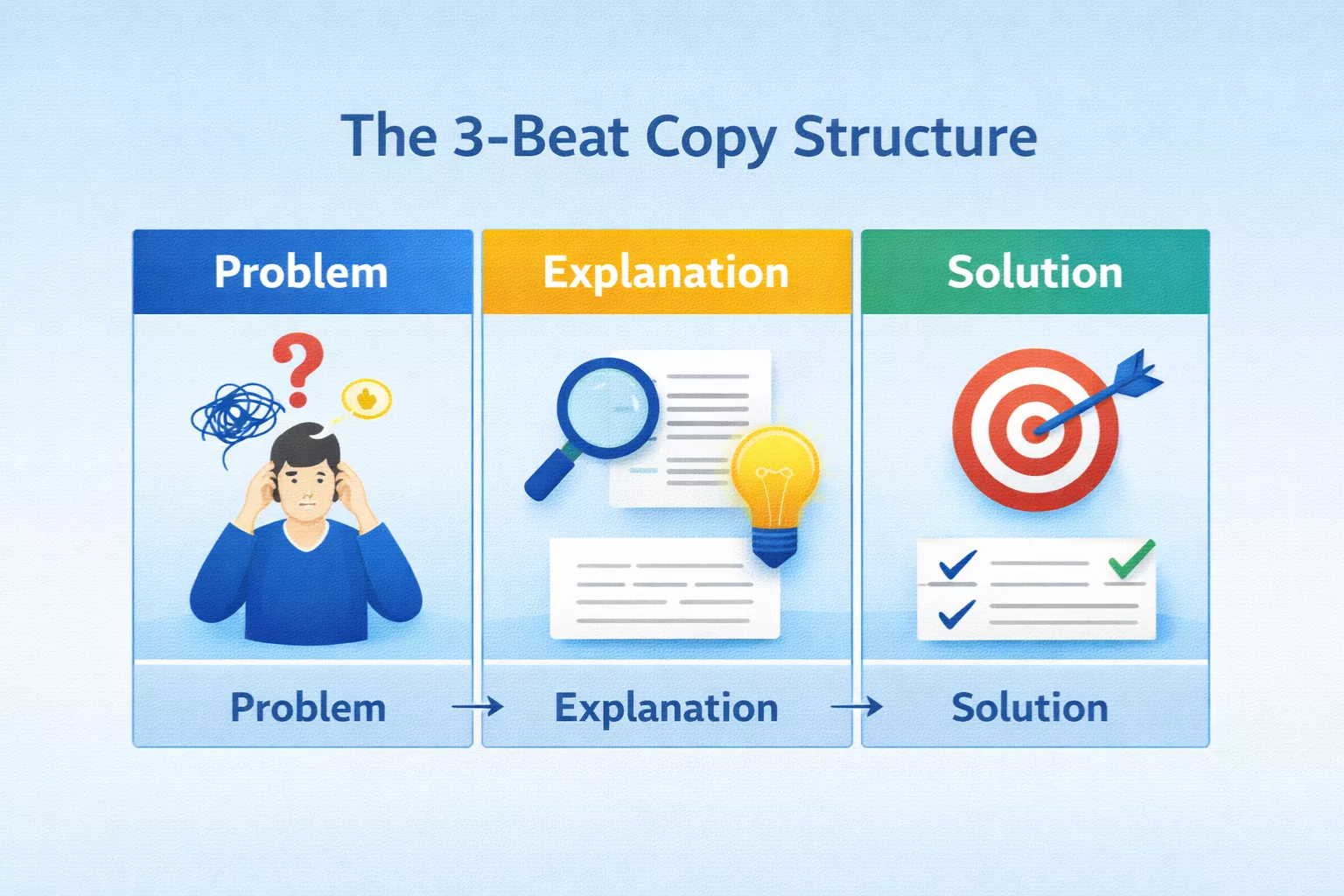
One structure I return to often is very simple.
- Problem.
- Explanation.
- Solution.
First describe the problem the reader is facing. Then explain why that problem happens. Finally present the solution or method that helps them move forward.
This pattern works well for educational content and beginner guides.
Step 4: Continuity
Continuity is the step where momentum actually forms.
Writing improves through repetition. There’s no shortcut around that.
Many writers wait until they feel ready before publishing. I did that for a long time and it slowed my progress more than anything else.
Continuity flips that mindset.
Instead of waiting for perfect articles, focus on maintaining a steady writing rhythm.
Consistency builds skill faster than perfection.
The Starter Map
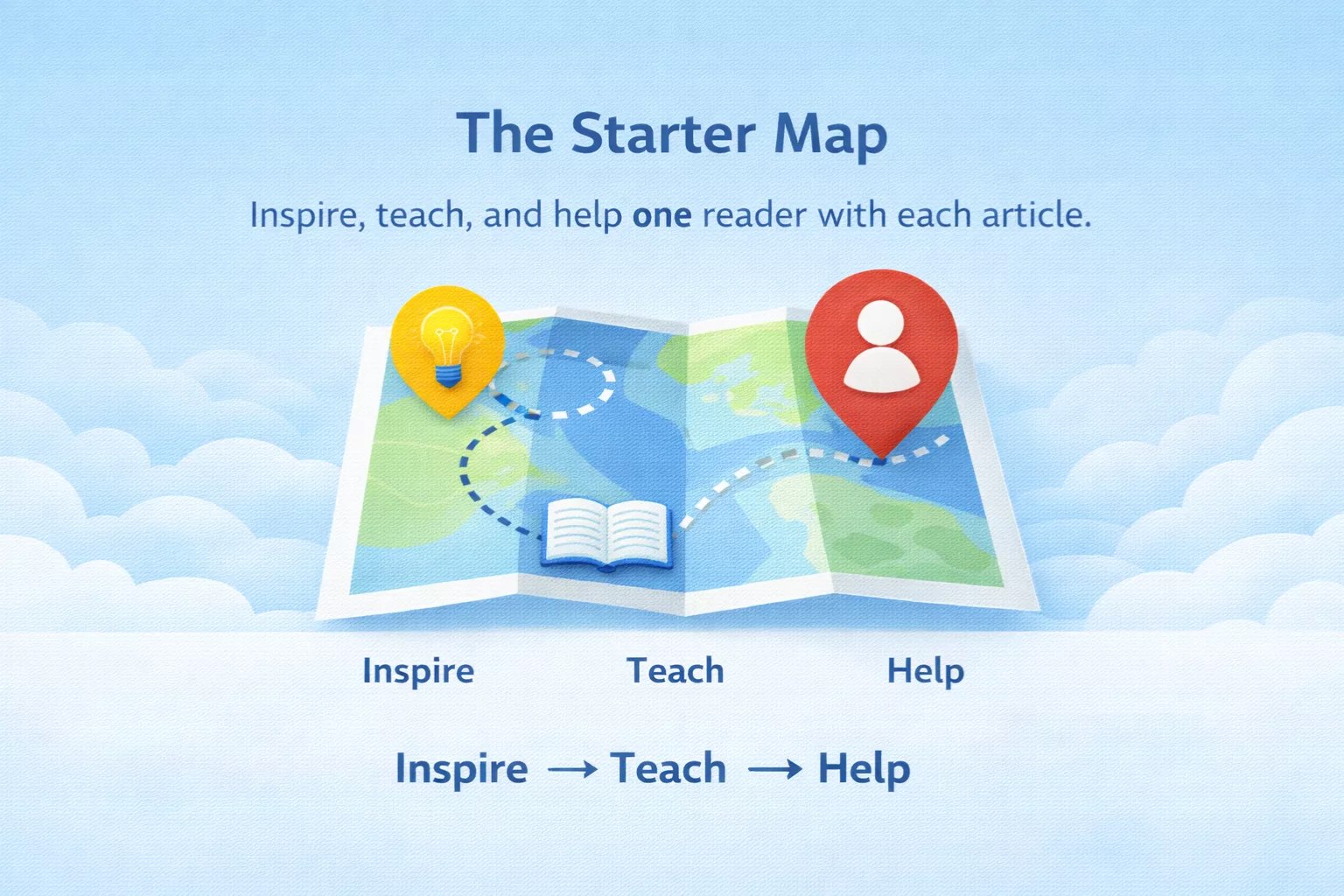
The Starter Map is a simple way to identify writing topics without guessing what readers want.
Start by listing common questions people ask in your niche. Then turn each question into a helpful article.
This approach removes the pressure of inventing clever ideas. You simply help readers solve real problems.
The 20-Minute Publishing Rhythm
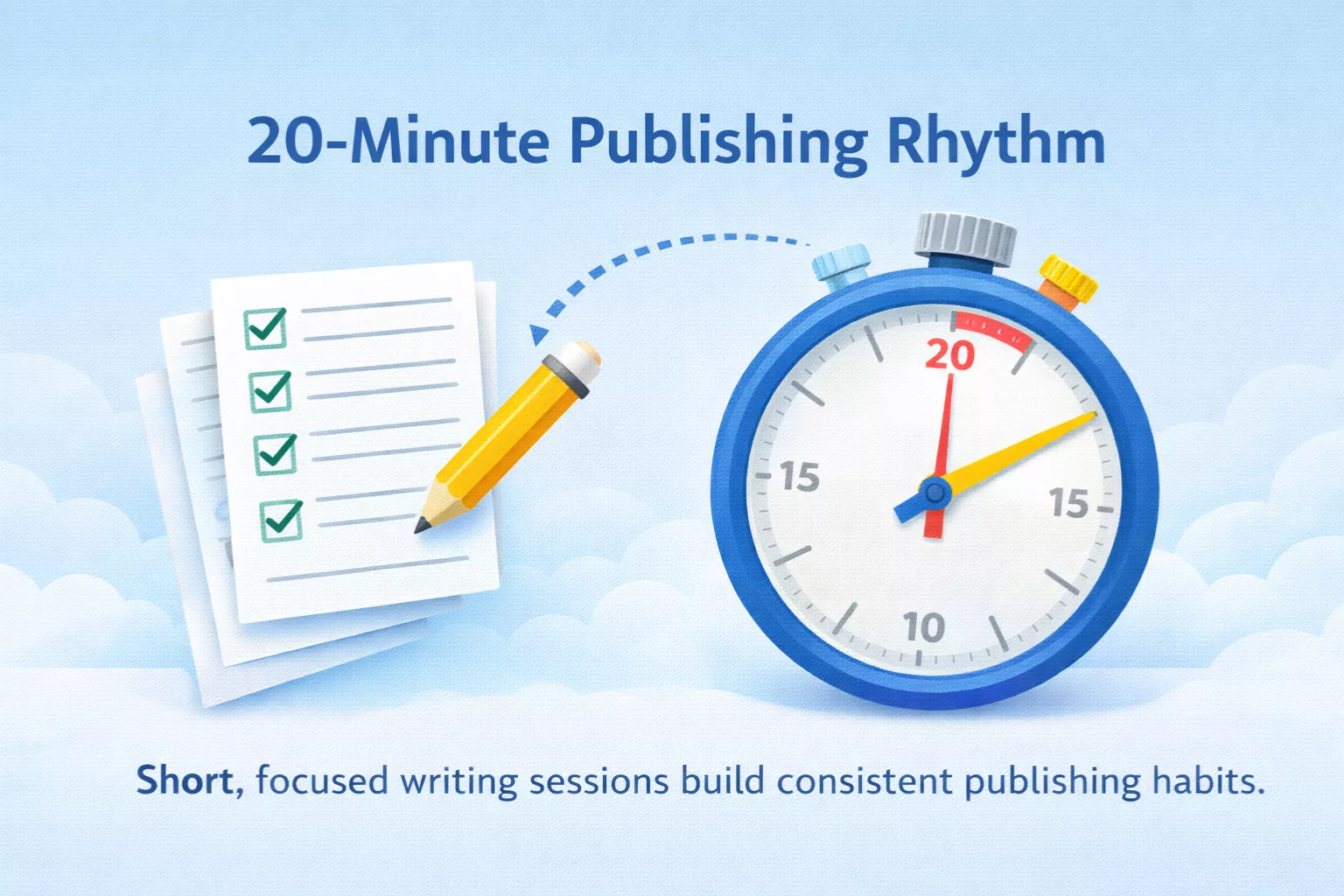
One habit that helped me build consistency was short writing sessions.
Instead of trying to write for hours, I committed to short focused periods of writing time.
Twenty minutes is often enough to outline an article, write a section, or refine an idea.
Small writing sessions make consistency easier to maintain.
Why This Digital Writing System Works?
The Momentum Loop works because it simplifies the writing process.
Instead of trying to improve every writing skill at once, you focus on four elements that influence every article you write.
- Clarity improves your message.
- Connection builds trust with readers.
- Structure makes your ideas easy to follow.
- Continuity strengthens your writing through repetition.
Over time these small improvements accumulate. Writing becomes faster, clearer, and more confident.
That’s momentum.
Who the Momentum Loop Is For?
The Momentum Loop is designed for people who are just beginning their digital writing journey.
It works especially well for new bloggers, freelance writers, and creators who want to publish helpful content online.
If you often feel stuck before starting an article or unsure about how to structure your ideas, this system gives you a simple path forward.
You don’t need complicated strategies to begin improving your writing.
You just need a clear loop to follow.
If you’re completely new to writing online, start with the simple writing system guide for beginners.
Tools Inside the Momentum Loop
Several simple tools help writers apply the Momentum Loop in daily practice.
Each tool focuses on one small improvement that strengthens your writing. Over time those improvements compound.
Future guides on this site will explore these tools in more detail.
- The One Reader Rule
- The One Sentence Promise
- The 3-Beat Copy Structure
- The Starter Map
- The 20-Minute Publishing Rhythm
Together they form the practical side of the Momentum Loop.
FAQs
What to Do Next?
If you want to start using the digital writing system Momentum Loop in your writing, the next step is learning the fundamentals of digital writing.
Understanding how online writing works will help you apply this system more effectively.
You can start with the Start Here guide to learn how digital writing works.
Then explore the Writing Basics Hub, where you’ll find foundational skills every digital writer should understand.
These resources will help you turn the Momentum Loop into a daily writing habit.