Most beginner writers do not struggle because they lack talent.
They struggle because they lack structure.
If you are trying to improve your writing skills but everything still feels messy, overwhelming, or unclear, you are not alone.
Many beginner digital writers consume advice without understanding the core writing basics that actually make content work online.
You read tips. You watch videos. You save resources.
But when it is time to write, you hesitate. You overthink. You second-guess every sentence.
This Digital Writing Basics hub brings together the fundamental digital writing skills every beginner needs: clarity, structure, reader focus, and consistency.
No noise. No pressure. Just practical foundations that help you write clearly and improve faster.
If you are new, start at the top and move step by step.
If you feel stuck, scan the sections and choose what fits.
Either way, this is your foundation.
Digital Writing Basics: The Foundations That Matter
What Are Digital Writing Basics?
Digital writing basics are the fundamental skills that make your writing clear, structured, and easy to understand. They are the core principles that help ideas flow logically from one sentence to the next, so readers never feel confused or lost.
In digital writing, these basics become even more important. Online readers skim quickly, so clarity, reader focus, strong structure, and consistency matter more than clever phrasing or complex vocabulary. Writing basics include choosing one clear message, organizing ideas in a logical order, using simple language, and maintaining a steady writing routine.
Without these foundations, advanced techniques will not improve your work. Strong writing does not begin with style. It begins with clarity. When you master the basics, everything else becomes easier to build on.
Before You Dive Into Skills
If you are unsure what digital writing actually means or how it differs from traditional writing, start here:
- What Is Digital Writing? Definition, Meaning & Examples
- 10 Real Digital Writing Examples (With Clear Breakdowns)
- Digital Writing vs Traditional Writing
Those guides explain what digital writing is, how it works online, and why it matters before you focus on improving technique.
1. Why Writing Feels Hard (And Why That’s Normal)
Writing feels difficult for beginners because expectations are often wrong.
- You expect clarity before starting.
- You expect motivation to stay steady.
- You expect improvement to feel obvious.
These posts reset those assumptions and remove self-blame.
Start here if you feel stuck or frustrated:
- Why Most Beginner Writers Struggle (And the Simple Fix That Works)
- Why Motivation Fails New Writers (And What Actually Helps You Keep Going)
- Are You Ready for Digital Writing Critique?
- Why Reading Writing Advice Isn’t Enough (And How Beginners Make Real Progress)
- You’re Not Bad at Writing. You’re Just Early
- Why Writing Consistently Feels Hard at First (And Why That’s Normal)
2. Learning to Write Clearly (Not Cleverly)
Clear writing is one of the fastest ways to improve as a beginner.
- It helps readers understand you.
- It helps you see your own progress.
- It removes the pressure to sound impressive.
These posts show how clarity works in real digital writing.
Read these to improve clarity:
- Why Clear Writing Beats Clever Writing Every Time
- Beginner-Friendly Writing Guide: How to Write Clearly Online
- Digital Writing Techniques That Make Content Clear, Human, and Effective
- Digital Writing Skills: The Core Skills Every Online Writer Needs
- How to Pick One Reader and Write With More Clarity
- How to Write Engaging Headlines That Get Attention
3. Building a Simple Writing System
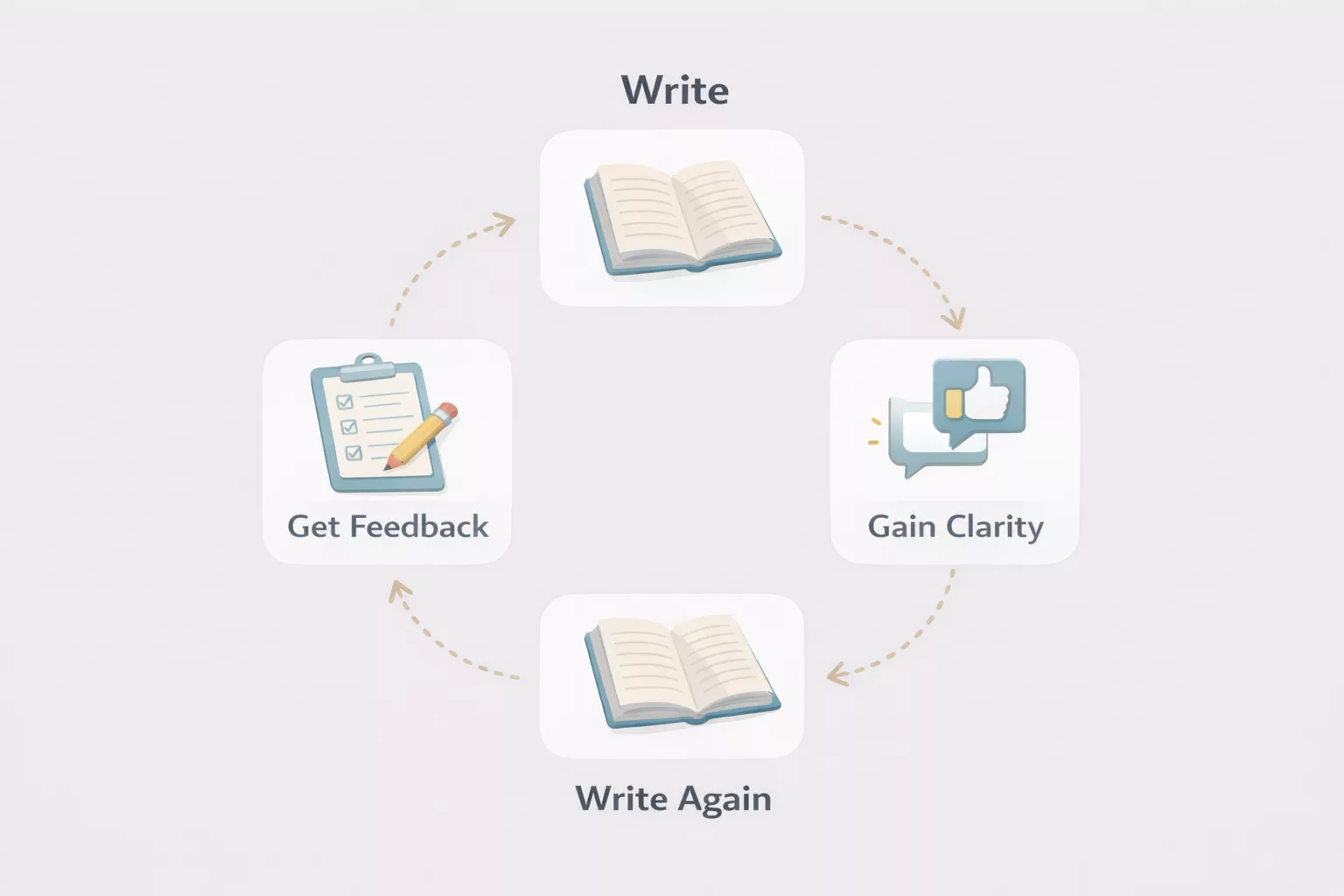
Consistency does not come from motivation. It comes from having a repeatable system.
These posts introduce a simple, beginner-friendly way to move from blank page to finished draft without burnout.
Read these to build a repeatable process:
- A Simple Writing System for Beginners (That You Can Use Today)
- How to Build a Writing Routine That Fits a Busy Life
- How to Start Writing Online When You Feel Like a Beginner
4. Knowing If Your Writing Is Actually Working
One of the biggest beginner problems is not knowing if progress is real.
No feedback creates doubt. Doubt kills momentum.
This guide shows how to spot real signals instead of guessing.
Read this if you feel unsure or behind:
Ready to Go Beyond Writing Basics?
Once you understand the fundamentals, you can build specialized skills for search, persuasion, or freelance work.
-
Digital Writing Hub
Explore the broader digital writing path and find the skills and topics to learn next. -
SEO Writing in 2026: A Complete Guide for Digital Writers
Learn how to create content that serves readers and search engines. -
Optimize Your Writing for SEO (Goals That Actually Work)
Learn how to adapt your writing for search visibility. -
Copywriting Hub
Learn how persuasive writing helps businesses communicate and convert. -
Freelance Writing Hub
Learn how to turn writing skills into freelance client work.
How to Use This Hub
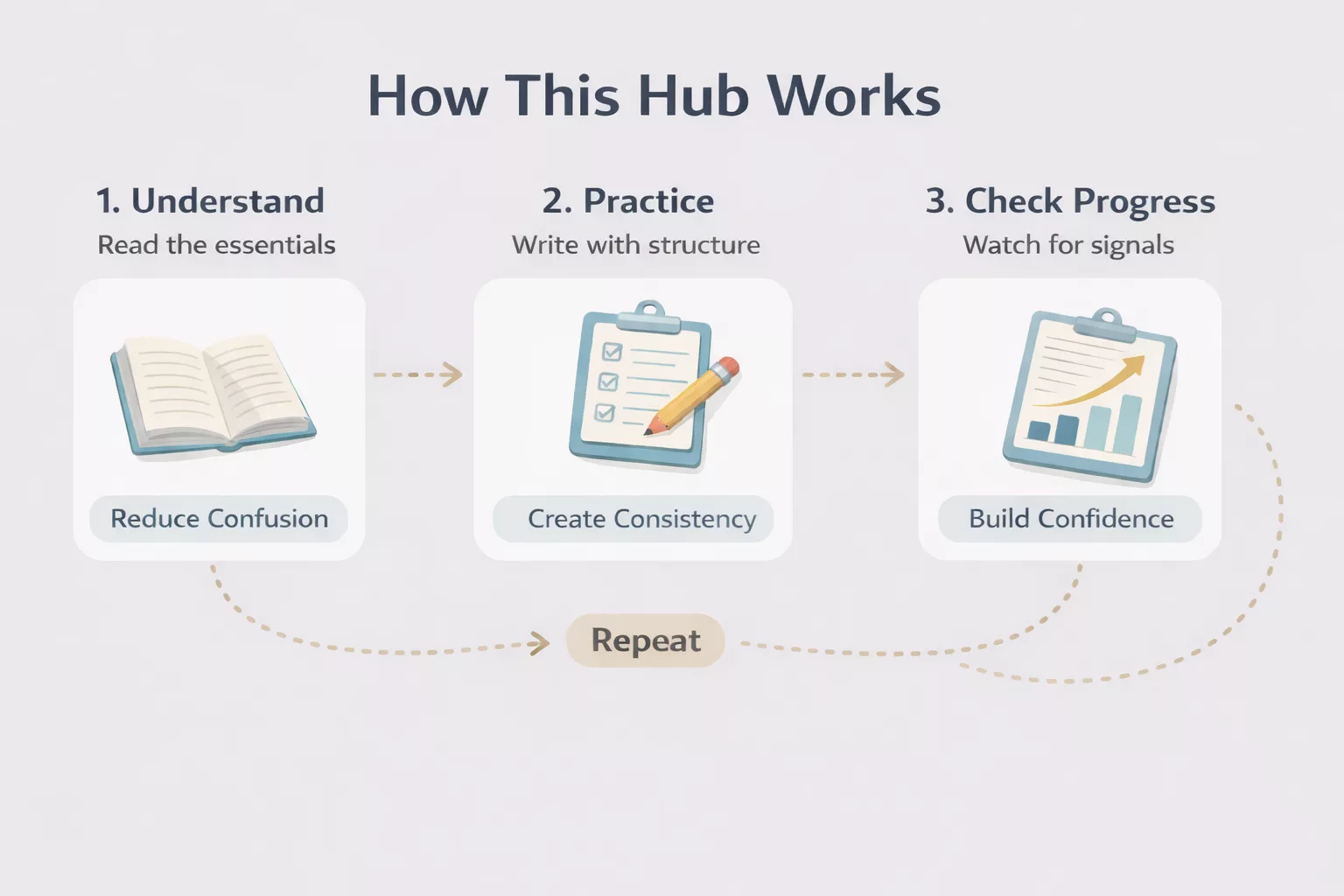
- New to writing? Start with Section 1 and move through the foundations.
- Feel stuck or frustrated? Start with Section 1.
- Want to improve your clarity? Go to Section 2.
- Want consistency? Focus on Section 3.
- Unsure whether you are improving? Go to Section 4.
There is no rush.
There is a path.
This hub will grow as new beginner-focused posts are added. Bookmark it and come back when writing feels heavy again.
Frequently Asked Questions About Writing Basics
What are writing basics?
Writing basics are the fundamental skills that make your writing clear, structured, and easy to understand. For beginner digital writers, writing basics include clarity, simple sentence structure, logical flow, understanding your reader, and organizing ideas before you write. Without these core principles, advanced techniques and style improvements do not matter.
What are writing basics for beginners?
Writing basics for beginners focus on building a strong foundation. This includes learning how to write clearly instead of cleverly, choosing one target reader, structuring ideas in a logical order, and practicing consistently. Beginner writers improve fastest when they focus on clarity and structure rather than trying to sound impressive.
How can I improve my writing skills as a beginner?
The fastest way to improve writing skills is to focus on clarity and repetition. Write regularly, simplify your sentences, remove unnecessary words, and review your work with one reader in mind. Improvement comes from building a simple writing system you can repeat consistently, not from consuming endless advice.
Is digital writing different from traditional writing?
Yes. Digital writing is designed for online readers who skim and scan content quickly. It requires shorter paragraphs, clearer structure, stronger headlines, and direct language. Traditional writing often prioritizes depth and complexity, while digital writing prioritizes clarity, readability, and user attention.
What is the fastest way to improve writing clarity?
The fastest way to improve writing clarity is to simplify your message. Focus on one main idea per section, write shorter sentences, avoid unnecessary jargon, and ask yourself whether a beginner could easily understand what you wrote. Clear writing improves when you remove complexity rather than add more words.