
Freelance writing sounds simple at first. You write, someone pays you. That’s it.
But once you try to start, things get messy fast. You see dozens of platforms, conflicting advice, and people saying you need experience before you even begin. It feels like you’re missing something everyone else understands.
I’ve been there. Most beginners don’t fail because they lack skill. They fail because they don’t see a clear path.
This guide fixes that.
You’ll learn how freelance writing actually works, how to get your first clients, how to build samples that get responses, and how to charge for your work. No fluff. Just a simple system you can follow.
This guide covers everything a beginner freelance writer needs to know, from starting with no experience to finding clients, building a portfolio, and increasing writing income over time.
In This Guide:
- How to Start Freelance Writing
- How to Get Freelance Writing Clients
- How to Build a Portfolio
- Freelance Writing Rates
Freelance Writing (Quick Summary)
Freelance writing means getting paid to write content for clients instead of working for one employer. You choose your projects, set your rates, and work with businesses that need blog posts, website content, or marketing copy.
- Write for blogs, websites, or online businesses
- Get paid per project, per word, or monthly
- Find clients instead of applying for jobs
- Increase income by improving skills and positioning
What Is Freelance Writing? (Simple Explanation)
Freelance writing is selling your writing as a service.
Businesses need content to grow. They need blog posts to get traffic, emails to sell products, and website copy to explain what they offer. Most don’t have time to write it themselves, so they hire writers.
That’s where you come in.
There are a few common types of freelance writing:
- Blog writing
- SEO writing
- Copywriting (sales pages, landing pages)
- Email writing
You don’t need to master all of them. You just need to start with one direction and build from there.
Freelance Writing vs Copywriting (What’s the Difference)
Freelance writing usually focuses on blog content, SEO articles, and informational content. Copywriting focuses on sales, conversions, and marketing messages like landing pages or emails.
If you’re just starting, blog writing is often easier to begin with. You can move into copywriting later as you gain experience.
How to Start Freelance Writing? (Step-by-Step)
Starting feels confusing until you break it into simple steps.
Step 1: Pick One Direction
Don’t overthink this. Choose one type of writing to start with. Blog writing is usually the easiest.
You can always adjust later.
Step 2: Create 2–3 Writing Samples
This is where most people get stuck. They wait for clients before they have proof.
That’s backwards.
You create samples first. But not random ones. You create samples that match real client problems.
If you want help with that, read:
Step 3: Understand What Clients Want
Clients don’t care about your writing style.
They care about results:
- traffic
- leads
- conversions
Once you understand this, your writing becomes more valuable instantly.
Step 4: Start Reaching Out
You don’t need a perfect portfolio.
You need clear positioning and simple outreach.
Start small. Keep it direct.
If you want a system that works without guessing, read:
How to Start Freelance Writing for Beginners? (Quick Steps)
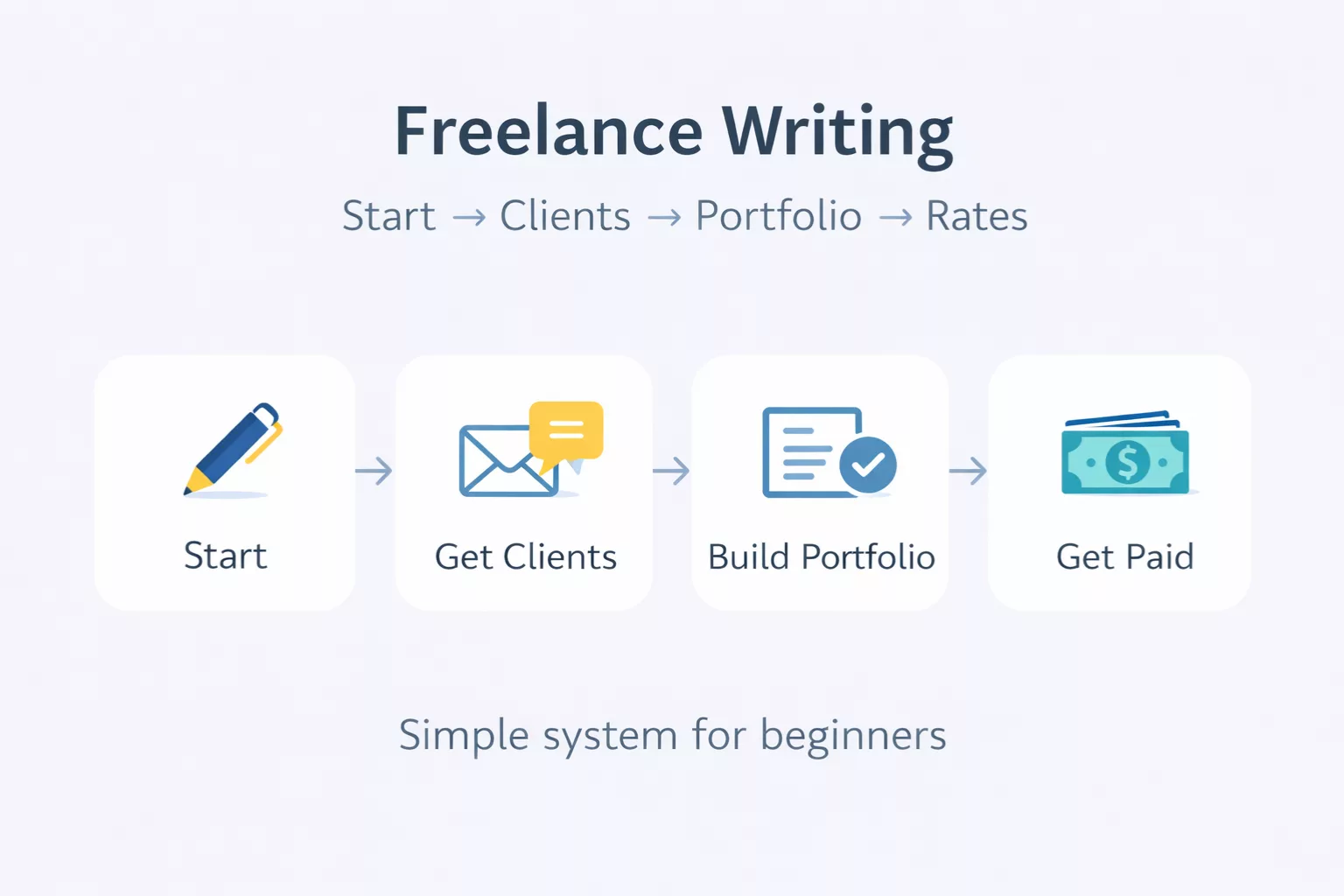
- Choose one type of writing to focus on
- Create 2–3 writing samples
- Understand what clients want
- Start reaching out to clients
- Improve your samples and raise your rates
How to Get Freelance Writing Clients?
This is where most beginners struggle.
They try:
- platforms
- job boards
- random pitches
But nothing sticks.
The problem is not effort. It’s signal.
Clients respond when they see:
- clear relevance
- specific proof
- simple messaging
That’s the idea behind your approach.
Instead of chasing more opportunities, you send better signals.
If you want to understand this properly, read:
How to Build a Freelance Writing Portfolio?
Most portfolios don’t work.
They show variety instead of relevance. They try to impress instead of match what clients need.
A good portfolio does one thing:
It makes the client think, “this is exactly what I need.”
That’s why your samples matter more than your design.
Focus on:
- solving a specific problem
- writing for a clear audience
- showing outcomes
If you want a structured way to build this, read:
Freelance Writing Rates (How Much You Can Earn?)
This is where things feel unclear for most beginners.
You’ll see:
- $0.03 per word
- $100 per article
- $1,000+ per project
All of it is real.
The difference comes down to:
- skill
- positioning
- type of writing
In the beginning, your goal is not to charge the highest rates. It’s to get proof and experience.
Then you raise your prices as your results improve.
If you want real numbers and examples, read:
Common Freelance Writing Mistakes (That Slow You Down)
Most beginners don’t fail because they can’t write.
They fail because they make these mistakes:
- Waiting too long to start
- Focusing on platforms instead of positioning
- Creating weak or random samples
- Underpricing without understanding value
- Trying to learn everything at once
Each of these slows you down.
The fix is not more information. It’s a simple system you follow step by step.
Simple Freelance Writing Roadmap
If you feel overwhelmed, use this.
- Write 2–3 focused samples
- Learn what clients actually need
- Reach out with simple messages
- Improve your samples based on feedback
- Increase your rates over time
That’s it.
You don’t need ten strategies. You need one path that makes sense.
Tools That Help Freelance Writers
You don’t need many tools to start.
Keep it simple:
- Google Docs for writing
- Grammarly for basic editing
- A simple portfolio page or document
As you grow, you can add more tools. But tools don’t replace skill or clarity.
Start Here (Choose Your Next Step)
If you’re not sure what to do next, use this:
If you’re just starting:
If you want clients:
If you need a portfolio:
If you want to earn more:
Not sure what kind of writer you should become?
Take this short quiz and get a clear starting point based on your strengths, interests, and goals. No guesswork. Just direction you can follow.
Take the QuizFAQs About Freelance Writing
Freelance writing feels hard at first because there is no clear path. Once you follow a simple system and focus on small steps, it becomes much easier to manage.
Yes. Many beginners earn their first income by creating simple writing samples and reaching out to small clients who need content.
No. You can create your own writing samples and use them to show clients what you can do.
Some writers get clients within a few weeks. For others, it takes longer. It depends on how clear your positioning and outreach are.
Freelance writers can earn anything from a small side income to a full-time living. Income grows as your skills and positioning improve.