

If you’ve been freelancing for a while, you’ve probably had this thought:
“I’m working a lot… but I’m not earning enough.”
I’ve been there. You start with low rates to get clients. It works at first. You build experience. You get better. But your prices stay the same.
Then one day it hits you. You’re underpaid, overworked, and stuck.
Raising your freelance rates feels risky. You worry clients will leave. You question your value. You delay the decision.
In this guide, you’ll learn how to raise your freelance rates step by step, with clear examples and simple strategies you can actually use.
If you want a deeper breakdown of pricing levels, read this digital writing rates guide to understand how freelance rates increase as your skills improve.
How to Raise Your Freelance Rates (Quick Summary)
Raising your freelance rates means increasing what you charge based on your experience, results, and the value you deliver to clients. It helps you earn more without working more hours.
- Raise your rates when your skills, speed, or results improve
- Start with new clients to test higher pricing with less risk
- Inform existing clients clearly and give 2–4 weeks notice
- Focus on value-based pricing instead of hourly rates
- Expect some clients to leave and plan to replace them
- Gradually replace low-paying work with higher-paying projects
Table of Content
- How to Raise Your Freelance Rates (Quick Summary)
- Why Most Freelancers Stay Underpaid?
- When Is the Right Time to Raise Your Freelance Rates?
- How to Raise Your Freelance Rates Step by Step?
- How to Raise Your Freelance Rates Without Losing Clients?
- How to Charge Based on Value Instead of Time?
- Hourly vs Value-Based Pricing (Which Is Better?)
- Key Takeaways
- FAQ: How to Raise Your Freelance Rates
- Conclusion
Why Most Freelancers Stay Underpaid?
When I started freelancing, I said yes to everything.
Low-paying work. Tight deadlines. Clients who kept asking for “one more change.”
At first, it felt like progress. I thought I was building experience. But I was actually building a habit of undervaluing my work.
Most freelancers don’t stay underpaid because they lack skill. They stay underpaid because they price their work based on fear.
You might recognize these thoughts:
- What if they say no?
- What if I lose this client?
- What if I can’t replace them?
So you stay at the same rate.
Another mistake is charging based on time.
I used to think, “This takes me two hours, so I’ll charge X.”
But that approach breaks as soon as you improve.
You get faster. You work better. And suddenly you earn less for the same result.
That’s when I realized something important.
Clients don’t care how long something takes. They care about what it does for them.
- A blog post that brings traffic.
- An email that gets clicks.
- A landing page that converts.
That’s what they pay for.
There’s also a comfort trap.
You get used to your clients. Even if they pay less, they feel safe. Raising your rates feels like risking that safety.
But staying underpaid has a cost.
It drains your energy. It limits your income. And it keeps you stuck doing more work than you should.

When Is the Right Time to Raise Your Freelance Rates?
Most freelancers wait too long.
I did the same. I told myself I needed more experience first. Or better clients. Or more proof.
That moment never comes unless you decide it does.
Here are clear signs you’re ready:
- You complete work faster than before
- Clients are happy and come back
- You rarely get pushback on your rates
- You’re close to fully booked
- Your skills or results improved
One of the biggest signals is internal.
If you feel frustrated or resistant when accepting new work at your current rate, that matters.
It means your pricing no longer matches your value.
Another signal is demand.
If clients say yes quickly without questioning your price, there’s a good chance you’re undercharging.
A simple test helps here.
If most clients accept your rate without hesitation, you have room to increase it.
You don’t need perfect timing.
You need enough proof that your value has improved.
If you’re unsure, start small. Raise your rates for new clients first. That gives you a safe way to test without risking current relationships.
How to Raise Your Freelance Rates Step by Step?
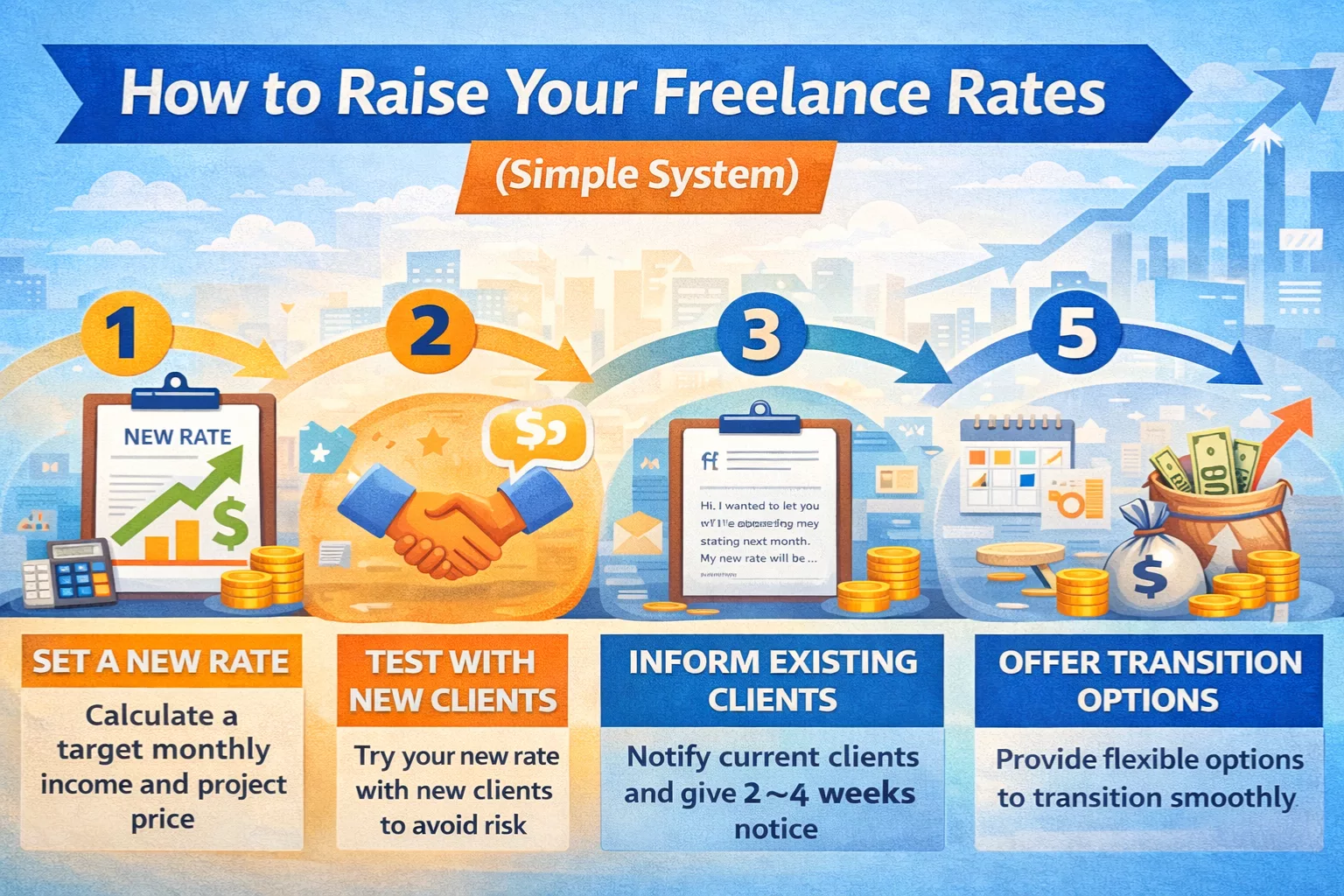
You don’t need a complex system. You need a clear process you can repeat.
1. Decide Your New Rate
Don’t pick a number randomly.
Use simple methods:
Income goal method
Decide how much you want to earn monthly, then divide it by the number of projects you can handle.
Example: $2000 per month ÷ 10 projects = $200 per project
Market comparison
Look at what freelancers with similar skills charge. This gives you a realistic range.
Value estimate
If your work helps a client generate revenue or traffic, your price should reflect that.
Pick a rate that feels slightly uncomfortable but still reasonable.
If you're not sure what to charge yet, use this copywriting rates calculator to estimate a realistic starting rate based on your experience and workload.
2. Start With New Clients
This is the easiest step.
New clients don’t know your old pricing. Simply quote your new rate:
“My rate for this type of project is $X.”
No long explanation. No apology.
Pay attention to responses. If most clients accept your rate, you can increase it again over time.
3. Inform Existing Clients
This is where most freelancers hesitate.
Keep it simple and professional.
Example:
“Hi, I wanted to let you know I’ll be updating my rates starting next month. My new rate will be $X. I’ve enjoyed working together and wanted to give you notice.”
That’s enough.
You don’t need to justify your decision or explain your finances.
4. Give Notice
Always give clients time to adjust. Two to four weeks is a good range. This shows respect and keeps the relationship positive.
5. Offer a Transition Option (If Needed)
For long-term clients, you can make the transition easier.
For example:
- Keep the old rate for a short period
- Adjust the scope of work
- Offer a smaller package at the same price
This keeps goodwill while still moving forward.
6. Replace Low-Paying Work Gradually
Don’t remove clients without a plan.
Instead:
- Raise rates step by step
- Fill your schedule with higher-paying clients
- Let lower-paying work phase out naturally
This keeps your income stable while improving it.
How to Raise Your Freelance Rates Without Losing Clients?
This is the biggest fear. Not raising your rates. Losing the clients you like.
Here’s what I learned.
Good clients don’t just pay for the work itself. They pay for reliability, communication, and results.
If you’ve been delivering those, you already have leverage.
The key is how you present the change. Don’t make it about needing more money. Make it about growth.
You can mention:
- Improved process
- Better results
- Higher quality work
Keep it simple. No long explanation. Confidence matters more than detail.
Another thing that helped me was not negotiating against myself.
State your new rate clearly. Then stop talking. Silence often works in your favor.
Also, don’t raise rates for everyone at once. Do it in phases. That way, you protect your income while improving it.
And here’s something important.
If a client leaves because of a fair rate increase, they were not sustainable long term.
It may feel like a loss, but it creates space for better opportunities.
How to Charge Based on Value Instead of Time?
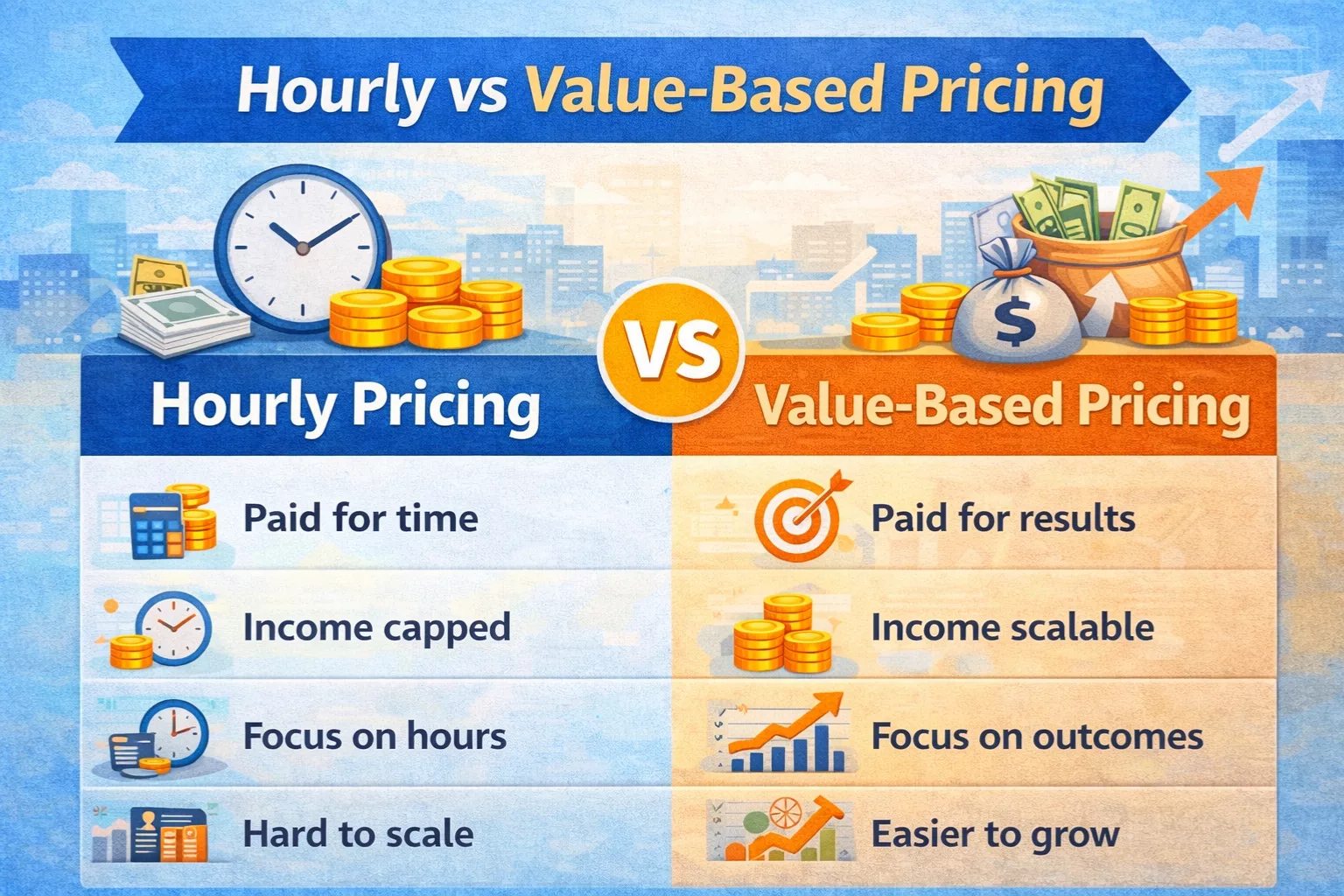
This is where your income starts to change.
Hourly pricing keeps you stuck. The faster you work, the less you earn. Instead, shift your thinking.
Ask:
“What is this worth to the client?”
Let’s look at examples.
- A blog post that brings steady traffic has ongoing value.
- An email that drives sales directly impacts revenue.
- A landing page can turn visitors into paying customers.
These outcomes matter more than time spent.
Now turn that into pricing.
Instead of charging hourly, create simple packages:
- $150 per blog post
- $100 per email
- $300 per landing page
This makes your pricing easier to understand and easier to scale.
Clients know what they get. You control how you work. Over time, as your results improve, you can increase these prices.
To move beyond hourly pricing, try this blog post pricing calculator and see how your content can be priced based on results instead of time.
Hourly vs Value-Based Pricing (Which Is Better?)
| Factor | Hourly Pricing | Value-Based Pricing |
|---|---|---|
| How You Get Paid | Based on time worked | Based on results and outcomes |
| Income Potential | Limited by hours | Scales with value delivered |
| Client Focus | Time spent | Business results |
| Ease of Pricing | Simple to calculate | Requires understanding value |
| Scalability | Low | High |
| Best For | Beginners or small tasks | Experienced freelancers and specialists |
Key Takeaways
- Raise your freelance rates when your value increases
- Use simple methods to set your pricing
- Start with new clients to test higher rates
- Communicate clearly and give notice
- Expect some clients to leave
- Focus on value instead of time
FAQ: How to Raise Your Freelance Rates
How often should I raise my freelance rates?
Review your rates every 6 to 12 months or when your results improve.
Will I lose clients if I raise my rates?
Some may leave, but many will stay. Better clients often replace the ones who leave.
How much should I increase my rates?
A 20 to 50 percent increase is a common starting point.
Should I explain why I’m raising my rates?
Keep it short. A simple update is enough.
Is hourly or project pricing better?
Project pricing works better in most cases because it focuses on value.
Conclusion
Raising your freelance rates is not just about charging more. It's about changing how you see your work. You move from getting paid for time to getting paid for results.
It may feel uncomfortable at first. That’s normal.
Start small. Test your new rates. Adjust as you go.
The goal is simple.
Earn more while doing better work for the right clients.
Many freelancers stay stuck because they guess their prices, but using a freelance rate calculator gives you a clear starting point you can adjust over time.