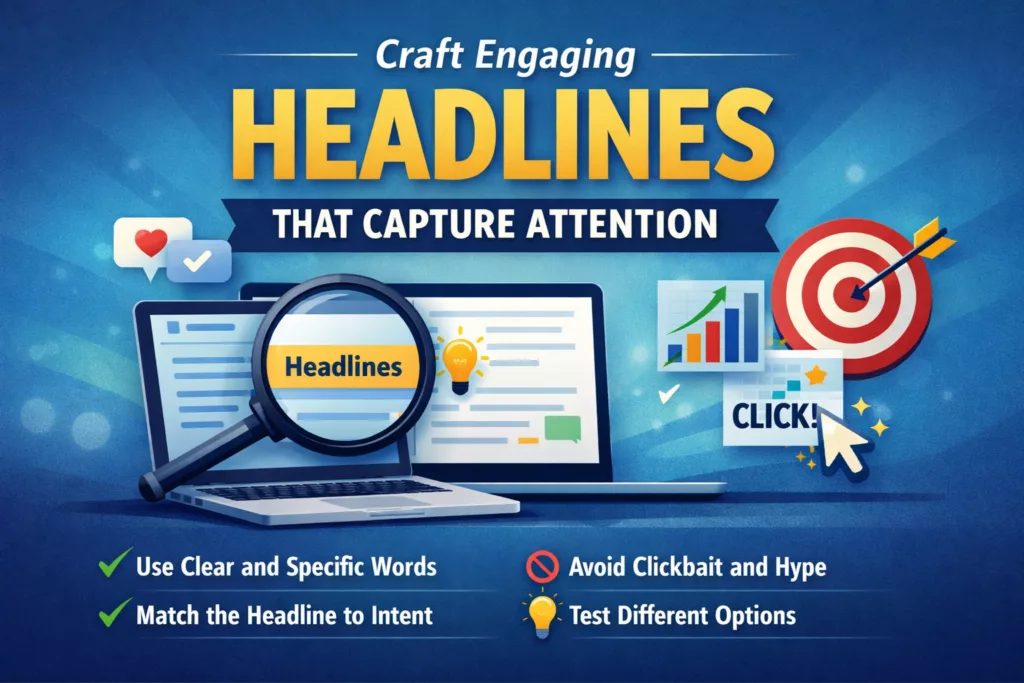
Headlines decide whether your content gets read or ignored. Before anyone sees your ideas, examples, or expertise, they see the headline.
This article explains how to write engaging headlines that capture attention without tricks, hype, or clickbait.
You will learn how strong headlines work, why most fail, and how to write headlines that earn clicks and trust at the same time.
If you want to strengthen the basics behind clear, effective writing, this topic connects directly to the foundations covered in our Writing Basics hub.
TL;DR
To write engaging headlines that get attention, lead with a clear promise, use specific words, and match the headline to what the reader wants right now. Avoid clever phrasing, generic claims, and hype. Write a few options, then pick the one that feels easiest to understand at a glance.
Table of Content
- TL;DR
- Why Headlines Matter More Than the Content Itself?
- What Makes a Headline Engaging?
- Common Headline Mistakes That Kill Clicks
- Proven Headline Structures That Get Attention
- 10 Headline Templates You Can Use
- How to Match Headlines to Reader Intent?
- Using Emotion Without Clickbait
- How Long Should a Headline Be?
- Writing Headlines for Different Content Types
- A Simple Headline Writing Process You Can Reuse
- Key Takeaways
- FAQs
- Conclusion
Why Headlines Matter More Than the Content Itself?
Headlines act as the first filter for attention. Before a reader sees your ideas, structure, or effort, they see one line of text. That line decides everything. If it feels unclear or dull, the content never gets a chance.
Most readers decide to click based on the headline alone. They skim fast. They compare options. They choose the one that feels most useful or most relevant in that moment. This happens even when the article behind the headline is excellent. The decision happens before trust, before depth, before value.
A strong article fails if the headline is weak. This is the hard truth many writers avoid. You can spend hours shaping examples and tightening paragraphs, yet none of it matters if the headline does not signal value. A weak headline hides good work. It does not invite curiosity. It does not promise clarity. So the article sits unread.
Headlines also set expectations and frame how content is read. A clear headline prepares the reader’s mind. It tells them what problem you will address and what kind of answer to expect. When the headline and the content match, trust builds. When they do not, readers feel misled and leave early.
This is why headlines matter more than the content itself, at least at first. The headline earns the click. The content earns the stay. Both matter, but they play different roles. If you want your writing to work harder, start by respecting the job of the headline.
Research on how people scan content online consistently shows that headlines guide attention before anything else. Nielsen Norman Group’s eye-tracking studies explain why readers decide what to read in seconds.
What Makes a Headline Engaging?
A headline becomes engaging when it makes a clear promise to the reader. It signals an outcome, not just a topic. The reader should know what they will gain before they click. When the benefit feels obvious, attention follows.
Specific language matters more than clever wording. Vague claims force readers to guess what the content is about. Clear words remove that friction. A headline that names the result or the situation feels safer to click because the reader knows what they are walking into.
Relevance is what turns attention into action. An engaging headline connects to a real problem or desire the reader already has. It reflects something they recognize from their own experience. When readers see themselves in the headline, they pause and lean in.
Simplicity reduces thinking effort. Readers do not want to decode meaning or interpret layers. They want clarity fast. Short phrases, familiar words, and a single idea help the headline land without resistance. When a headline feels easy to understand, it feels easier to trust.
Engaging headlines do not rely on tricks. They work because they respect how people read, decide, and protect their time.

Common Headline Mistakes That Kill Clicks
One of the most common mistakes is trying to sound clever instead of clear. Wordplay, puns, and vague hooks may feel creative, but they slow understanding. If a reader has to think about what the headline means, they often move on.
If you want a simple way to pressure-test a headline, this guide explains why clarity beats cleverness in writing: Why Clear Writing Beats Clever Writing Every Time?
Generic phrases are another click killer. Headlines that say everything and nothing at the same time fail to stand out. Phrases like “everything you need to know” or “ultimate guide” do not explain why this piece matters right now. Readers skip them because they have seen them too often.
Overpromising breaks trust fast. When a headline claims dramatic results that the content cannot support, readers feel misled. Even if they click, they leave early. Over time, this damages credibility and makes future headlines less effective.
Writing for algorithms instead of people also hurts performance. Stuffing keywords or forcing awkward phrasing may look strategic, but it creates friction. Readers respond to clarity and relevance first. Search systems reward that behavior over time.
Strong headlines avoid these mistakes by focusing on one job. They help the right reader understand why the content is worth their attention.
Proven Headline Structures That Get Attention
How-to headlines work because they promise clarity. They tell the reader that guidance is coming and confusion will shrink. This structure feels safe and practical. Readers click because they expect steps, explanations, or a clear path forward.
Question headlines surface curiosity by naming a thought the reader already has. When the question feels familiar, it stops the scroll. The reader wants to know if the answer matches their own situation. Strong question headlines sound natural, not dramatic, and point to a real concern.
Problem-solution headlines feel personal when they reflect a specific struggle. They work by showing the reader that you understand what is not working. The implied solution creates momentum. The reader clicks because they want relief or clarity, not because of hype.
Outcome-based headlines signal value upfront. They focus on the result rather than the process. This helps readers decide fast if the content is worth their time. When the outcome feels realistic and relevant, trust grows before the click.
These structures work because they align with how people decide. They reduce uncertainty, name intent, and respect the reader’s time.
Many classic headline structures still work because they reduce uncertainty and promise clarity. Copyblogger’s breakdown of headline fundamentals shows why simple structures outperform clever phrasing.
10 Headline Templates You Can Use
These headline templates are simple, flexible, and easy to adapt. Each one focuses on clarity, relevance, and reader intent rather than tricks.
- How to [achieve specific result] without [common frustration]
Works well for practical guides and educational posts. - The real reason [problem] keeps happening
Good for reframing common assumptions and opening curiosity. - Why [common approach] fails and what works instead
Useful for corrective or belief-shifting content. - [Number] signs you are struggling with [specific problem]
Helps readers self-identify and feel understood. - What to do when [specific situation] feels stuck
Strong for emotional or uncertainty-based topics. - The simplest way to [desired outcome]
Signals ease and reduces resistance. - If you want [goal], stop doing this
Creates contrast and invites reconsideration. - A practical guide to [task or skill] for [specific audience]
Sets clear expectations and attracts the right readers. - Most people get [topic] wrong. Here is why.
Works well for myth-busting and clarity-driven posts. - How [audience] can [achieve result] even with [constraint]
Shows empathy and makes the outcome feel possible.
Use these templates as starting points. Adjust the language to match your reader, your topic, and the promise your content can truly deliver.
How to Match Headlines to Reader Intent?
Informational headlines work best for learning content. These readers want understanding before action. They look for explanations, definitions, and context. Headlines that signal insight, clarity, or perspective help them feel confident that the article will teach, not rush.
Practical headlines attract execution-focused readers. These readers want to do something now. They respond to language that suggests steps, fixes, or clear actions. When a headline hints at usefulness and momentum, it earns the click from readers who value progress over theory.
Reassurance headlines matter for overwhelmed readers. These readers feel stuck, uncertain, or behind. They want validation before advice. Headlines that sound calm and supportive help them feel safe enough to engage. When pressure drops, attention increases.
Intent mismatch leads to bounce and distrust. When a headline promises one thing and the content delivers another, readers leave fast. They feel misled, even if the information is good. Over time, this breaks confidence in your writing and weakens future headlines.
If you want a quick way to tell whether your writing is landing with readers, this article helps you spot the signal fast: The Fastest Way to Know If Your Writing Is Working.
Matching headlines to reader intent is not about manipulation. It is about respect. When the headline aligns with what the reader wants in that moment, the content has a real chance to work.
Using Emotion Without Clickbait
Emotion belongs in headlines, but it works best when it feels familiar and grounded. Naming real frustrations readers recognize helps them feel seen. When a headline reflects a common struggle in plain language, it creates connection without pressure.
Avoid fear language and exaggeration. Phrases that imply urgency, panic, or extreme outcomes may attract clicks once, but they weaken trust over time. Readers respond better to calm confidence than dramatic warnings. Respect keeps attention longer than shock.
Curiosity gaps can work when they feel honest. A good gap hints at insight without hiding the point. It invites the reader forward instead of pulling them in by force. If the reader can sense the direction of the answer, curiosity feels safe.
Clarity should do most of the persuasive work. Clear words reduce resistance and build confidence before the click. When readers understand what they are about to read and why it matters, emotion supports the decision rather than driving it.
Strong headlines use emotion to signal relevance, not to manipulate. They connect first, then persuade through understanding.
Emotion works best when it reflects real reader concerns instead of exaggeration. This overview of emotional triggers in headlines shows how relevance outperforms hype.
How Long Should a Headline Be?
Headline length is about balance. You want enough words to be clear, but not so many that the headline feels heavy. Scannability matters because most readers skim. A headline that can be understood at a glance has a better chance of earning attention.
Shorter headlines often perform better because they reduce effort. Fewer words mean faster comprehension. They also stand out in lists, feeds, and search results. When the core idea fits in a tight phrase, clarity improves and hesitation drops.
Longer headlines make sense when they add meaning, not noise. If extra words help specify the audience, problem, or outcome, they can increase relevance. The key is that every word earns its place. Length works only when it improves understanding.
Avoid unnecessary filler words. Terms that add no clarity slow the reader down. Words like “very,” “really,” or vague phrases weaken the message. Removing them sharpens the headline and strengthens the promise.
A good rule is simple. If cutting a word does not change the meaning, remove it. Clean headlines feel confident and easy to read.
Data suggests shorter headlines often perform better when clarity is preserved. HubSpot’s analysis on headline length shows why scannability matters more than word count.
Writing Headlines for Different Content Types
Blog post headlines should balance clarity and curiosity. They need to explain what the article covers while giving the reader a reason to click now. Search visibility matters here, so the topic should be obvious. At the same time, the headline should speak to a real problem or question the reader already has.
Email subject lines work in a tighter space. They compete inside crowded inboxes, so focus on one clear idea. Curiosity helps, but relevance matters more. If the subject line does not feel timely or personal, it gets ignored or deleted.
Landing page headlines carry more weight than any other type. They must communicate value fast. The reader should understand what is offered, who it is for, and why it matters within seconds. Confusion here leads to instant exits.
Social media headlines need to stop the scroll. They work best when they feel conversational and familiar. Short, direct language performs well because readers skim fast. The goal is not to explain everything, but to spark enough interest to earn a pause or click.
Each content type asks the headline to do a different job. When you adjust your approach instead of reusing the same style everywhere, engagement improves naturally.
A Simple Headline Writing Process You Can Reuse
Start with the core idea of the content. Before writing any headline, be clear on what the piece actually delivers. If you cannot explain the main point in one sentence, the headline will wander. Clarity here saves time later.
Next, identify the main reader problem or outcome. Ask what the reader wants to understand, fix, or achieve after reading. This step shifts the focus away from what you want to say and toward what the reader cares about most.
Then write five rough headline options. Do this fast and without judging them. Variety helps you see different angles and reveals which version feels most natural. Often the best headline shows up after the first few attempts.
If consistency is the real bottleneck, this breaks down why it feels hard early and how to keep going without forcing it: Why Writing Consistently Feels Hard at First? (And Why That’s Normal)
Finally, choose the clearest option, not the cleverest one. The goal is understanding, not applause. A clear headline sets the right expectations and invites the right reader. When clarity wins, clicks follow for the right reasons.
This process works because it is simple and repeatable. Use it often and your headlines will improve without extra effort.
Key Takeaways
- Headlines earn the click. Your content earns the stay.
- Engaging headlines make a clear promise and use specific language.
- Match the headline to reader intent: learning, doing, or reassurance.
- Avoid clickbait signals like exaggeration, fear language, and vague “ultimate guide” wording.
- Short headlines win when they stay clear. Longer headlines work when they add useful detail.
- Use different headline styles for blogs, email subject lines, landing pages, and social posts.
- Write five headline options fast, then choose the clearest version.
FAQs
What is an engaging headline?
An engaging headline is a clear, specific line that tells the reader what they will get from the content and why it matters. It earns attention by making the benefit easy to understand.
How do I write headlines that capture attention without clickbait?
Name a real reader problem, promise a realistic outcome, and keep the wording simple. Avoid exaggeration, fear language, and vague claims that the content cannot support.
How long should a headline be for SEO?
There is no perfect length, but shorter headlines often perform well because they are easy to scan. Make the headline as long as it needs to be to stay clear, then remove filler words.
What headline structure works best for blog posts?
How-to, problem-solution, and outcome-based headlines perform well for blog posts because they set clear expectations. Choose the structure that matches the reader’s intent for that query.
How do I match a headline to reader intent?
Decide what the reader wants when they see the headline: to learn, to do, or to feel reassured. Then write the headline to signal that outcome. Intent mismatch leads to quick exits and lower trust.
Should I use numbers in headlines?
Use numbers when they add clarity, such as “7 mistakes” or “10 templates.” Numbers help readers scan and set expectations, but avoid adding numbers if the content does not match the promise.
How many headline options should I write before choosing one?
Write at least five options. The first idea is often the most obvious, not the best. Multiple options help you find a clearer angle and choose the headline that feels easiest to understand.
What is the biggest headline mistake to avoid?
Choosing clever over clear. If the reader has to interpret what the headline means, they will often move on. Clarity is the fastest path to clicks and trust.
Conclusion
Writing engaging headlines that capture attention is not about tricks or formulas. It is about clarity, empathy, and intent.
When your headline respects the reader’s time and names what matters to them, clicks follow naturally.
Focus on being understood first. Attention comes next.