
Most writers focus on keywords. But Google ranks intent.
When someone types a query into Google, they have a goal. They might want to learn something, compare tools, find a specific website, or buy a product.
Understanding search intent for writers means understanding that goal.
If your article does not match that intent, it rarely ranks. Even perfectly optimized content can fail when the intent is wrong.
Writers who understand search intent create content that aligns with what users expect to see in the search results. This makes their articles more helpful, easier to rank, and more likely to attract traffic.
In this guide, you will learn:
- what search intent is
- the four types of search intent
- how writers identify intent using SERP analysis
- how to structure articles based on search intent
- real examples of intent-based writing
Writers who understand search intent rarely struggle with rankings.
Let’s start by defining what search intent means and how it shapes SEO writing.
Search intent is the goal behind a user’s search query. It explains why someone types a keyword into Google and what type of content they expect to find.
For example, someone searching “how to write a blog post” expects a step-by-step guide, while someone searching “best grammar checker” expects a comparison of tools.
Google ranks pages that best satisfy the user’s intent. When writers understand search intent and structure content around it, their articles are far more likely to rank in search results.
Table of Content
- What Is Search Intent?
- The 4 Types of Search Intent Every Writer Must Know
- Why Search Intent Is Critical for SEO Writing?
- How Search Intent Has Evolved?
- How Writers Identify Search Intent?
- How to Write Content That Matches Search Intent?
- Real Examples of Search Intent for Writers
- Common Search Intent Mistakes Writers Make
- Search Intent Optimization Checklist for Writers
- Tools Writers Can Use to Identify Search Intent
- Intent Layering
- Intent Mapping for Blog Posts
- Intent-Based Content Templates
- SERP Analysis Walkthrough
- Key Takeaways
- Final Thoughts
What Is Search Intent?
When I first started writing SEO content, I thought ranking was mostly about keywords. If the keyword appeared in the title, headings, and a few times in the text, the article should rank. That was the common advice floating around.
But after publishing dozens of posts, I noticed something strange. Some articles were well optimized and still sat on page three. Others ranked quickly even though the keyword usage was lighter.
The difference was search intent.
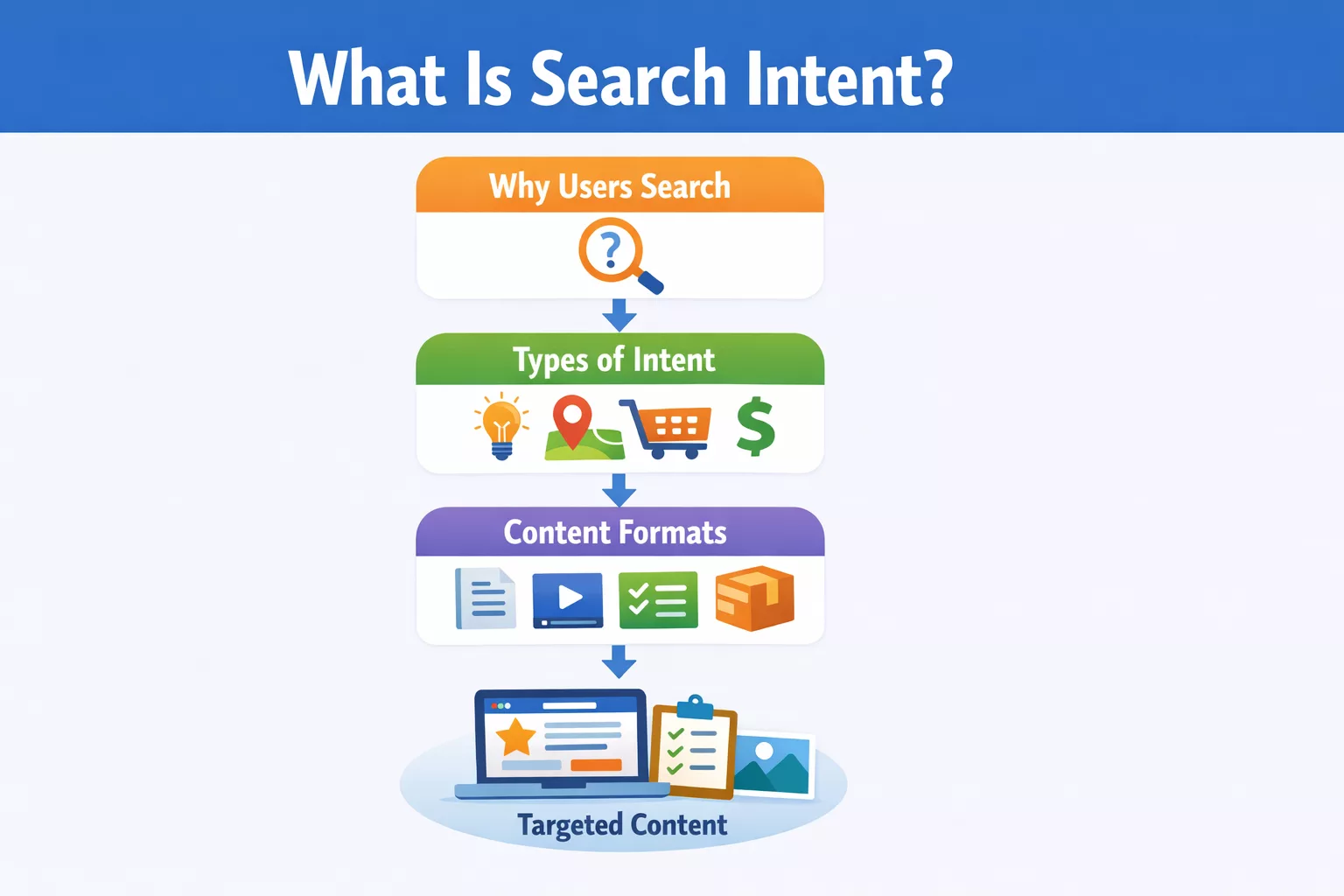
Search intent is the reason someone performs a search on Google. It represents the goal behind the query. When someone types a phrase into the search bar, they expect a certain type of answer, and Google tries to deliver exactly that.
For example, if someone searches “how to write a blog post,” they expect a step-by-step guide. If someone searches “best grammar checker,” they expect a comparison article. And if someone searches “Grammarly pricing,” they want product information or a pricing page.
In each case, the user typed words into Google. But what they really wanted was different. That hidden goal is the search intent.
Google’s algorithm spends a lot of effort figuring this out. Instead of matching pages based only on keywords, it evaluates the meaning of the query and the type of content that best satisfies it.
One way Google does this is by studying the pages that users interact with. If people searching a query tend to click guides and stay on them, Google learns that the query likely has informational intent. If most users click product pages or comparison articles, the algorithm adjusts the results accordingly.
Over time, Google becomes very good at predicting what searchers want.
This is why intent now matters more than simple keyword placement. A page can include the perfect keyword usage, but if the format does not match what users expect, the page often struggles to rank.
I learned this lesson the hard way while writing a post about grammar tools. My article explained what grammar checkers are and how they work. The keyword seemed right, the content was helpful, and the on-page SEO looked solid.
But the article never moved past page two.
When I finally examined the search results, I saw the problem immediately. Every top result was a comparison list of tools, not an explanation of grammar software. The search intent was commercial research, but my article was informational.
Google simply showed pages that matched the intent better.
Search intent also influences the structure and format of content. Some queries work best as guides. Others need lists, tutorials, reviews, or landing pages.
For writers, understanding this before starting an article saves a lot of wasted effort. Instead of guessing what readers want, you analyze the search results and design the article around that expectation.
When the content format aligns with the user’s goal, the page becomes far more relevant. And relevance is one of the strongest signals in search rankings.
That is why experienced SEO writers rarely start with writing. They start by figuring out the intent behind the query. Once that intent is clear, the structure of the article becomes much easier to plan.
Understanding intent is only one part of the process. Writers also need to apply practical SEO optimization strategies to structure content correctly.
The 4 Types of Search Intent Every Writer Must Know
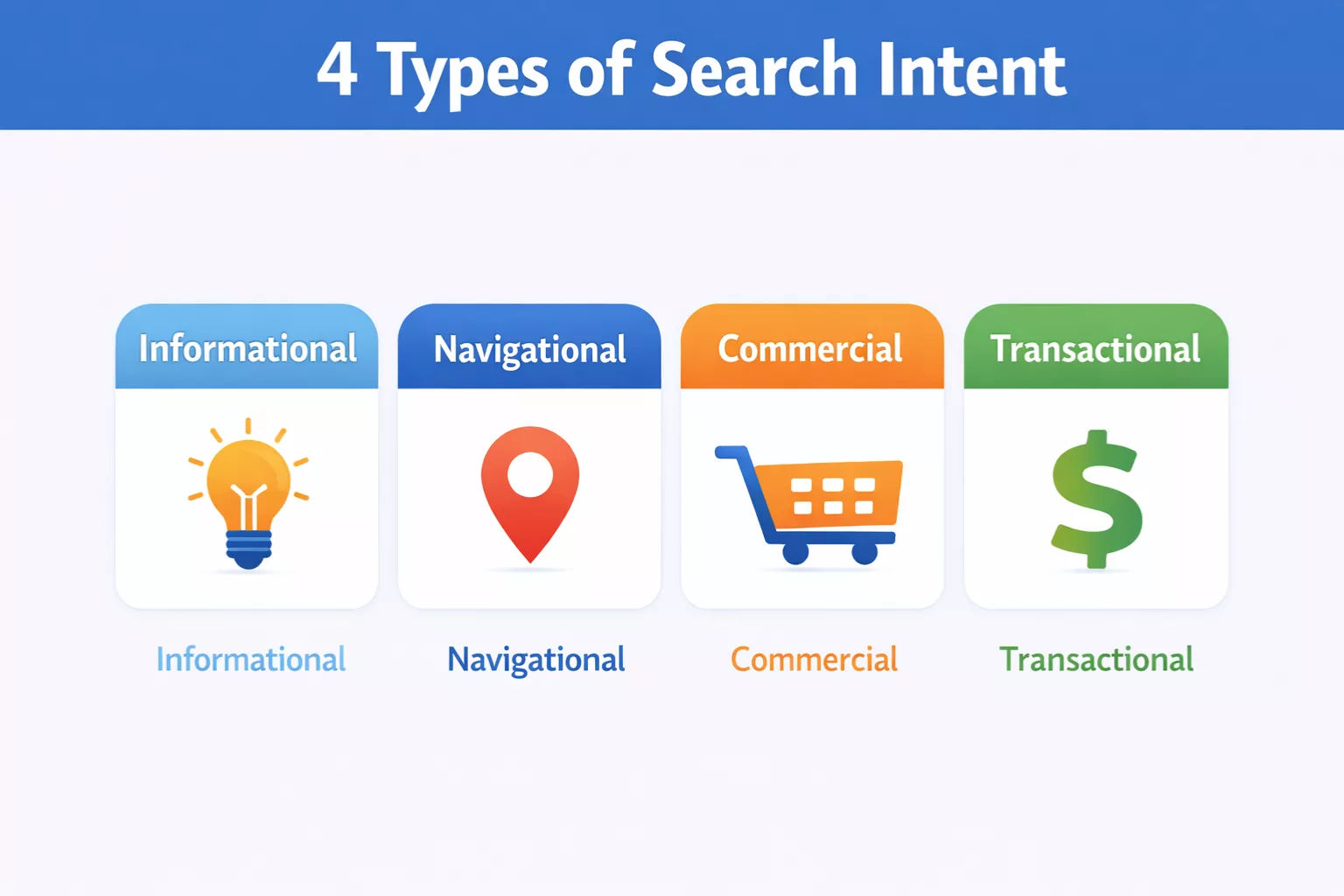
When writers talk about search intent, they usually refer to four main categories. Google uses these categories to understand what users want when they search for something.
Once you understand these intent types, writing SEO content becomes much easier. Instead of guessing what readers expect, you can quickly identify the type of content Google wants to show for a keyword.
Over time, I realized that most ranking problems happen because writers misunderstand intent. The article might be well written, but the format does not match what the user wants.
These four intent types explain why.
Search intent is usually divided into four main categories that explain what the user wants to accomplish when searching on Google.
- Informational intent – the user wants to learn something or find an explanation.
- Navigational intent – the user wants to visit a specific website or page.
- Commercial investigation – the user is comparing products or researching options.
- Transactional intent – the user is ready to take action such as buying or signing up.
Informational Intent
Informational intent is the most common type of search query. In this case, the user wants to learn something or understand a topic better.
These searches often start with phrases like:
- what is
- how to
- why does
- guide to
For example:
- what is SEO
- how to write blog posts
- what is digital writing
When someone searches these phrases, they expect an explanation or a clear guide. They are not trying to buy something. They simply want useful information.
Because of this, Google usually ranks content such as:
- detailed guides
- tutorials
- step-by-step articles
- educational blog posts
I learned early that informational queries reward helpful teaching content. The more clearly you explain the topic, the more likely readers stay on the page and engage with the article.
This type of intent works especially well for blogs because it allows writers to demonstrate expertise while helping readers solve a problem.
Navigational Intent
Navigational intent happens when someone wants to visit a specific website or page.
The user already knows where they want to go. They simply use Google as a shortcut to get there.
Common examples include:
- Facebook login
- HubSpot blog
- Mailchimp dashboard
When someone types these searches, they are not looking for an explanation of the platform. They want the exact page that allows them to access the site.
Because of this, the search results usually show:
- official brand pages
- login pages
- homepage links
- account dashboards
For writers, navigational intent rarely requires creating new content. Google almost always ranks the official website for these queries.
However, understanding this type of intent helps you avoid targeting keywords that are impossible to rank for. If a keyword is strongly navigational, a blog article will struggle to compete.
Commercial Investigation Intent
Commercial investigation intent sits between research and purchasing.
The user is thinking about buying something, but they are still comparing options. They want to evaluate different products before making a decision.
Typical searches include:
- best laptops for writers
- Grammarly vs ProWritingAid
- best blogging platforms
When Google detects this intent, it tends to rank content that helps users compare products. These articles usually contain detailed evaluations and recommendations.
Common content formats include:
- product comparisons
- reviews
- buying guides
- “best tools” lists
These posts work well because they help readers narrow their choices. When I started writing comparison articles, I noticed they often attracted strong search traffic because people rely on them during the research stage.
Commercial intent is also popular in affiliate marketing because readers are already considering a purchase.
Transactional Intent
Transactional intent appears when users are ready to take action.
They have already researched their options and now want to complete a specific task. That task might involve purchasing a product, signing up for a service, or contacting a provider.
Examples include:
- buy Grammarly premium
- hire SEO writer
- subscribe to newsletter
Search results for these queries usually feature pages designed for conversion rather than education.
These pages often include:
- landing pages
- product pages
- sign-up pages
- service pages
Writers working with transactional keywords usually create content that leads directly to an action. The goal is not only to inform the reader but to guide them toward completing the task they searched for.
Understanding these four types of search intent helps writers create content that matches what users expect. When the intent and the content format align, the article has a much better chance of ranking well in search results.
Once the content matches user intent, writers improve visibility using on-page SEO strategies.
Why Search Intent Is Critical for SEO Writing?
One lesson I learned early in SEO writing is that Google ranks pages that satisfy the user’s goal, not just pages that contain the right keywords. That difference sounds small, but it changes everything about how content performs in search results.
When someone searches on Google, they are trying to accomplish something. Maybe they want to learn how to write a blog post. Maybe they want to compare grammar tools. Or maybe they are ready to hire a writer or buy software.
Google’s job is to give them the page that helps them complete that goal as quickly as possible.
Because of this, search engines constantly evaluate how well pages satisfy user intent. They do this by analyzing behavior in the search results. If users click a page and quickly return to Google, it usually means the content did not meet their expectations. If users stay on the page, read the content, and interact with it, Google sees that page as relevant.
Over time, this behavior helps the algorithm determine which pages best match the search intent for a keyword.
This is one reason many well-written articles fail to rank. The content may be helpful, but the intent behind the query was misunderstood.
I once made this mistake while writing about blogging tools. The keyword suggested a topic related to writing software, so I created a detailed explanation of grammar checkers and editing tools. The article included definitions, examples, and tips for improving writing.
It looked like a solid informational article.
But when I checked the search results more closely, I noticed something important. Every top ranking page was a comparison list of tools, not an educational article about grammar software.
The search intent was commercial research. People were trying to decide which tool to use. They wanted comparisons, pricing details, and recommendations.
My article explained the concept of grammar checkers, which did not match what searchers wanted. Because of that mismatch, the article struggled to rank.
This kind of mistake happens often in SEO writing.
A common example is when a writer targets an informational query but publishes a product page instead. Imagine someone searching “how to start a blog.” That search clearly suggests a guide or tutorial.
If the page that appears is simply a hosting company sales page, the user may leave immediately because the content does not answer the question. Google sees that behavior and starts favoring pages that provide step-by-step instructions instead.
This is why keyword optimization alone is no longer enough.
In the early days of SEO, writers focused on placing keywords in titles, headings, and paragraphs. While those elements still matter, they cannot overcome an intent mismatch.
Even a perfectly optimized page will struggle if the format does not match what users expect to see.
Experienced SEO writers often begin their process by analyzing the search results. Before writing a single sentence, they look at the top ranking pages and ask a simple question.
What type of content is Google rewarding for this query?
If the results are guides, the article should be a guide. If the results are product comparisons, the content should include comparisons. When the format aligns with the search intent, the article becomes far more relevant to both readers and search engines.
Understanding this principle saves a lot of wasted effort. Instead of writing content and hoping it ranks, writers can build articles that already match what Google is trying to deliver.
That alignment between user goals and content format is one of the strongest signals for search rankings.
Search intent plays a major role in SEO writing because search engines prioritize pages that satisfy the user’s goal. This principle is explained in the SEO Writing Guide, where search intent, keyword research, and content structure are explored in more detail.
Search intent is only one piece of the puzzle. To actually rank, you need to combine it with structure, writing, and optimization.
See how SEO writing works step by stepHow Search Intent Has Evolved?
When I first learned SEO, most advice focused on keywords. Writers were told to place the target phrase in the title, headings, and several times throughout the article. If the page used the right words, it had a chance to rank.
Search engines worked differently back then. They relied heavily on keyword matching to understand what a page was about.
Over time that changed.
Search engines began looking beyond the words themselves. Instead of only matching keywords, they started evaluating what the searcher was trying to accomplish. The goal behind the query became just as important as the words used.
For example, someone searching “how to write a blog post” is looking for a guide. Someone searching “best grammar checker” wants to compare tools. Even though both searches involve writing, the expected content is different.
Because of this shift, repeating a keyword is no longer enough. The article must match the purpose behind the search.
That is why search intent now plays such an important role in SEO writing. Writers who understand the goal behind the query can structure their content in a way that matches what readers expect to find.
How Writers Identify Search Intent?
When I started writing SEO content, I used to assume the keyword told me everything I needed to know. If the keyword was “blog writing tips,” I wrote tips. If it was “SEO tools,” I explained tools.
Over time I realized something important. A keyword alone rarely tells you the full story.
The real clues are inside the search results page, also called the SERP. That page shows exactly what Google believes searchers want. When you analyze it carefully, the search intent becomes much clearer.
Before writing any article now, I spend a few minutes studying the search results. It saves hours of work later because it prevents writing the wrong type of content.
A simple SERP analysis usually reveals the intent behind the query.
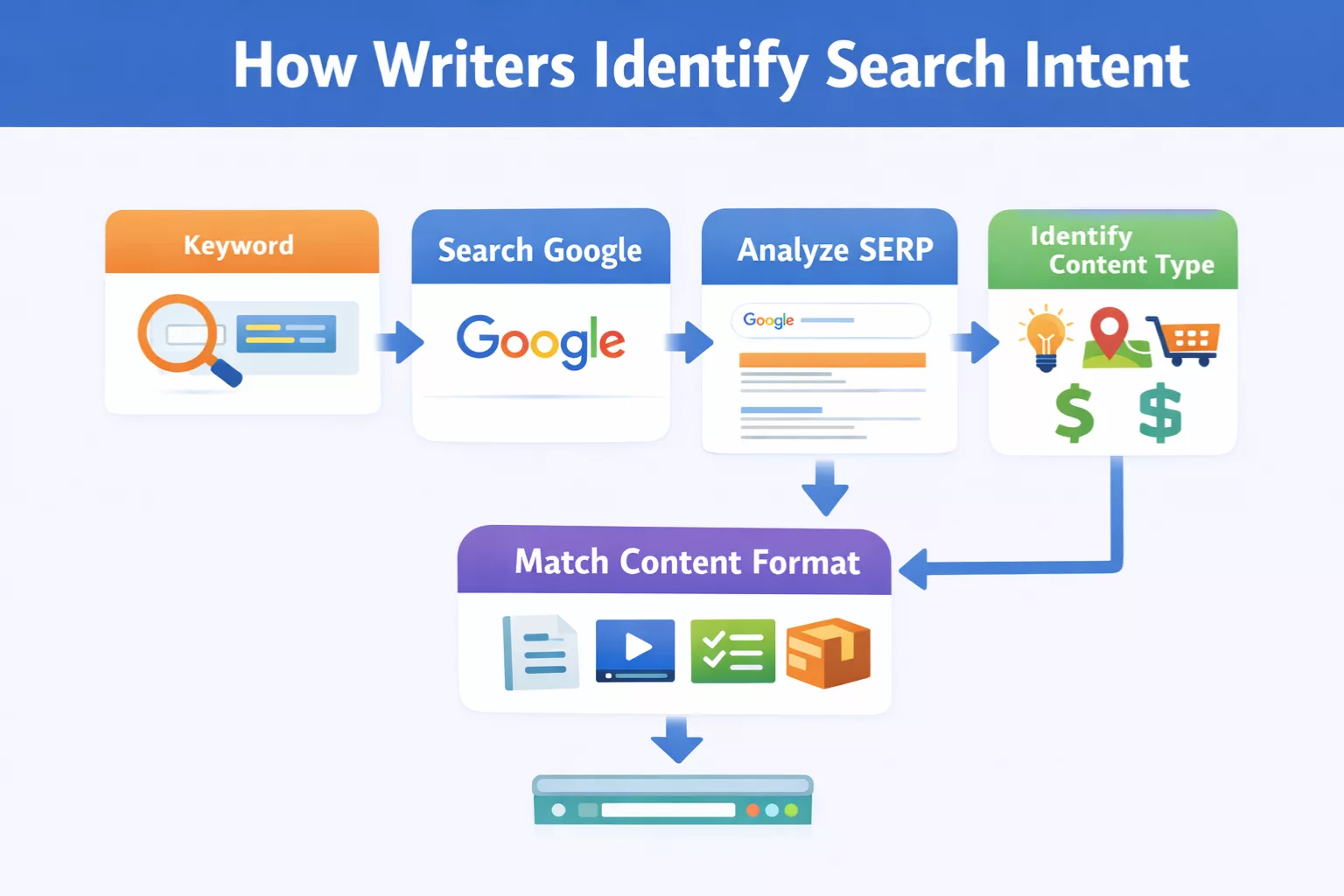
Writers identify search intent by analyzing the search results for a keyword and observing what type of content Google ranks on the first page.
Simple process:
- Search the keyword on Google.
- Look at the type of pages ranking (guides, reviews, product pages).
- Analyze featured snippets and People Also Ask questions.
- Study headings and structure of top ranking articles.
- Create content that matches the format users expect.
Analyze the Google SERP
The first step is to look at the type of pages ranking for the keyword. The format of those pages often reveals the search intent almost immediately.
Common formats you will see include:
- blog posts
- product pages
- list articles
- tutorials
- videos
For example, if the results are mostly blog guides and tutorials, the search intent is likely informational. People want to learn something and expect a detailed explanation.
If the search results are filled with product pages, the intent is probably transactional. The user is ready to buy or sign up for something.
Sometimes the results contain comparison lists, such as “best tools” or “top platforms.” That usually signals commercial investigation intent. Users are researching options before making a decision.
I like to scan the first page quickly and look for patterns. If eight out of ten results use the same format, that format is usually what Google wants to show for the keyword.
Trying to rank with a completely different format rarely works.
Look at Featured Snippets
Featured snippets are another strong clue about search intent. These are the small answer boxes that appear at the top of some search results.
They often contain:
- direct answers
- short definitions
- step-by-step instructions
When Google displays a featured snippet, it is essentially highlighting the type of answer it believes users want first.
For example, if the snippet shows a short definition, the query probably has informational intent. Users want a clear explanation before anything else.
If the snippet contains numbered steps, the search likely relates to a process or tutorial.
As a writer, I pay attention to the structure of these snippets because they often show how content should be organized. Matching that structure can increase the chances of appearing in the featured snippet position.
Study Related Searches
Another useful place to look is the related searches section at the bottom of the results page.
These suggestions reveal additional queries that users often search after the original keyword. They provide insight into related questions and supporting topics.
For example, if the keyword is about blog writing, related searches might include:
- how to write SEO blog posts
- blog post structure
- blog writing tips for beginners
These related searches help writers understand the broader context behind the keyword. They reveal secondary intent and additional problems readers want solved.
I often use these suggestions to expand article sections. Instead of answering only one question, the article can address several closely related questions that readers might have next.
This makes the content more complete and helpful.
Analyze Top Ranking Pages
The final step is to examine the top ranking pages more closely. Usually, looking at the first five to ten results is enough to spot patterns.
When analyzing these pages, I pay attention to several things:
- article structure
- approximate word count
- content format
- headings used throughout the article
These details show how successful pages are organized. For example, if most ranking articles are long guides with many sections, that suggests the topic requires deeper coverage.
If the top pages are short lists or comparison tables, the intent may not require a lengthy guide.
This process is often called reverse engineering the SERP. Instead of guessing what type of content will work, writers observe what is already ranking and learn from it.
By combining these observations, the search intent usually becomes very clear. Once that intent is understood, planning the structure of the article becomes much easier.
How to Write Content That Matches Search Intent?
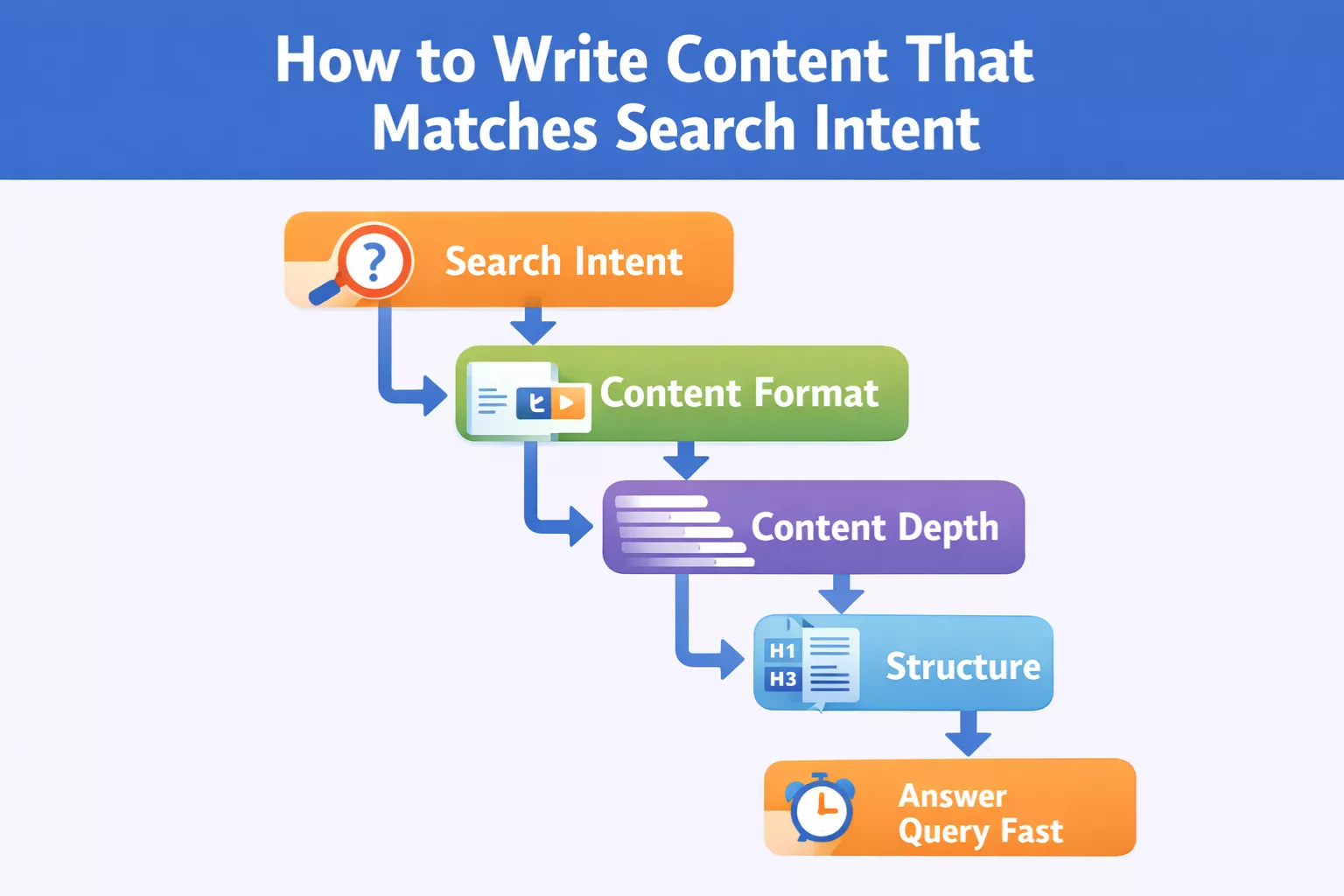
Once you understand the search intent behind a keyword, the next step is shaping your article around it. This is where many writers struggle. They identify the right keyword but still structure the content in a way that does not match what readers expect.
I used to make this mistake often. I would research a topic carefully and write a detailed article, only to discover later that the format did not match what Google was ranking.
Search intent tells you what type of content users expect, but it also influences how the article should be organized, how long it should be, and how quickly it should answer the main question.
When the format, depth, and structure align with the intent, the article becomes far more relevant to both readers and search engines.
Match Content Format
The first step is choosing the right content format. This is one of the strongest signals Google uses when ranking pages.
Different keywords naturally require different types of content.
Keyword → Format
- how to write a blog post → guide
- best grammar checker → comparison
- SEO tools pricing → landing page
If someone searches for how to write a blog post, they expect a step-by-step guide. A list of writing tools would not answer their question.
If someone searches best grammar checker, they want comparisons between tools. A long explanation of grammar software would miss the point.
I learned this the hard way after writing an informational article for a keyword that clearly had commercial intent. The article explained the topic well, but the search results were full of comparison lists and product recommendations.
The format was wrong, so the page never ranked well.
When analyzing the SERP, always pay attention to the dominant format. If most top results follow the same structure, it usually means Google has already determined the best content format for that query.
Matching that format dramatically improves the chances of ranking.
Match Content Depth
Search intent also influences how deep the content needs to go. Some queries require only a short explanation, while others demand a comprehensive guide.
For example:
- simple query → short explanation
- complex query → long guide
If someone searches what is SEO, they want a clear definition and basic explanation. A massive 5,000 word guide might overwhelm the reader.
But if the query is how to start a blog, users usually expect a detailed walkthrough. They want steps, tools, examples, and practical advice.
Looking at the top ranking pages often reveals the expected depth. If the first page is filled with long guides, that usually signals the topic requires deeper coverage.
Matching the depth of the content helps ensure the article satisfies the user’s expectations.
Answer the Core Query Fast
Another important element of intent-focused writing is answering the main question quickly. Readers should not have to scroll through several paragraphs before finding the answer they searched for.
Google also favors content that delivers clear answers early in the article.
Writers can do this by:
- defining the topic early
- providing direct answers
- avoiding long introductions
For example, if someone searches what is search intent, the article should explain the concept within the first few sentences.
After the core answer is provided, the article can expand into examples, explanations, and strategies. But the main question should be addressed immediately.
This approach improves both user experience and search visibility.
Structure Content for Scannability
Most readers do not read every word of an article. They scan the page looking for useful sections and quick answers.
That is why content formatting plays an important role in SEO writing.
Clear structure makes the information easier to absorb and helps search engines understand the page.
Effective formatting often includes:
- clear headings
- bullet points
- short paragraphs
- tables
- summary sections
These elements break the content into smaller pieces that readers can process quickly.
I often notice that high ranking articles are not only informative but also easy to navigate. Readers can jump to the section they need without struggling to find the information.
This combination of helpful content and clean structure makes the article more satisfying to users, which is exactly what search engines aim to deliver.
Real Examples of Search Intent for Writers
Understanding search intent becomes much easier when you look at real keyword examples. In theory, intent categories make sense. But when you start analyzing actual keywords, you quickly see how intent shapes the type of content that ranks.
I like to think of search intent as a simple question: What does the reader expect to see after clicking the result?
When that expectation is clear, the structure of the article becomes obvious.
Below are a few practical examples writers encounter frequently when creating SEO content.
| Keyword | Intent | Content Type |
| how to write a blog post | informational | guide |
| best grammar checker | commercial | comparison |
| grammarly pricing | transactional | landing page |
Each of these keywords looks related to writing tools, but the intent behind them is very different.
Take the keyword how to write a blog post. Someone searching this phrase wants to learn the process of writing a blog article. They expect instructions, examples, and a clear explanation of the steps involved.
Because of that, Google usually ranks detailed guides that include sections like outlining, structuring paragraphs, writing introductions, and editing content.
If a writer tried to rank this keyword with a product review or a list of blogging tools, the article would probably struggle to compete. The intent is clearly informational, and readers expect educational content.
Now look at the keyword best grammar checker.
This search has a different goal. The reader already understands what grammar checkers are. Instead of learning about the concept, they want help choosing the right tool.
That means the search intent falls into the commercial investigation category. Users want comparisons, reviews, and recommendations.
When you examine the search results for this type of keyword, you often see list-style articles such as:
- best grammar checkers for writers
- top grammar tools compared
- Grammarly vs other editing tools
These articles usually include comparison tables, feature lists, and pros and cons for each tool. The structure helps readers evaluate different options before deciding which one to use.
Finally, consider the keyword Grammarly pricing.
At this stage, the user already knows about the product and is trying to find specific details before purchasing. They want to see subscription plans, features, and payment options.
This type of query has transactional intent. The user is close to taking action.
Because of that, Google often ranks pages that provide pricing information directly. These may include official product pages or landing pages designed to explain plans and encourage signups.
A long educational article would not match this intent well. Readers searching for pricing details usually want the information immediately.
Examples like these show why keyword intent analysis is so important for writers. Even small differences in wording can signal very different goals.
Instead of assuming what readers want, writers can analyze the keyword and the search results to determine the most appropriate content type.
Once the intent is clear, the article becomes much easier to structure. The writer simply builds the content around the goal the searcher is trying to accomplish.
Before writing an article, it helps to define the purpose of the content and the result you want to achieve. This approach is explained in Optimize Your Writing: Goals for Effective SEO, which shows how setting a clear SEO goal improves content performance.
Common Search Intent Mistakes Writers Make
One of the reasons many articles struggle to rank has nothing to do with writing quality. In many cases, the article is helpful and well written. The real problem is that the content does not match the search intent behind the keyword.
I’ve made this mistake more times than I’d like to admit. Early on, I focused heavily on keyword placement and article length. If the keyword appeared in the title, headings, and paragraphs, I assumed the article was optimized.
But Google rarely rewards keyword optimization alone. What matters more is whether the content solves the problem the searcher actually came to Google to solve.
Over time, a few common mistakes started to stand out.
Writing Informational Content for Buying Queries
One of the most common mistakes is writing informational articles for keywords that clearly signal buying intent.
For example, imagine someone searching best grammar checker for writers. That search shows the reader is comparing tools. They want recommendations and reviews.
If the article only explains what grammar checkers are and how they work, it will probably miss the intent of the query.
Instead, the content should include:
- comparisons between tools
- pros and cons
- pricing information
- recommendations for different types of writers
When the content helps readers make a decision, it aligns with the intent behind the search.
Ignoring SERP Format
Another mistake happens when writers ignore the format that Google is already ranking.
The first page of results is one of the best sources of information about search intent. If most of the top results follow a similar structure, that structure likely reflects what users expect.
For example, if a keyword produces results filled with list articles like “10 best tools for writers,” publishing a long essay-style article may not match the intent.
Instead of fighting the format that Google prefers, writers should study the top ranking pages and look for patterns.
Things to examine include:
- article structure
- type of headings used
- whether the content is a list, guide, or review
- how information is organized
Matching the format of successful pages increases the chances of ranking.
Over-Optimizing Keywords
Some writers focus so much on keyword placement that they lose sight of the reader’s goal.
Repeating the target keyword in every heading or paragraph does not guarantee better rankings. In fact, overly optimized content often reads awkwardly and provides little value.
Search engines have become much better at understanding language and context. They no longer rely only on exact keyword matches.
What matters more is whether the content answers the user’s question clearly and completely.
A helpful article written in natural language often performs better than one that tries too hard to force the keyword into every sentence.
Writing Without Analyzing Audience Goals
Another mistake is starting an article without thinking about the reader’s actual goal.
Every search query represents a problem the user wants to solve. If the writer focuses only on the topic rather than the goal, the article may miss what the reader truly needs.
For example, someone searching how to start a blog may be looking for:
- step-by-step instructions
- platform recommendations
- setup guidance
If the article only discusses the benefits of blogging, it does not help the reader complete the task.
Understanding the audience’s goal helps writers design content that delivers practical answers.
Publishing Generic Content That Does Not Satisfy Intent
The final mistake is publishing content that feels too broad or generic.
Many articles cover a topic without clearly solving the reader’s problem. They include background information but lack actionable guidance.
Search engines tend to favor content that provides clear answers and useful explanations. If readers leave the page still searching for information, the article likely did not satisfy the intent.
One way to avoid this is to ask a simple question while writing: What result does the reader expect after searching this keyword?
If the article helps the reader reach that result, the content is much more likely to perform well in search results.
Search Intent Optimization Checklist for Writers
When I started writing SEO content, I often jumped straight into writing the article. I would research the topic, outline the sections, and begin drafting paragraphs.
Sometimes the article performed well. Other times it barely received traffic.
Over time I realized something simple but important. The difference was not always writing quality. It was whether the article matched the search intent behind the keyword.
Because of that, I began using a small checklist before writing any SEO article. It only takes a few minutes, but it helps ensure the content aligns with what users and search engines expect.
Here is the process I usually follow.
Identify Keyword Intent
The first step is determining the type of intent behind the keyword.
Ask a simple question: What is the searcher trying to accomplish?
Most queries fall into one of four categories:
- informational
- navigational
- commercial investigation
- transactional
If someone searches how to write a blog post, they want a guide. If someone searches best grammar checker, they want a comparison.
Understanding this goal helps you decide what type of content to create.
Analyze the Google SERP
Next, look at the search results for the keyword.
The first page often reveals exactly what Google believes users want. Instead of guessing the format, examine the pages that are already ranking.
Look for patterns such as:
- guides or tutorials
- list articles
- product reviews
- landing pages
If most results follow the same format, it is usually a strong signal that this format satisfies the search intent.
Trying to rank with a completely different structure often makes ranking more difficult.
Match the Content Format
Once the intent is clear, structure the article accordingly.
For example:
- informational queries → guides or tutorials
- commercial queries → comparisons or reviews
- transactional queries → landing pages
Matching the content format helps Google recognize that your page aligns with the expectations of the searcher.
It also makes the article easier for readers to understand because the structure feels familiar.
Answer the Main Question Quickly
Readers usually want the answer to their question as soon as possible. Long introductions can delay that answer and make the article feel less helpful.
I try to explain the main concept within the first few paragraphs of the article.
For example, if someone searches what is search intent, the article should provide a clear definition early. Once the reader understands the concept, the article can explore examples, strategies, and deeper explanations.
This approach improves user experience and helps search engines identify the relevance of the content.
Cover Related Questions
Most search queries are connected to other questions that readers often ask next.
For example, someone learning about search intent might also want to know:
- how to identify search intent
- why search intent matters for SEO
- examples of search intent
Including these related topics helps create more complete content.
It also increases the chances of ranking for additional keywords because the article covers a broader set of related queries.
Include Structured Headings
Clear headings make articles easier to scan.
Most readers do not read every word of a page. Instead, they skim through headings to find the sections that answer their question.
Using structured headings such as H2 and H3 helps organize the information and guide readers through the content.
Search engines also use these headings to understand the structure and topics covered in the article.
Provide Comprehensive Answers
Finally, make sure the article fully solves the problem behind the search.
If someone searches a question and leaves the page still confused, the content did not satisfy the intent. Google tends to favor pages that answer the query clearly and completely.
That does not mean every article needs to be extremely long. The goal is simply to provide the information the reader needs in a helpful and easy-to-follow way.
When writers follow this checklist before publishing, their content is far more likely to align with user intent. And when the intent and content match, ranking becomes much easier.
Understanding search intent becomes much easier when you start with proper keyword research for writers.
Tools Writers Can Use to Identify Search Intent
When I first started learning about search intent, I assumed there had to be some complicated SEO formula behind it. I imagined experienced marketers using advanced software that instantly told them exactly what type of content to write.
It turned out to be much simpler.
Many writers identify search intent using tools that are already available. Some are built directly into Google. Others are SEO platforms that make it easier to analyze keywords and study the search results.
Over time I realized the real value of these tools. Instead of guessing what readers want, you can look at patterns in the search results and see how Google interprets the query.
Here are several tools writers commonly use when trying to understand search intent.
Google SERP
The easiest way to understand search intent is by analyzing the results page itself. Open a keyword in Google Search and study the types of pages ranking on the first page.
When you type a keyword into Google, the results immediately reveal the type of content users expect. The first page shows what Google believes best satisfies the query.
Start by looking at the types of pages that appear.
For example, the results may include:
- blog posts
- step-by-step guides
- product comparisons
- landing pages
- videos
These formats reveal the likely intent.
If most results are guides or tutorials, the keyword probably has informational intent. If the page is filled with product pages or pricing pages, the query may have transactional intent.
Google also provides additional signals through features such as:
- featured snippets
- related searches
- People Also Ask questions
These sections reveal what users want to learn and what related questions they often search.
Studying the SERP for a few minutes often makes the search intent clear.
Ahrefs
SEO tools can also help with intent analysis. Platforms like Ahrefs allow writers to review ranking pages, keyword variations, and search traffic data.
Ahrefs is one of the most widely used SEO research tools among content marketers and writers.
Its keyword overview and SERP analysis section shows the pages currently ranking for a keyword and highlights several useful metrics.
For example, you can see:
- estimated traffic
- content type
- keyword variations
- search difficulty
By examining the top ranking pages, writers can quickly identify the type of content Google prefers for that query.
If the first page is dominated by comparison articles or product reviews, the keyword likely has commercial investigation intent.
Ahrefs also suggests related keywords and queries. These ideas reveal additional topics readers may expect to see in the article.
SEMrush
Another popular research tool is SEMrush, which provides keyword data, search intent classification, and detailed SERP analysis.
SEMrush provides similar features for keyword research and search analysis.
Many writers use its keyword overview and intent classification features to understand the likely purpose behind a query.
In many cases, the platform categorizes keywords into groups such as:
- informational
- navigational
- commercial
- transactional
This classification gives writers a quick starting point when evaluating a keyword.
SEMrush also displays ranking pages, keyword variations, and related questions. These insights help writers see how successful content is structured and what readers expect to find.
Surfer SEO
Content optimization tools such as Surfer SEO analyze top ranking pages and highlight common structures, headings, and content patterns.
Surfer SEO focuses strongly on content optimization and SERP analysis.
When analyzing a keyword, the tool studies top ranking pages and identifies patterns across them. It highlights details such as:
- average word count
- headings used in ranking articles
- important terms appearing in the content
- overall structure of top ranking pages
This data helps writers understand how successful pages are organized.
For example, if most ranking pages are long guides with many headings, the search likely requires detailed coverage. If the results are short comparison lists, the content format may need to be simpler.
AlsoAsked
Writers can also explore related questions using AlsoAsked, which visualizes questions from Google’s “People Also Ask” results.
AlsoAsked is a tool that focuses on questions people search around a topic.
It pulls data from Google’s People Also Ask feature and organizes related questions into visual clusters.
These clusters reveal how search queries connect and what questions readers often ask next.
For example, someone researching search intent might also ask:
- how do you determine search intent
- what are the types of search intent
- why is search intent important for SEO
These related questions help writers expand their articles and address additional topics readers are curious about.
Intent Layering
One thing that confused me early in SEO writing was this. Some keywords didn’t fit neatly into a single search intent category. I would analyze the keyword, assume it was informational, write a guide, and then notice that product comparisons and store pages were also ranking.
At first it looked inconsistent.
Later I realized what was happening. Many keywords contain layered intent. That means different users searching the same phrase may have slightly different goals.
Google often tries to satisfy several of those goals at once.
A good example is the keyword best laptops.
Some searchers are simply learning about laptops and want general information. Others are comparing options before making a decision. And some are ready to buy immediately.
Because of this, the search results often include a mix of content types:
- buying guides
- comparison articles
- product pages
- retailer listings
This combination shows that the keyword carries informational, commercial, and transactional intent at the same time.
When writers understand this pattern, they can structure content in a way that satisfies multiple layers of intent within one article.
Instead of focusing on only one goal, the article guides the reader from learning about the topic to evaluating options and eventually making a decision.
A simple structure works well for this.
Overview Section
The first section usually explains the topic and provides context.
For example, if the article targets best laptops, the introduction might explain what makes a laptop good for different users. It might briefly mention factors such as performance, battery life, portability, and price.
This part satisfies the informational layer of the search.
Readers who are still learning about the topic get the background they need before evaluating specific options.
Comparison Table
Next, many high ranking articles include a comparison table.
This table quickly shows the differences between several products. It often highlights key details such as price, features, ratings, and ideal use cases.
Comparison tables are useful because they help readers evaluate options without reading long descriptions first.
For commercial investigation queries, this type of section often becomes one of the most important parts of the article.
Buying Recommendations
After comparing options, the article can move into recommendations.
Each product might include a short review explaining:
- strengths and weaknesses
- who the product is best for
- why it stands out among other options
This section helps readers narrow down their choices.
For users who are ready to purchase, these recommendations often include links to product pages or additional information. That satisfies the transactional layer of intent.
Intent layering works well because it mirrors the way people actually make decisions.
Many readers begin by learning about a topic, then compare options, and finally choose a product or service.
When an article supports that entire process, it becomes useful to a wider group of searchers. Google tends to reward content that satisfies multiple user needs within the same query.
Intent Mapping for Blog Posts
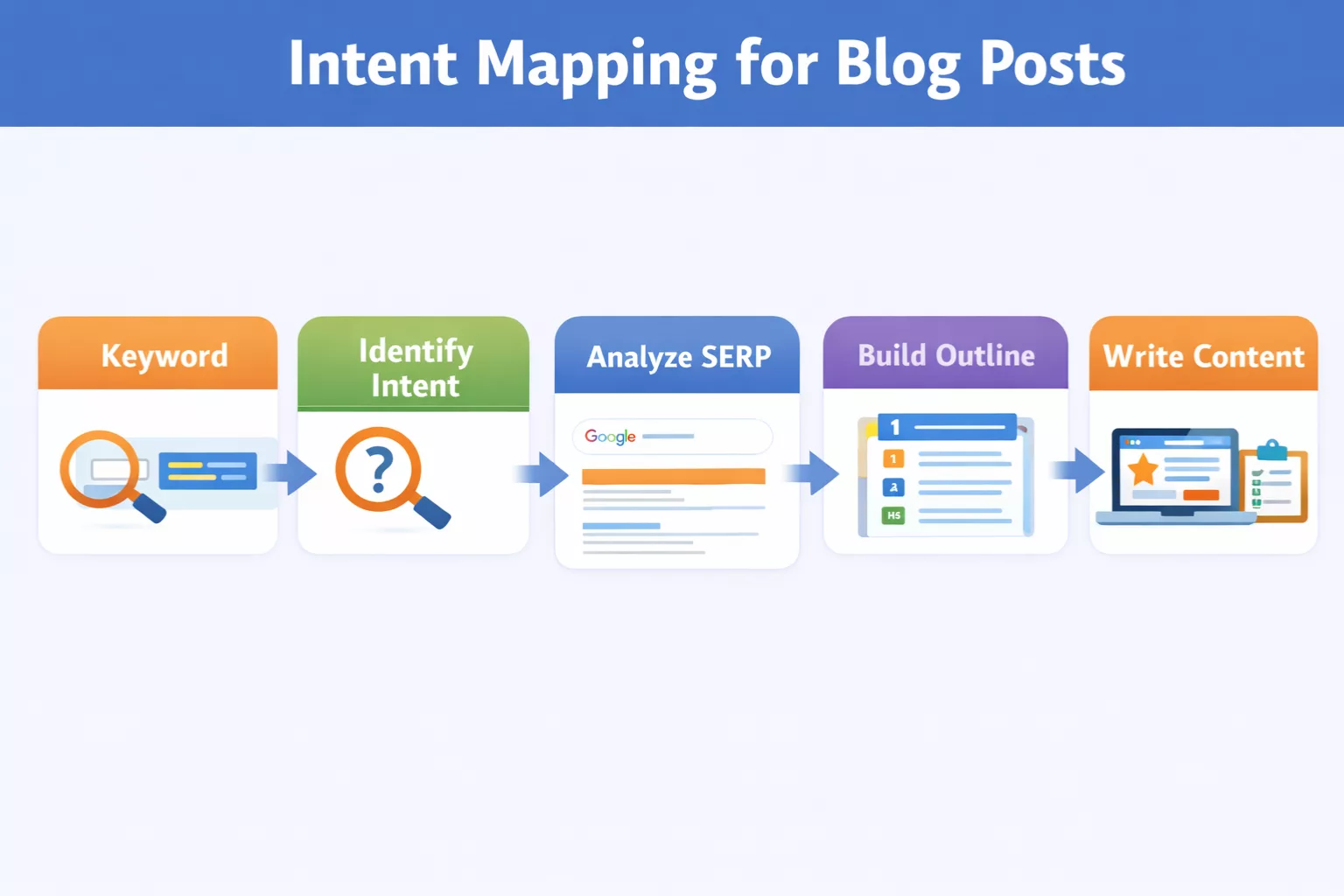
Once I understood search intent, the next challenge was applying it consistently when planning content. Knowing the concept is helpful, but writers also need a simple process they can follow before starting an article.
This is where intent mapping becomes useful.
Intent mapping means aligning a keyword, the search intent behind it, and the structure of the article before writing begins. Instead of jumping straight into drafting paragraphs, the writer first studies the query and plans the content around the reader’s goal.
I started doing this after publishing several articles that looked good but failed to rank. The problem was rarely the writing itself. The issue was that the structure of the article did not match what searchers expected.
Intent mapping solves that problem by guiding the content planning process.
Here is the method many SEO writers use.
1. Identify Keyword Intent
The first step is identifying the intent behind the keyword.
Ask yourself a simple question. What is the searcher trying to accomplish?
Most keywords fall into one of the common intent categories:
- informational
- navigational
- commercial investigation
- transactional
For example, a keyword like how to start a blog clearly signals informational intent. The reader wants instructions or guidance.
A keyword like best blogging platforms suggests commercial research. The reader is comparing tools before choosing one.
Once the intent is clear, it becomes easier to determine what type of article will satisfy the query.
2. Analyze the SERP
After identifying the likely intent, the next step is analyzing the search results page.
The SERP acts as a real-time guide to what Google believes users want. By looking at the first page of results, writers can see which types of content already perform well.
Pay attention to patterns such as:
- content format
- article length
- headings used
- structure of the page
If most results are long guides, that suggests the topic requires detailed coverage. If the results are comparison lists, the query likely has commercial intent.
This analysis confirms whether your interpretation of the keyword intent is correct.
3. Choose the Correct Format
Once the search intent is clear, the writer can choose the appropriate content format.
Different intents naturally align with different formats.
For example:
- informational queries → guides or tutorials
- commercial queries → comparison articles
- transactional queries → landing pages or product pages
Choosing the correct format early in the planning stage helps ensure the article aligns with what users expect to see.
It also prevents the common mistake of writing a helpful article that simply does not match the search intent.
4. Build the Outline Around Intent
After selecting the format, the next step is creating an outline that supports the user’s goal.
For informational content, the outline may include explanations, examples, and step-by-step instructions.
For commercial content, the outline might include product comparisons, feature breakdowns, and recommendations.
The goal is to organize the article so that each section helps the reader move closer to solving their problem.
This stage is where writers often uncover additional opportunities to answer related questions and expand the topic.
5. Write Content That Satisfies the Query
The final step is writing the article in a way that clearly addresses the search intent.
The content should answer the main question early and provide useful explanations throughout the article. Readers should be able to understand the topic quickly and find the information they came for without confusion.
When the article satisfies the search query effectively, it tends to perform better in search results.
Intent mapping also supports topical authority. When writers consistently create content aligned with user intent, their site begins to cover topics in a way that feels complete and helpful to readers.
Over time, this approach strengthens the credibility of the site and makes it easier for new articles to rank.
Intent-Based Content Templates
One thing that helped me improve my SEO writing was noticing that different search intents usually follow predictable content patterns. After analyzing enough search results, you start seeing the same structures appear again and again.
Once that pattern becomes clear, planning articles becomes much easier.
Instead of guessing how to organize the content, you can follow a structure that already matches what searchers expect to see. I still use this approach when outlining articles. Before writing anything, I look at the search intent and choose a format that fits the reader’s goal.
Here are two simple templates writers often use.
Informational Content Template
Informational searches happen when readers want to learn something or understand a concept. These queries often start with phrases such as what is, how to, or why does.
For this type of search, the goal is to explain the topic clearly and guide the reader through the concept.
A common structure looks like this:
- definition
- explanation
- examples
- step-by-step guide
The article usually begins with a clear definition. This helps readers understand the topic immediately without scrolling through long introductions.
For example, if the keyword relates to search intent, the opening section should explain what search intent means in a few simple sentences.
After that, the article moves into a deeper explanation of the concept. This section expands on the definition and shows why the topic matters. It may explain how the concept works, how it affects SEO, or why writers should understand it.
Next come examples.
Examples turn abstract ideas into practical situations. When readers see how a concept works in real scenarios, the explanation becomes easier to understand.
Finally, informational articles often include a step-by-step guide. This part shows readers how to apply the concept themselves. It may explain a process, outline steps, or walk through a practical example.
Commercial Content Template
Commercial investigation searches appear when readers are researching products or tools before making a decision. They are still comparing options and gathering information.
This type of content often targets keywords such as:
- best tools for writers
- grammar checker comparison
- blogging platform reviews
Articles designed for this intent usually follow a structure like this:
- product overview
- comparison table
- pros and cons
- recommendations
The article often begins with a product overview. This section introduces the category of tools or products and explains what readers should look for when choosing one.
For example, a post about writing tools may discuss factors such as accuracy, features, price, and ease of use.
Next comes a comparison table.
Comparison tables allow readers to quickly scan the differences between options. Key details like pricing, features, and ratings become easier to evaluate when presented side by side.
After the comparison table, the article typically includes pros and cons for each option. This section highlights the strengths and weaknesses of each product.
The final part usually includes recommendations. Each recommendation explains who the product is best for and why it may be a good choice for certain users.
SERP Analysis Walkthrough
One of the best habits I picked up as an SEO writer was learning to study the search results before writing anything. Early on I skipped this step. I would choose a keyword, open a document, and start writing the article right away.
Sometimes that worked. Many times it didn’t.
Later I realized the problem wasn’t my writing. The problem was that I hadn’t studied the search results page, so I didn’t understand what type of content Google wanted for that keyword.
A quick SERP analysis usually solves that issue.
Let’s walk through a simple example using the keyword how to write a blog post. This type of keyword is common in writing and content marketing topics, and it clearly signals informational intent.
Here is the process I usually follow.
1. Search the Keyword
The first step is simply entering the keyword into Google.
Type how to write a blog post into the search bar and look at the first page of results. Don’t open every article yet. Just scan the page and observe what types of content appear.
At this stage I look for patterns. Are the results mostly blog guides, list articles, or tutorials? Are there videos in the results? Are there featured snippets or “People also ask” questions?
Even this quick glance can reveal important clues about the search intent.
In this case, the results are usually dominated by detailed guides explaining the blog writing process.
2. Analyze the Top Results
Next, open a few of the top ranking pages. I usually examine the first five results because they show what Google currently considers the most relevant content.
While reading these pages, look at the structure and overall approach of each article.
Ask a few simple questions:
- What type of content is ranking?
- How detailed are the explanations?
- Are the articles written for beginners or experienced writers?
When multiple top results follow a similar structure, that often indicates the format Google prefers for that keyword.
3. Identify the Content Format
After reviewing several results, the content format usually becomes obvious.
For the keyword how to write a blog post, most top ranking articles are step-by-step guides. They explain the blogging process in stages, from choosing a topic to editing and publishing.
This tells us the keyword has strong informational intent and that readers expect practical instructions.
If the search results were filled with product comparisons or lists of blogging tools, the format would be different. But in this case, the pattern clearly favors tutorial-style content.
4. Analyze the Headings
The next step is examining the headings used in the ranking articles.
Look at how the sections are organized. Many guides about blog writing include headings such as:
- choose a blog topic
- create an outline
- write the introduction
- edit and optimize the post
These headings reveal the logical steps readers expect to see when learning the blogging process.
Paying attention to headings helps writers understand the structure that already works well for the topic.
5. Structure Your Article Accordingly
After studying the SERP and the top ranking pages, the final step is building your own article structure.
Instead of guessing what readers want, you can use the patterns you observed to design your outline.
For example, an article targeting how to write a blog post might include sections such as:
- choosing a topic
- creating an outline
- writing the first draft
- editing and formatting the article
- optimizing the post for SEO
This approach ensures the article aligns with the search intent and follows a structure that readers already expect.
Once the outline reflects the patterns seen in the search results, writing the article becomes much easier. The structure is already proven to work, and the content simply needs to expand on those sections in a helpful way.
How Search Intent Has Evolved
When I first learned SEO, most advice focused on keywords. Writers were told to place the target phrase in the title, headings, and several times throughout the article. If the page used the right words, it had a chance to rank.
Search engines worked differently back then. They relied heavily on keyword matching to understand what a page was about.
Over time that changed.
Search engines began looking beyond the words themselves. Instead of only matching keywords, they started evaluating what the searcher was trying to accomplish. The goal behind the query became just as important as the words used.
For example, someone searching “how to write a blog post” is looking for a guide. Someone searching “best grammar checker” wants to compare tools. Even though both searches involve writing, the expected content is different.
Because of this shift, repeating a keyword is no longer enough. The article must match the purpose behind the search.
That is why search intent now plays such an important role in SEO writing. Writers who understand the goal behind the query can structure their content in a way that matches what readers expect to find.
Key Takeaways
- Search intent is the goal behind a search query. It explains what the user wants to accomplish when searching on Google.
- Google ranks pages that match user intent. Content that satisfies the searcher's goal is more likely to appear in top results.
- There are four main types of search intent: informational, navigational, commercial investigation, and transactional.
- Analyzing the SERP helps writers understand intent. Looking at top ranking pages reveals the format and structure users expect.
- Content format matters as much as the keyword. Guides, comparisons, reviews, and landing pages serve different search intents.
- Matching content with search intent improves rankings. When articles solve the reader’s problem clearly, they perform better in search results.
Final Thoughts
When I first started writing SEO content, I thought ranking mostly depended on keywords. If the phrase appeared in the title, headings, and a few paragraphs, the article should perform well. Sometimes it did, but many posts still struggled to reach the first page.
The turning point was understanding search intent. Once I started thinking about why someone searches, my articles became much easier to structure.
Search intent reminds writers that every query has a goal behind it. The reader is trying to learn something, compare options, or complete a task. When the article helps them reach that goal, the content instantly feels more useful.
So instead of writing only for keywords, focus on the problem behind the search. When your article solves that problem clearly and directly, ranking usually becomes much easier.
Understanding search intent is only one part of ranking content. Learn how keyword research, structure, and optimization work together in the complete SEO writing guide for digital writers.