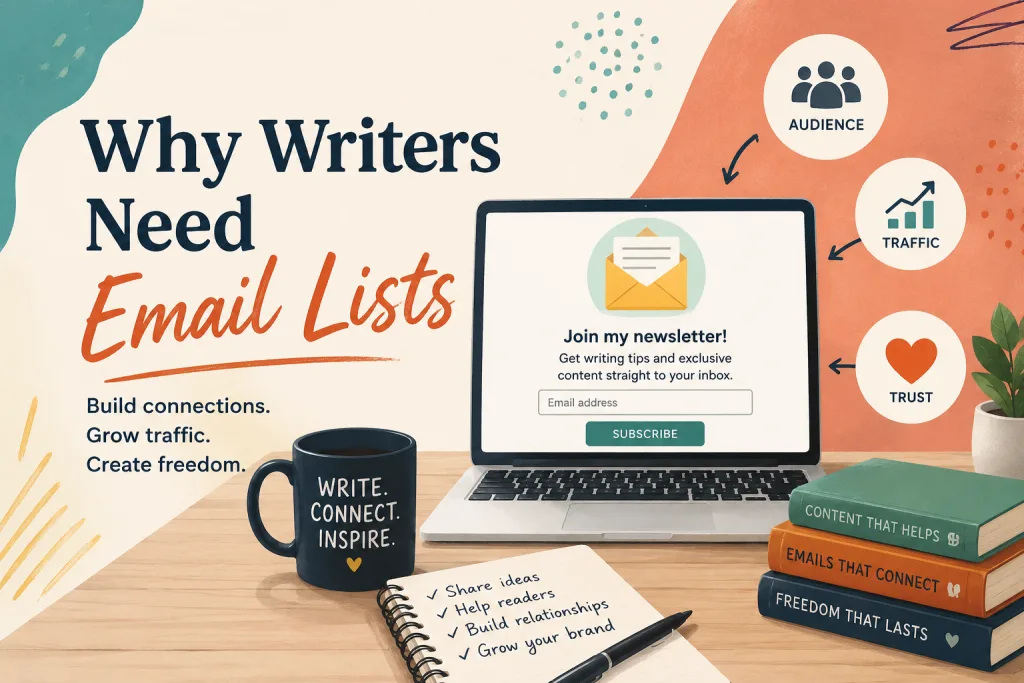

A lot of writers focus on blog traffic, social media followers, or search rankings first. I did too. It feels productive because you can see the numbers moving. More clicks. More likes. More impressions.
But here’s the problem.
None of those audiences truly belong to you.
One algorithm change can wipe out your reach overnight. A platform can suspend your account. Search rankings can disappear after a Google update. That’s rough when your writing business depends on traffic you can’t control.
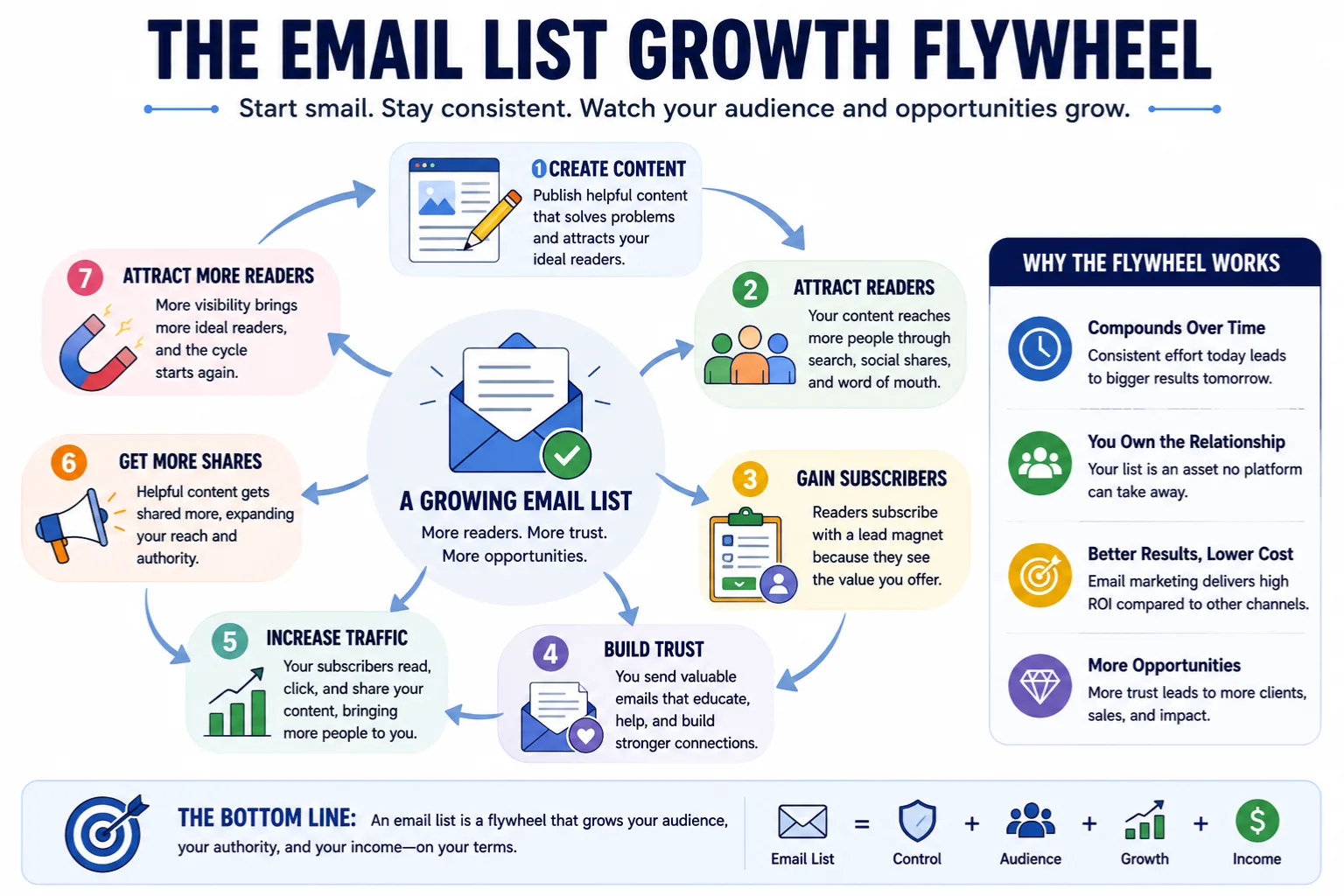
An email list changes that.
When someone joins your list, they give you direct access to their inbox. That means you can reach readers anytime without fighting algorithms or hoping your content gets shown to people. For freelance writers, bloggers, copywriters, and content creators, an email list becomes a long-term asset that keeps growing in value over time.
This article explains why writers need email lists, how email marketing helps build trust and income, and why starting early matters even if your audience feels small right now.
Why Writers Need Email Lists (Quick Summary)
Writers need email lists because they create direct connections with readers without relying completely on social media algorithms or Google traffic. Unlike followers on social platforms, email subscribers belong to an audience writers can reach anytime.
- Email lists help writers build trust and loyal audiences
- Subscribers convert better than casual website visitors
- Writers can promote services, affiliate products, and digital products directly
- Email marketing creates repeat traffic for blogs and websites
- Newsletters help freelance writers attract clients and build authority
- Email lists provide long-term stability when algorithms change
- Small email lists can still generate income and opportunities
Table of Content
- Why Writers Need Email Lists (Quick Summary)
- What Is an Email List for Writers?
- Why Social Media Followers Are Not Enough?
- An Email List Help Writers Build Real Relationships
- Writers Can Make Money Faster With Email Marketing
- Email List Protects Writers From Algorithm Changes
- Why Writers Should Start Building an Email List Early?
- Best Lead Magnet Ideas for Writers
- Best Email Marketing Platforms for Writers
- What Writers Should Send to Their Email List?
- Common Email Marketing Mistakes Writers Make
- How Email Lists Support Freelance Writers?
- How Bloggers and Content Creators Use Email Lists to Grow Traffic?
- Email Marketing vs Social Media for Writers
- Simple Steps to Start an Email List Today
- Key Takeaways
- Conclusion
- Frequently Asked Questions About Email Lists for Writers
What Is an Email List for Writers?
An email list is simply a collection of people who gave you permission to contact them through email. That’s it. Nothing complicated.
When someone visits your blog, reads one of your articles, or finds you through search engines, they can join your newsletter by entering their email address into a signup form. Once they subscribe, you can send them updates, writing tips, new articles, offers, or anything else connected to your content.
A lot of newer writers overthink this part. I did too at first. I thought email marketing was only for huge companies or internet marketers selling expensive courses. Turns out, even a tiny email list can become valuable if the people on it actually care about your writing.
And honestly? That’s the key most people miss.
An email list is not just a marketing tool. It’s a direct connection to readers who want to hear from you again.
That’s very different from social media.
On platforms like Instagram, X, TikTok, or Facebook, people might follow you for a second and completely forget you exist the next day. Social media algorithms decide who sees your content. Sometimes only a tiny percentage of your followers even see your posts.
I remember posting what I thought was a really useful writing thread once and barely anyone saw it. A few days later, a random low-effort post got more engagement. Super frustrating honestly.
Email works differently.
When someone joins your email list, they raise their hand and basically say, “Yeah, I want more from this person.” That intent matters a lot.
Subscribers are usually more engaged than social followers because they made an active decision to join your list. They trusted you enough to give you access to their inbox. That’s a bigger commitment than pressing a follow button while scrolling half asleep at midnight. Sounds funny, but it’s true.
This is why email subscribers are often more valuable than followers.
Writers with smaller email lists often make more money, get more replies, and build stronger communities than creators with massive social followings. A writer with 1,000 loyal subscribers can outperform someone with 100,000 passive followers. I’ve seen that happen over and over in blogging and freelance writing spaces.
The cool thing is writers can use email lists in many different ways.
Some writers send weekly newsletters with writing advice and productivity tips. Others share behind-the-scenes stories about freelancing, blogging, or building an online business. Some use email marketing to promote affiliate products, digital downloads, coaching, templates, or writing services.
You don’t even need complicated funnels at the start.
Simple emails work surprisingly well.
For example, writers often send:
- New blog post updates
- Personal lessons learned from writing online
- SEO writing tips
- AI writing prompt ideas
- Freelance client mistakes to avoid
- Recommended books and tools
- Content marketing tutorials
- Quick mindset emails for creators
- Behind-the-scenes business updates
Some of the best newsletters feel like emails from a smart friend instead of polished corporate marketing. That’s probably why readers connect with them more.
Another thing people don’t realize is email lists help writers create repeat readers. Without email, many visitors read one article and disappear forever. You worked hard to get that traffic, then poof… gone. Email gives readers a reason to come back.
That matters a lot if you run a blog, freelance business, or content website.
Over time, your email list becomes one of the few online assets you fully control. Algorithms change constantly. Platforms rise and fall. Traffic fluctuates. But an email list stays with you because you own the relationship with your audience.
That’s why experienced writers usually start caring about email marketing sooner or later. Most just wish they started earlier.
Why Social Media Followers Are Not Enough?
A lot of writers chase follower counts because the numbers feel exciting. You hit 1,000 followers. Then 5,000. Maybe one post goes viral and suddenly your notifications explode for a few days.
I’ve been there. It gives you this weird rush like things are finally working.
But after a while, you start noticing something frustrating. Your followers are not actually seeing your content consistently.
That’s because social media platforms control distribution through algorithms. Just because someone follows you does not mean your posts appear in their feed. In fact, many followers never see most of what you publish.
That part catches writers off guard.
You can spend two hours writing a thoughtful thread, a helpful LinkedIn post, or a detailed Instagram carousel only for the platform to show it to a tiny fraction of your audience. Then some random low-effort meme gets more reach than your best work. It honestly makes no sense sometimes.
Algorithms care about keeping users on the platform. They prioritize engagement signals, trends, watch time, and ad revenue. Your goals as a writer are different. You want readers to trust you, visit your website, join your newsletter, or hire you.
Those goals don’t always align with what platforms want.
And this creates a dangerous situation for writers who rely only on social media for traffic or audience growth.
The biggest problem is ownership.
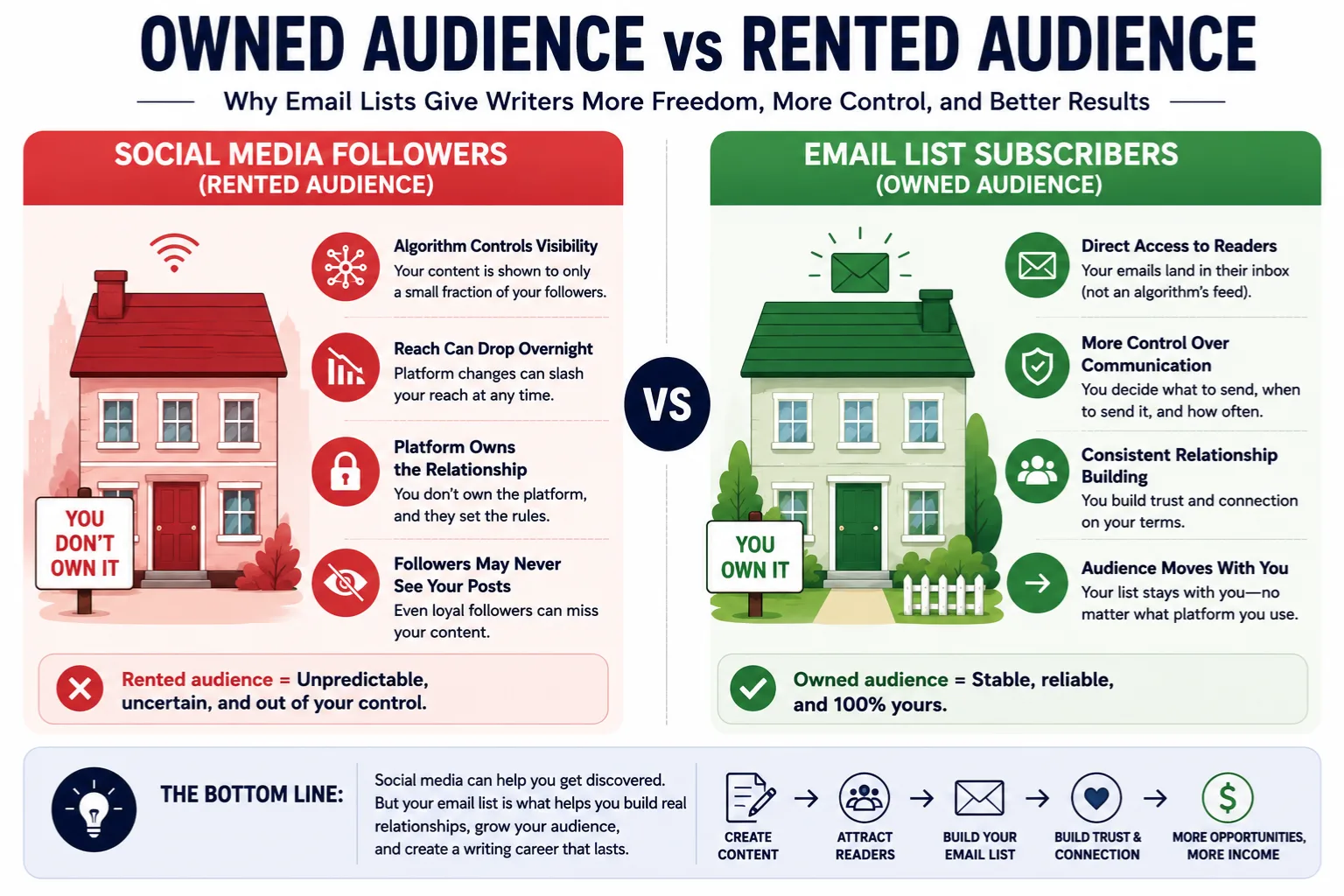
Your followers are technically not your audience. The platform owns access to them. That sounds dramatic, but it’s true. If your account gets suspended, hacked, restricted, or buried by algorithm changes, your reach can disappear overnight.
I watched this happen to a blogger a while back who built most of their business on one platform. Their engagement suddenly dropped hard after an update. Same content. Same posting frequency. Completely different results. They went from getting solid traffic daily to almost nothing in a couple weeks.
That’s scary when your income depends on visibility.
Platforms also change constantly. Features disappear. Organic reach drops. Rules shift without warning. One year short videos dominate. Then carousels. Then text posts. Then AI content floods feeds and everything gets noisy. Writers end up spending more time trying to “beat the algorithm” than actually writing useful content.
Honestly, it gets exhausting.
Organic reach has been declining on many platforms for years. More creators compete for attention now, which means your content fights harder for visibility. Even large accounts often complain about poor engagement unless they constantly adapt to trends.
That’s why writers need direct communication channels.
Email lists solve this problem because they remove the middleman. Instead of hoping an algorithm shows your content to followers, you send your message directly to subscribers. No fighting for feed placement. No praying the platform pushes your post.
If someone joins your email list, you can reach them anytime.
That changes everything.
A small email list with loyal readers often becomes more powerful than a huge social following filled with passive scrollers. Email subscribers usually open messages because they intentionally signed up to hear from you. That relationship feels more stable and personal.
There’s also less pressure.
Social media can feel performative sometimes. Writers start obsessing over likes, shares, impressions, and trends. You post something meaningful and refresh analytics ten times like a maniac. Been there too many times honestly. It can mess with your confidence if you let it.
Email feels calmer.
You write directly to people who already care about your work. No public metrics. No algorithm games. Just communication between you and the reader.
That’s one reason experienced writers eventually shift their focus toward building owned audiences instead of chasing followers forever. Social media still matters, sure. It can help writers grow visibility and attract new readers.
But relying on it alone is risky.
The smartest writers use social platforms as discovery tools while using email marketing to build long-term audience relationships they actually control.
An Email List Help Writers Build Real Relationships
One thing I noticed pretty quickly after starting an email list was how different the interaction felt compared to social media.
Social platforms feel crowded. Fast. Distracted.
People scroll past your content while standing in line somewhere or half-watching TV. Even when someone likes your post, it does not always mean they actually connected with what you wrote.
Email feels more intentional.
When someone opens your newsletter, it usually means they chose to spend a few minutes with your thoughts. That changes the entire dynamic between writer and reader. Instead of broadcasting content into a noisy feed, you’re showing up directly in someone’s inbox.
That feels personal in a way social media rarely does.
I still remember the first time a subscriber replied to one of my emails with a long message explaining how something I wrote helped them. Weirdly enough, that single reply felt more meaningful than hundreds of likes on social media. It reminded me there were actual humans reading behind the screen analytics.
That’s the power of email marketing for writers.
Readers start getting familiar with your writing voice over time. They notice your personality, your habits, your stories, and even the way you explain things. Small details matter more than people realize.
Maybe you always share honest lessons from freelancing mistakes.
Maybe your emails feel calm and practical while everyone else sounds aggressive and salesy.
Maybe you explain SEO or content writing in simple language instead of trying to sound smart.
Those patterns create familiarity.
And familiarity builds trust.
This is one reason consistent newsletters work so well for bloggers, freelance writers, and content creators. You don’t need every email to be groundbreaking. You just need readers to keep hearing from you regularly enough that you stay in their mind.
Consistency creates comfort.
A lot of people unsubscribe from writers not because the content is terrible, but because the writer disappears for three months, suddenly returns with a sales pitch, then vanishes again. That feels transactional.
Relationship-based marketing works differently.
Instead of constantly pushing products or services, writers focus on helping readers first. They send useful advice, personal stories, quick insights, helpful tools, or lessons learned through experience. Over time, readers begin trusting the writer naturally because the relationship feels genuine.
That trust affects everything.
Subscribers who trust you are more likely to:
- Read your blog posts
- Share your articles
- Buy your digital products
- Hire you for freelance work
- Recommend your newsletter
- Open future emails
- Click your links
This is why email subscribers usually convert better than random website visitors.
Trust shortens the distance between attention and action.
And honestly, trust is becoming more important online because people are tired of fake marketing. Most readers can instantly sense when someone only sees them as a number or potential sale. You know the type. Every email screams urgency and pushes another offer five seconds after joining the list. That approach burns people out fast.
Good writer newsletters feel human.
Some of my favorite emails from creators barely “market” anything at all. They simply tell stories, share lessons, or explain useful ideas clearly. Yet somehow those writers end up building stronger businesses because readers actually like hearing from them.
Another thing that surprised me was how often people reply to emails compared to social posts.
Replies happen way more than most new writers expect.
Readers ask questions. Share struggles. Thank you for specific articles. Sometimes they even tell you what content they want next. Those replies become incredibly useful because they show exactly what your audience cares about.
You rarely get that level of connection from a random social media like.
Email also creates a quieter environment for communication. There’s no public comment section full of distractions. No fighting for attention against trending content or viral videos. It’s just one person writing to another person.
That simplicity matters.
Over time, an email list becomes more than a marketing channel. It becomes a community built around your writing voice, ideas, and perspective. And for writers trying to grow an online business, that kind of audience relationship is incredibly valuable.
Writers Can Make Money Faster With Email Marketing
One of the biggest reasons writers eventually take email marketing seriously is simple.
It makes monetization easier.
Not overnight. Not magically. But compared to relying only on search traffic or social media followers, email usually shortens the path between creating content and earning income.
I didn’t fully understand this at first.
I thought making money online mostly came down to getting huge traffic numbers. More pageviews meant more opportunities, right? That’s partly true, but traffic alone does not always translate into income. I’ve seen blogs with decent traffic struggle financially because they had no direct relationship with readers.
An email list changes that dynamic.
When people consistently open your emails, they become much more familiar with your work, recommendations, and expertise. That trust makes subscribers more likely to take action when you eventually promote something.
For writers, that opens a lot of doors.
Freelance writers can promote services directly through email newsletters. Instead of constantly hunting for clients on job boards or social media, they can stay visible in subscribers’ inboxes every week. Over time, readers begin associating that writer with a specific skill or niche.
That’s huge for authority building.
Imagine someone reading your emails about SEO writing, email copywriting, or blogging tips for three months straight. When they suddenly need a writer, who do you think comes to mind first?
Probably you.
That’s one reason email marketing often brings in warmer leads than cold outreach. Subscribers already know your voice, your knowledge, and your style before they ever contact you.
Writers also use email lists to sell digital products.
This could be:
- Writing templates
- Prompt packs
- Freelance proposal examples
- Blogging guides
- Mini courses
- Swipe files
- Checklists
- Content calendars
- SEO tutorials
And honestly, small digital products tend to work really well with email audiences because the barrier feels low. Someone who trusts your writing advice might happily spend a few dollars on a helpful resource that saves them time.
Affiliate marketing becomes easier too.
This is something many bloggers overlook early on. Recommending products through blog posts is useful, but combining affiliate content with email marketing can increase clicks and conversions quite a bit. Subscribers are already engaged, so product recommendations feel more natural when they genuinely fit the audience.
For example, writers often recommend:
- Email marketing tools
- SEO software
- AI writing tools
- Web hosting
- Productivity apps
- Writing courses
- Blogging platforms
The important thing is relevance.
Readers can tell when recommendations are forced. I’ve unsubscribed from newsletters before because every email suddenly became a giant sales pitch for random products nobody asked about. It destroys trust fast.
But when writers recommend tools they actually use or explain how something helped them solve a real problem, readers respond differently. The recommendation feels useful instead of manipulative.
Email lists also help writers launch larger offers later.
Courses, memberships, coaching programs, consulting services, and workshops become much easier to sell when you already have an engaged audience. Trying to launch something expensive to strangers on social media is hard. Launching to readers who have been hearing from you weekly for months feels completely different.
Trust reduces hesitation.
And this is where conversion rates matter.
Email subscribers usually convert better than casual website visitors because they already crossed multiple trust barriers before buying anything. They subscribed voluntarily. Opened several emails. Read your content repeatedly. Became familiar with your approach.
That relationship compounds over time.
Even repeat traffic improves with email marketing. Every time you publish a new article, you can send readers back to your website instantly. Instead of waiting for Google rankings or hoping social media pushes your post, you already have a built-in traffic source.
That’s incredibly powerful for bloggers.
A lot of successful content sites quietly rely on newsletters to drive consistent traffic back to their articles. This repeat engagement can increase time on site, pageviews, affiliate clicks, and even brand recognition over time.
Another thing nobody really talks about enough is emotional stability.
Relying only on unpredictable traffic sources can make income feel shaky. One month things look great. The next month traffic dips and panic kicks in. Email lists create a more stable foundation because you’re building an audience you can reach directly whenever needed.
That stability matters more than people think.
Especially for writers trying to turn content creation into a long-term business instead of a temporary side project.
Email List Protects Writers From Algorithm Changes
If you spend enough time building content online, eventually you experience the pain of an algorithm update.
Almost every writer does at some point.
Maybe your blog traffic suddenly drops after a Google core update. Maybe your Instagram reach collapses for no obvious reason. Maybe a platform changes its recommendation system and your engagement gets cut in half overnight.
It feels awful because you usually don’t get a warning.
One day your content performs normally. The next day everything looks different and you’re refreshing analytics trying to figure out what happened. I remember checking traffic stats obsessively after one major search update years ago because several articles lost rankings almost instantly. Same content. Same site. Completely different visibility.
That experience changes the way you think about audience building.
A lot of writers unknowingly build their entire business on borrowed platforms. Google sends the traffic. Social media platforms distribute the content. YouTube recommends videos. Pinterest pushes pins.
That works great… until it doesn’t.
The problem is these systems constantly change.
Google updates its search algorithm thousands of times every year. Most changes are small, but major updates can completely reshape traffic patterns for websites. Social media platforms do the same thing. They tweak feeds, prioritize different content formats, change visibility rules, and push creators toward whatever keeps users active longer.
Writers end up adapting nonstop.
One month everyone says long-form content wins. Then short-form takes over. Then video dominates. Then AI-generated content floods feeds and organic reach becomes even harder. It can feel like trying to build a business on shifting sand sometimes.
That’s why email lists matter so much.
An email list gives writers stability because it creates a direct communication channel with readers that algorithms cannot fully control. If someone subscribes to your newsletter, you can still reach them even if your traffic dips or social engagement crashes.
That changes the level of risk dramatically.
This is where the idea of owned audience versus rented audience becomes important.
Social followers, search traffic, and platform audiences are basically rented. You benefit from them temporarily, but another company controls access to those people. They decide how much visibility you get and when.
Your email list is different.
You own the audience relationship.
Now obviously your email platform still exists between you and subscribers, but the connection itself belongs to you. Nobody can suddenly reduce your newsletter reach by 80% because an algorithm changed priorities. That level of control gives writers something rare online these days: predictability.
And honestly, predictability creates peace of mind.
I’ve seen creators lose huge amounts of traffic almost overnight because they depended too heavily on one source. Some bloggers built entire businesses around Facebook traffic years ago and got crushed when organic reach dropped. Others relied completely on Pinterest or Google search rankings and struggled after updates shifted visibility.
It happens constantly online.
The scary part is many creators don’t realize the danger until after traffic disappears. By then, rebuilding becomes much harder because they never created a direct audience connection outside the platform.
Email lists help prevent that situation.
Even a small newsletter can act like a safety net for writers. If search rankings fluctuate, you still have subscribers. If social engagement tanks, you can still promote new articles through email. If a platform disappears entirely someday, your audience relationship still exists.
That long-term protection matters more than most beginners realize.
Especially if you want writing to become a real business instead of just a hobby tied to random platform trends.
Another thing worth mentioning is emotional burnout.
Constantly depending on algorithms can make creators anxious. You start chasing metrics instead of focusing on useful work. Every traffic drop feels personal even when it’s caused by external platform changes outside your control.
Email feels steadier.
Instead of hoping platforms distribute your content fairly, you build direct relationships with readers who intentionally chose to hear from you. That creates a much healthier foundation over time.
Smart writers still use search engines and social media, of course. Those platforms are powerful discovery tools. But experienced creators usually stop relying on them as their only connection to an audience.
They use platforms to attract attention.
Then they use email lists to keep the relationship.
Why Writers Should Start Building an Email List Early?
Most writers wait too long to start an email list.
Seriously, almost everyone says the same thing later: “I wish I started sooner.”
I used to think email marketing was something you worried about after getting traffic. Like first you grow the blog, then maybe you start a newsletter once everything feels “official.” But that mindset delays one of the most important parts of building an online writing business.
Because audience growth compounds over time.
The earlier you start collecting subscribers, the more momentum you build quietly in the background while creating content. Even if your blog only gets a small amount of traffic at first, some readers will subscribe if your content helps them.
That matters more than people realize.
A lot of new writers dismiss small email lists because the numbers look tiny compared to social media. Ten subscribers doesn’t feel impressive. Neither does fifty. But those early subscribers are often the people who become your most loyal readers later.
They grow with you.
I remember seeing writers apologize for having “only” a couple hundred subscribers while completely ignoring how valuable those people actually were. If 200 people consistently open your emails and trust your advice, that’s already a real audience. Honestly, most local businesses would love direct access to 200 engaged people interested in what they offer.
Small lists still create opportunities.
Freelance writers land clients from small newsletters all the time. Bloggers get affiliate sales with modest subscriber counts. Some creators sell digital products to audiences smaller than people expect because trust matters more than massive numbers.
This is one of the biggest misconceptions online.
People assume you need giant audiences before email marketing becomes useful. In reality, smaller engaged lists often outperform huge disengaged audiences. A newsletter with 500 active readers can generate more business opportunities than a social account with 50,000 passive followers who barely pay attention.
Another reason to start early is practice.
Writing newsletters is a skill. Learning what readers respond to takes time. You gradually figure out subject lines, email structure, storytelling, pacing, and what types of content your audience enjoys most. Starting early gives you room to experiment without pressure.
That’s actually a good thing.
If you wait until you “need” email marketing later, you’ll probably feel overwhelmed trying to suddenly build a list, create lead magnets, write newsletters, and understand email platforms all at once. Growing gradually feels much easier mentally.
And honestly, consistency beats intensity here.
One subscriber a day may not sound exciting, but over a year that adds up. Same thing with writing emails regularly. Small consistent actions compound in ways that are hard to notice at first. Then suddenly you look back and realize your audience quietly became a real asset.
That slow growth creates stability.
The other danger of waiting too long is losing potential subscribers forever. Every blog visitor who leaves your site without joining your list may never come back. Same thing with social media followers who enjoy your content briefly before forgetting you exist.
I’ve made that mistake before.
There were periods where I focused only on publishing articles and ignored email signup forms completely. Looking back, it bothers me knowing how many readers probably disappeared because I never gave them a reason to stay connected. That traffic was temporary instead of long-term audience growth.
Writers often say things like:
- “I’ll start my newsletter after I get more traffic.”
- “I’m not experienced enough yet.”
- “Nobody would subscribe right now.”
- “I need the perfect lead magnet first.”
But perfection delays momentum.
Readers usually care more about useful content than polished branding anyway. Even a simple newsletter sharing writing lessons, blogging tips, or personal experiences can start attracting subscribers early.
And those first subscribers become important psychologically too.
When real people join your list, reply to emails, or tell you they enjoyed your content, writing starts feeling less invisible. You stop feeling like you’re publishing into an empty void online. That encouragement helps many writers stay consistent long enough to actually grow.
That’s huge because consistency is where most online writing businesses are built.
The writers who succeed long term are rarely the people who waited for the perfect moment. Usually they’re the ones who started small, stayed consistent, and kept building audience relationships little by little over time.
Best Lead Magnet Ideas for Writers
One of the fastest ways writers grow an email list is by offering a lead magnet.
A lead magnet is simply something valuable you give readers in exchange for their email address. Usually it helps them solve a problem, save time, or achieve a quick win.
The most important thing to understand is this:
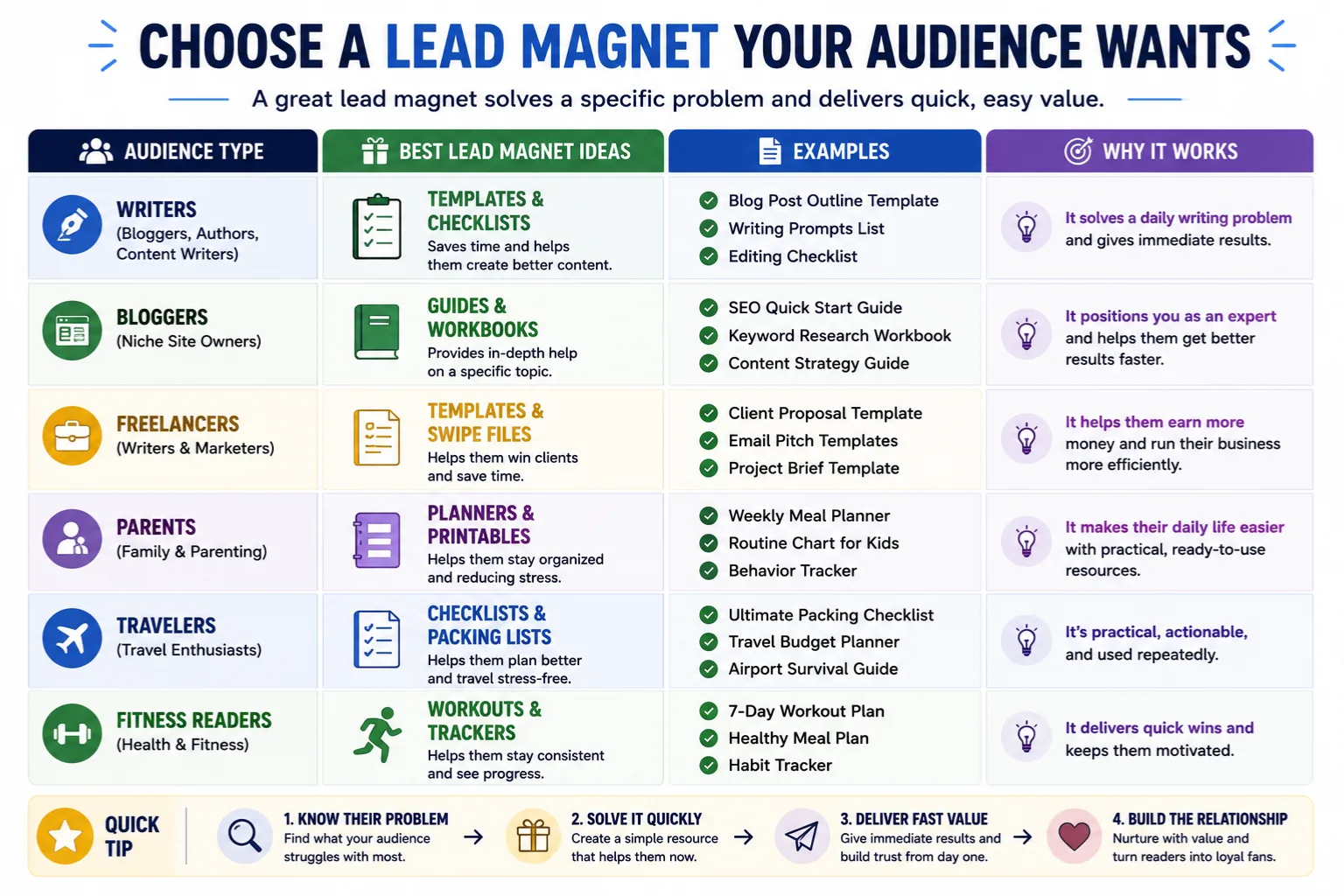
Your lead magnet should match your audience, not your profession.
Many writers make the mistake of creating resources they find useful instead of resources their readers want. A lead magnet only works when it solves a problem your audience already cares about.
For example, a travel writer’s audience probably doesn’t want SEO templates. A parenting writer’s audience probably doesn’t need freelance writing proposals. The best lead magnets are always connected to the topics readers came to your site to learn about.
Some effective lead magnet formats include:
Checklists
Checklists help readers complete a task without forgetting important steps.
Examples:
- Packing checklists
- Budgeting checklists
- Meal planning checklists
- Home maintenance checklists
- Blog publishing checklists
Templates
Templates save readers time by giving them a starting point.
Examples:
- Travel itineraries
- Budget spreadsheets
- Content calendars
- Workout plans
- Project planning templates
Guides
Focused guides help readers solve a specific problem quickly.
Examples:
- Beginner investing guide
- First-time traveler guide
- Healthy meal planning guide
- SEO starter guide
- Home organization guide
Swipe Files and Examples
People learn faster when they can see examples.
Examples:
- Headline examples
- Social media post examples
- Email examples
- Ad examples
- Resume examples
Tools and Resources
Helpful resources often attract highly engaged subscribers.
Examples:
- Calculators
- Worksheets
- Planners
- Prompt libraries
- Resource directories
Mini Email Courses
Instead of delivering a PDF, you teach readers through a short email series.
Examples:
- 5-Day Budget Challenge
- 7-Day Productivity Course
- Beginner Fitness Series
- Blogging Starter Course
- Travel Planning Bootcamp
The format matters less than the problem being solved.
A simple checklist that solves one specific problem will often outperform a 100-page ebook that tries to solve everything.
The best lead magnets are clear, useful, and closely aligned with what readers already want help with.
Best Email Marketing Platforms for Writers
Choosing an email marketing platform feels confusing when you first start.
There are dozens of tools. Everyone online claims their favorite platform is “the best.” Then you open pricing pages and suddenly you’re staring at words like automation, segmentation, workflows, triggers, and subscriber journeys like you’re trying to operate a spaceship.
Honestly, most beginner writers do not need complicated setups at the start.
Simplicity matters way more than advanced features early on.
I’ve seen writers spend days comparing software instead of actually building their email list. Meanwhile, someone else picks a simple platform, creates a signup form, and starts collecting subscribers immediately. Momentum usually beats perfection here.
The good news is most writers only need a few core features in the beginning:
- Email signup forms
- Landing pages
- Basic automations
- Simple newsletter sending
- Subscriber management
- Analytics like opens and clicks
That’s really it.
You do not need giant enterprise-level marketing systems to run a writing newsletter. In fact, overly complicated tools often become a distraction because writers end up tinkering with settings instead of creating useful content.
One reason beginner-friendly email platforms matter is consistency. If your email software feels confusing or stressful, you’re less likely to send newsletters regularly. Sounds obvious, but it’s true.
The easier the system feels, the more likely you are to actually use it.
That’s why many writers choose simple email marketing tools first before worrying about advanced features later.
One popular option is MailerLite.
A lot of beginner bloggers and freelance writers like it because the interface feels clean and easy to understand. It handles the basics well without overwhelming people. You can create forms, simple automations, landing pages, and newsletters pretty quickly even without technical experience.
I remember helping someone set up their first email list with MailerLite once and they were shocked by how fast the process actually was. They expected it to take days. Took maybe an hour to get everything running.
That simplicity reduces resistance.
Another well-known platform among creators is Kit (ConvertKit).
Kit became popular largely because it focuses heavily on creators, bloggers, and online businesses instead of giant corporate email marketing teams. The platform is designed around audience building, digital products, and creator-focused automation.
A lot of writers enjoy its subscriber tagging system because it helps organize audiences more naturally. For example, someone interested in blogging tips can receive different emails than someone interested in freelance writing or AI prompts.
That process is called segmentation.
And honestly, segmentation sounds scarier than it is.
It simply means grouping subscribers based on interests or actions so people receive more relevant emails. Instead of blasting every subscriber with identical content forever, you can personalize communication a little more.
For example:
- Bloggers receive SEO content
- Freelancers receive client acquisition tips
- Copywriters receive sales writing advice
That improves engagement because readers get emails matching what they actually care about.
Then there’s Beehiiv, which has grown quickly among newsletter creators recently.
Beehiiv focuses strongly on newsletter publishing and audience growth. A lot of creators like its modern interface and built-in growth features. It feels very creator-centered, especially for people building media-style newsletters or audience-focused brands.
Some writers prefer it because the platform makes newsletters feel like the main product instead of just an add-on marketing channel.
That’s becoming more common now.
Many writers are building standalone newsletters instead of relying only on blogs or social media platforms.
Automation is another thing writers hear about constantly.
But again, most beginners overcomplicate it.
Basic email automation simply means certain emails send automatically after someone subscribes. For example, you can create:
- Welcome emails
- Mini email courses
- Resource delivery emails
- Simple onboarding sequences
This helps new subscribers hear from you immediately without manually sending every message yourself.
Even one simple welcome email can make a huge difference. It introduces your writing voice, explains what subscribers can expect, and starts building trust early.
And honestly, trust matters more than fancy automation workflows.
A small engaged list with simple emails usually performs better than complicated funnels nobody enjoys reading.
One thing I’d recommend to writers is avoiding platform paralysis. There’s no perfect email tool. Every platform has strengths, weaknesses, pricing changes, and annoying quirks eventually. The important thing is starting with something simple enough that you consistently build your list and communicate with readers.
That’s what creates results over time.
Not endlessly comparing software reviews while your signup form still doesn’t exist.
What Writers Should Send to Their Email List?
One of the biggest reasons writers delay starting a newsletter is because they think they’ll run out of things to say.
I used to think that too.
You imagine subscribers sitting there expecting brilliant essays every week like you suddenly became a full-time magazine columnist overnight. That pressure makes email marketing feel intimidating before it even starts.
But honestly, most successful writer newsletters are much simpler than people expect.
Readers usually want useful, relatable, and consistent emails more than perfectly polished masterpieces.
Weekly writing tips are one of the easiest places to start.
These emails do not need to be long either. Sometimes a quick practical lesson performs better than giant essays nobody finishes reading. Writers appreciate advice they can apply immediately.
For example:
- How to write better intros
- Blog formatting tips
- SEO writing mistakes
- Freelance client lessons
- Ways to improve readability
- Content planning systems
- Simple productivity habits
The key is specificity.
Generic advice feels forgettable. But real-world lessons based on experience tend to connect much better. I once sent a short email explaining how changing article formatting improved average reading time on a blog. Nothing groundbreaking. Yet it got more replies than a heavily planned newsletter I spent hours polishing.
That taught me something important.
Useful beats impressive.
Personal lessons and mistakes also make newsletters feel more human. Readers connect with honesty because most people online only share wins. Meanwhile, writers quietly struggle with procrastination, inconsistent traffic, bad clients, burnout, imposter syndrome, and self-doubt all the time.
Talking about those experiences helps readers feel understood.
You do not need dramatic stories either. Even small lessons work:
- A content strategy that failed
- A client red flag you ignored
- A writing habit that improved focus
- A traffic drop that taught you something
- A mistake that wasted time or money
Those moments create relatability.
Honestly, some of the best newsletters feel like conversations instead of marketing campaigns. That tone builds stronger audience relationships over time because readers begin trusting the writer behind the content.
Blog post updates are another easy newsletter idea.
Whenever you publish a new article, you can email subscribers a short introduction explaining why the post matters and what readers will learn. This brings repeat traffic back to your website consistently.
A lot of bloggers underestimate how important that is.
Without email, readers often consume one article and disappear forever. Newsletters create a habit where subscribers regularly return to your content. Over time, that repeat engagement strengthens audience loyalty.
Behind-the-scenes insights work surprisingly well too.
People enjoy seeing the process behind online writing because most creators only show finished results publicly. Sharing small details about how you research content, structure articles, organize ideas, or manage freelance work can make newsletters feel more personal.
For example:
- Your writing workflow
- SEO research process
- Content planning systems
- AI tools you use
- Productivity struggles
- Website growth updates
That transparency creates connection.
Content writing tutorials are another strong option for writer newsletters. Teaching practical skills naturally positions you as someone readers learn from consistently. And honestly, teaching through email often feels easier than creating giant blog posts because newsletters can stay focused on one small idea.
Small focused lessons usually perform better anyway.
Helpful tools and resources also make newsletters valuable without requiring tons of original writing every time. Writers constantly look for things that save time or improve workflow.
You can recommend:
- Writing tools
- SEO platforms
- AI apps
- Grammar checkers
- Productivity systems
- Browser extensions
- Content research resources
But context matters.
Random tool lists feel shallow. Readers respond better when you explain why something helped you personally or solved a specific problem. Even a simple explanation like “this tool helped me cut outlining time in half” creates more interest than generic promotion.
Storytelling matters too.
Stories keep readers engaged because humans naturally remember experiences better than abstract advice. A quick story about a difficult client, a publishing mistake, or a lesson learned while building a blog often teaches more effectively than pure instruction alone.
That emotional layer makes newsletters easier to connect with.
And honestly, this is where many writers go wrong with email marketing.
They turn newsletters into nonstop promotion.
Every email becomes:
- Buy this
- Click this
- Join this
- Limited-time offer
- Don’t miss out
That gets exhausting fast.
People subscribe because they want value, insight, entertainment, or useful guidance. If every message feels like a sales pitch, trust fades quickly. I’ve unsubscribed from newsletters where the writer barely shared anything useful anymore because every email pushed another product.
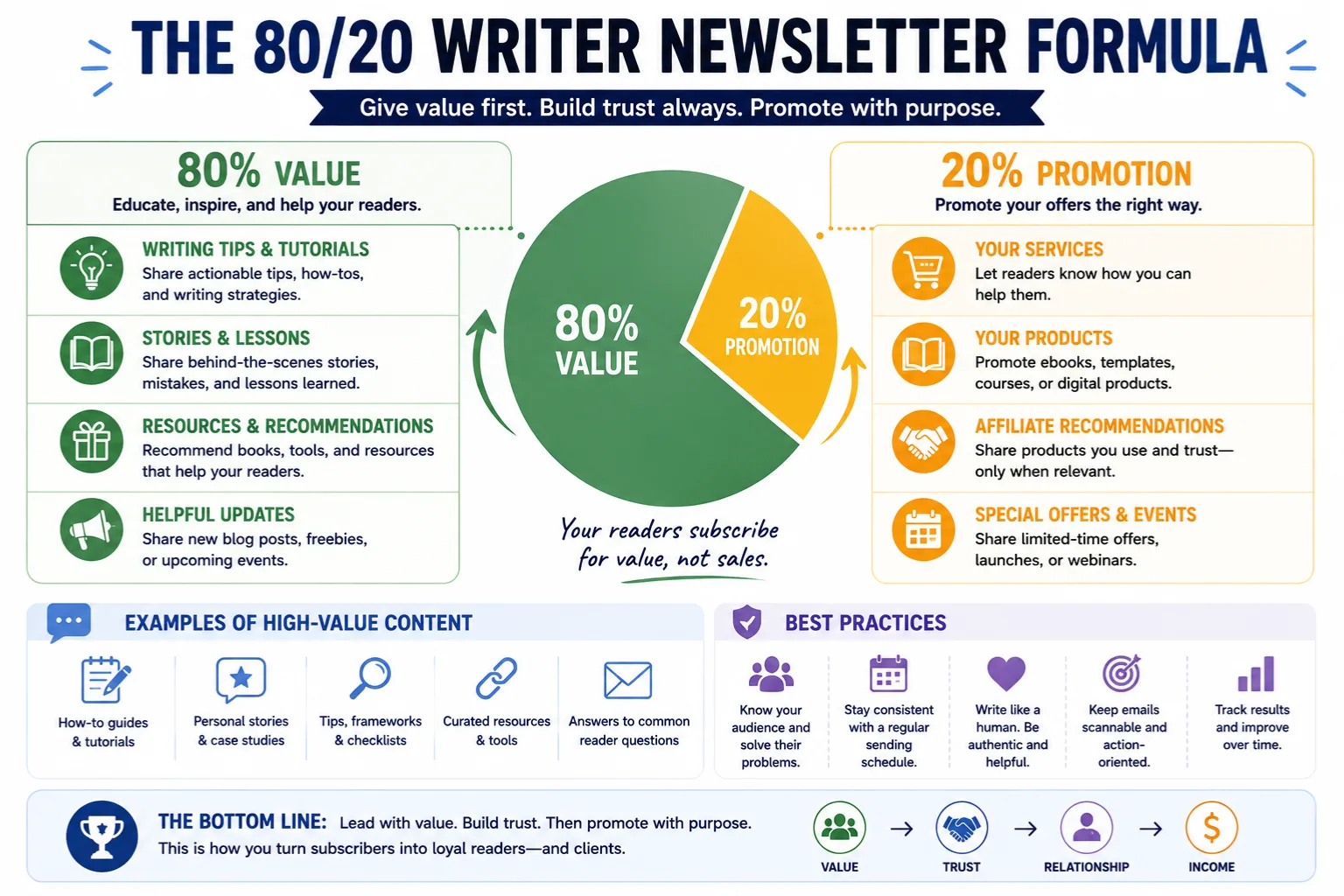
Good writer newsletters balance value and promotion naturally.
Most emails should help the reader in some way. Then when you occasionally recommend a product, service, or article, subscribers are much more receptive because the relationship already feels genuine.
That’s the difference between audience building and constant selling.
One creates long-term trust.
The other burns people out.
Common Email Marketing Mistakes Writers Make
Most writers make the same email marketing mistakes in the beginning.
Honestly, that’s normal.
Email marketing sounds simple from the outside. Collect subscribers. Send emails. Build relationships. But once you actually start, you realize there are small habits and decisions that affect whether people stay subscribed or quietly disappear.
One of the biggest mistakes is waiting too long to start.
This happens constantly.
Writers tell themselves they’ll create a newsletter later after getting more traffic, publishing more articles, or feeling more experienced. I did that too for a while. Looking back, it was mostly fear disguised as “preparation.”
The problem is delayed audience building creates lost opportunities.
Every day your blog or social content exists without a signup system, potential subscribers leave without any long-term connection to your work. Some of those readers might have become loyal fans later. Instead, they disappear because there was no reason to stay connected.
Another common mistake is sending only promotional emails.
This kills trust fast.
Nobody enjoys joining a writer’s newsletter only to receive endless sales pitches immediately. You know the type:
- Buy my course
- Limited-time offer
- Last chance
- Huge discount
- Don’t miss this
After a few emails like that, people stop opening messages entirely.
Readers subscribe because they expect value first. Helpful advice, stories, insights, tools, lessons, or entertainment. Promotion works better when it feels naturally connected to useful content instead of constant pressure.
I’ve unsubscribed from newsletters where every message felt like walking into a used car dealership. Exhausting honestly.
Good email marketing for writers feels conversational, not aggressive.
Subject lines are another area writers often overlook.
A boring subject line quietly destroys open rates no matter how good the actual email is. If subscribers never open the message, the content inside does not matter much.
And honestly, writing strong subject lines takes practice.
Generic lines like:
- Weekly Newsletter #14
- New Blog Post
- Update From My Site
…usually don’t create curiosity or emotional connection.
You do not need clickbait either. In fact, overly hypey subject lines often feel spammy. Simple curiosity works better.
Something like:
- The blogging mistake I repeated for months
- Why my traffic suddenly dropped
- A small writing habit that helped me focus
- What most freelance writers ignore early on
Those feel more human and specific.
Overcomplicated funnels are another mistake newer writers make after watching too many marketing videos online.
They try building giant automated systems before even sending regular newsletters consistently. Suddenly there are:
- 12-email sequences
- Branching automations
- Complex segmentation rules
- Multiple lead magnets
- Endless workflows
Meanwhile they barely have subscribers yet.
Honestly, simple usually works better early on.
A basic signup form, welcome email, and consistent newsletter can outperform giant complicated systems most beginners never fully maintain anyway. Complexity creates friction. Friction creates inconsistency.
And inconsistency quietly hurts email lists over time.
Ignoring welcome emails is another missed opportunity.
This one matters more than people realize.
When someone subscribes, they’re paying the most attention they’ll probably ever give your emails initially. That first impression shapes whether they continue opening future newsletters. Yet many writers either skip welcome emails completely or send something cold and robotic.
A good welcome email should feel personal.
It can explain:
- What readers can expect
- Who you help
- Why you started writing
- Helpful resources to begin with
- Your overall approach or philosophy
Even a short friendly welcome message builds connection immediately.
Another huge issue is not emailing consistently.
Writers often disappear for months, then randomly return with a sales pitch. That pattern confuses subscribers because there’s no relationship rhythm anymore. Readers forget who you are when emails become too inconsistent.
Consistency builds familiarity.
And familiarity builds trust.
This does not mean emailing daily either. Most writers honestly do fine with weekly or biweekly newsletters. The important part is creating a predictable communication habit readers recognize over time.
I’ve seen small newsletters grow steadily simply because the writer showed up consistently without trying to overcomplicate everything.
One mistake that rarely gets discussed enough is obsessing over subscriber count.
Numbers can become distracting fast.
Writers compare themselves constantly:
- “They have 50,000 subscribers.”
- “My list is too small.”
- “Nobody cares about my emails.”
But subscriber count alone means very little.
A smaller engaged list often performs far better than a giant disengaged audience. I’ve seen newsletters with modest subscriber numbers generate freelance clients, affiliate income, digital product sales, and strong reader communities because subscribers genuinely trusted the writer.
Engagement matters more than vanity metrics.
Replies matter. Opens matter. Relationships matter.
Honestly, many writers would benefit from focusing less on rapid list growth and more on becoming the kind of writer people actually look forward to hearing from regularly.
That mindset changes everything about email marketing.
How Email Lists Support Freelance Writers?
A lot of freelance writers focus heavily on finding new clients but ignore one of the best long-term client acquisition tools available to them.
Their email list.
At first, that probably sounds strange. Most people associate newsletters with bloggers, online creators, or internet marketers. But email marketing can be incredibly valuable for freelance writers too, especially if you want clients coming to you instead of constantly chasing work.
That shift changes everything.
I remember spending way too much time refreshing job boards and sending cold pitches years ago. It felt exhausting because every opportunity started from zero. Nobody knew who I was. Nobody trusted my work yet. Every conversation required convincing people I could actually help them.
An email list solves part of that problem naturally over time.
When potential clients subscribe to your newsletter, they begin seeing your expertise regularly. They read your writing tips, marketing insights, SEO advice, or content strategy lessons week after week. Gradually, you stop feeling like a stranger.
That familiarity matters a lot in freelance writing.
Clients rarely hire writers only because of technical skill anymore. They hire people they trust to understand their business, audience, and communication style. Consistent newsletters quietly build that trust before a client ever reaches out.
And honestly, this creates warmer leads than random cold outreach most of the time.
Email newsletters also help freelance writers showcase expertise without constantly “selling” themselves directly. Instead of repeatedly saying “I’m a good writer,” you demonstrate it through useful content.
That’s much more powerful.
For example, if you specialize in:
- SEO writing
- SaaS content
- Email copywriting
- B2B blogging
- Content strategy
- AI content workflows
…your newsletter can revolve around those topics naturally. Over time, subscribers begin associating you with that niche automatically.
That’s how authority gets built quietly.
A writer who consistently shares useful SEO insights starts becoming “the SEO writer” in readers’ minds. Someone who teaches email marketing regularly becomes associated with email copywriting expertise. This positioning happens gradually through repetition and consistency.
And honestly, authority online often comes from clarity and consistency more than flashy branding.
Another huge advantage of newsletters is staying top-of-mind with prospects.
This matters more than many freelance writers realize.
Sometimes clients do not need a writer immediately when they first discover you. Maybe they bookmark your site, follow you on LinkedIn, or read one article. Without an email list, there’s a good chance they completely forget about you later.
Newsletters keep the relationship alive.
Even simple weekly emails help remind readers you exist and understand your niche well. Then when a content need suddenly appears inside their business, your name already feels familiar.
That timing effect is powerful.
I’ve seen freelance writers land projects months after someone first subscribed to their list because the newsletter kept reinforcing trust quietly in the background. Without email, those opportunities probably would’ve disappeared completely.
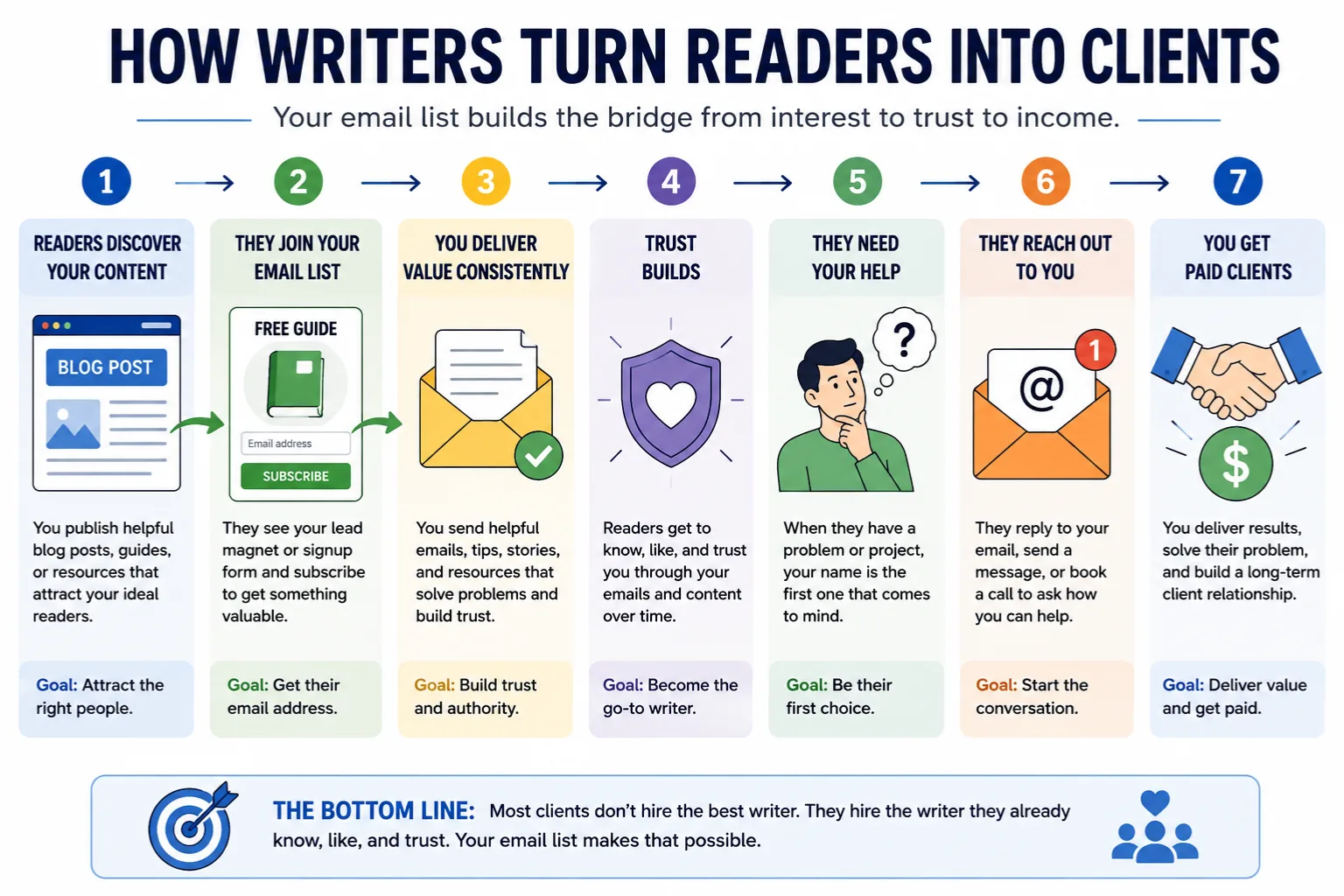
Email lists also turn readers into paying clients over time.
This is especially true for writers with blogs or educational content. Someone may first discover your site through a Google search about blogging, SEO, or content marketing. Then they join your newsletter because they enjoyed your advice.
Weeks later they realize:
“This person actually understands content strategy really well.”
That’s when inquiries happen.
The cool thing is newsletters create multiple trust-building moments instead of relying on one impression alone. Every helpful email becomes another reason readers see you as credible.
And honestly, many freelance writers underestimate how much their newsletter acts as portfolio proof.
Clients judge writers partly through writing quality itself. Your emails demonstrate:
- Communication style
- Clarity
- Consistency
- Teaching ability
- Personality
- Strategic thinking
All without needing formal pitching.
In some ways, a newsletter becomes a living portfolio because prospects regularly experience your writing in real time instead of only viewing static samples on a website.
That ongoing exposure builds confidence.
Another underrated benefit is relationship depth. Social media posts disappear quickly in crowded feeds. Emails feel more direct and personal. Subscribers often reply with questions, business problems, or feedback, which can naturally lead to conversations and opportunities later.
That interaction builds stronger professional relationships than passive social engagement usually does.
And honestly, freelance writing feels less stressful when you have multiple ways to attract work besides constant cold outreach. Email lists create a system where your audience, authority, and opportunities compound gradually over time.
That’s why many experienced freelance writers eventually focus heavily on audience building instead of only client hunting.
Because audiences create leverage.
And leverage creates stability.
How Bloggers and Content Creators Use Email Lists to Grow Traffic?
One thing many bloggers realize eventually is this:
Getting traffic once is hard enough.
Getting readers to come back consistently is even harder.
Most people discover a blog through search engines, social media, Pinterest, YouTube, or referrals. They read one article, maybe skim another, then disappear forever. That’s normal internet behavior honestly. Attention spans are short and people jump between content constantly.
Email lists help solve that problem.
Instead of hoping readers remember your website later, you create a direct way to bring them back whenever you publish something new. Every email becomes another opportunity to reconnect with your audience and send traffic back to your content.
That repeat traffic adds up more than people think.
I noticed this clearly after starting regular newsletters. Articles stopped relying only on Google rankings for visibility because subscribers would visit the site almost immediately after receiving emails. Even older posts started getting traffic again when linked naturally inside newsletters.
That creates momentum.
A lot of bloggers quietly use newsletters as traffic engines behind the scenes. Whenever they publish a new article, they send subscribers a short email explaining why the post matters and what readers will learn. That initial burst of traffic helps articles gain attention faster.
And honestly, repeat visitors are valuable.
Someone who returns to your blog multiple times usually spends more time reading, clicks more pages, and trusts your content more than random first-time visitors. Those engagement signals matter because they often improve overall website performance over time.
Session duration tends to increase too.
Email subscribers already know your writing style, so they’re more likely to stick around and explore additional content instead of bouncing away immediately. I’ve personally noticed newsletter traffic usually behaves differently than random social traffic. Subscribers often read more carefully because they intentionally clicked through.
That audience familiarity matters.
Email marketing also supports SEO indirectly in several ways.
Now obviously newsletters themselves do not directly improve Google rankings overnight. But email lists can strengthen many behaviors search engines care about:
- Repeat visits
- Increased pageviews
- Longer reading sessions
- More brand searches
- Higher engagement
- More content sharing
Those patterns help blogs grow stronger over time.
One underrated strategy bloggers use is promoting cornerstone content through email.
Cornerstone articles are usually the most important long-form resources on a website. These posts target major topics and often drive long-term search traffic. The problem is new readers may never discover them naturally unless they’re promoted consistently.
Email fixes that.
For example, if you run a writing blog, your cornerstone content might include:
- Beginner blogging guides
- SEO tutorials
- Freelance writing roadmaps
- Email marketing basics
- Content strategy articles
Newsletters allow you to repeatedly direct subscribers toward those important resources without relying only on internal links or search rankings.
This is especially useful because most readers do not explore websites deeply on their own. You often need to guide them intentionally toward your best content.
Another major benefit is audience loyalty.
People who regularly read your emails begin feeling connected to your content ecosystem over time. They stop being random visitors and start becoming returning readers who actively look for your articles, recommendations, and updates.
That relationship changes blog growth completely.
Loyal readers:
- Share your content more often
- Open future emails consistently
- Recommend your site to others
- Leave comments and replies
- Click internal links
- Trust your recommendations
Those behaviors create stronger audience communities over time.
Honestly, this is why many successful bloggers focus heavily on newsletters now instead of relying only on SEO or social media traffic. Search rankings fluctuate constantly. Social reach changes overnight. But email subscribers remain a stable audience source you can reach directly anytime.
That stability matters.
Another thing I noticed is newsletters help blogs feel more alive. Without email, content can start feeling disconnected because readers only arrive through random Google searches. Newsletters create continuity between articles, ideas, and audience conversations.
You’re not just publishing isolated posts anymore.
You’re building an ongoing relationship with readers through consistent communication.
And that consistency creates repeat visitors naturally.
Over time, some subscribers stop waiting for emails entirely because your content becomes part of their regular routine. They check your site directly. Search your name intentionally. Recommend your articles to friends.
That’s the kind of audience growth most bloggers actually want.
Not just temporary clicks.
But readers who keep coming back.
Email Marketing vs Social Media for Writers
A lot of writers treat email marketing and social media like competing strategies.
But honestly, the smartest creators usually use both together.
The real difference is understanding what each platform does best.
Social media is great for discovery.
Email marketing is better for relationships.
Once you understand that, everything starts making more sense.
Social platforms help writers get seen by new people quickly. A single LinkedIn post, X thread, TikTok video, or Instagram carousel can suddenly reach thousands of people overnight if the algorithm pushes it. That kind of visibility is powerful, especially when you’re still growing an audience.
But visibility and connection are not the same thing.
Social media engagement often looks bigger on the surface because you can see public likes, comments, shares, and views. But a lot of that engagement is shallow. People scroll fast. Attention jumps constantly. Someone might like your post and completely forget about it ten seconds later.
Email engagement feels different.
Subscribers intentionally open messages because they already care about your content. They spend more focused time reading. They reply more often too. Honestly, some of the best audience conversations happen quietly through email instead of public comment sections.
That’s one reason email subscribers usually convert better than social followers.
The relationship already feels more established.
I noticed this clearly after comparing traffic from social media versus newsletters. Social traffic sometimes brought large spikes of visitors, but email traffic often produced better results overall:
- More pageviews per visitor
- Longer reading sessions
- More replies
- More affiliate clicks
- More client inquiries
The quality felt different.
People arriving from newsletters already trusted the content before clicking. Social visitors were often colder because they discovered the post randomly while scrolling.
Ownership is another huge difference.
Social audiences are rented.
Email audiences are owned.
That idea sounds dramatic at first, but it becomes obvious once you spend enough time online. Social platforms control who sees your content, how often it appears, and what formats get prioritized. Algorithms decide your visibility.
And those algorithms change constantly.
One month your posts perform well. Then reach suddenly drops for no clear reason. Maybe the platform shifted priorities toward short videos or trending topics. Maybe competition increased. Maybe organic reach declined again.
Writers have almost no control over those changes.
Email works differently because you control the communication channel more directly. If someone subscribes to your newsletter, you can reach them without depending entirely on feed algorithms.
That stability matters for long-term growth.
Especially if writing is part of your business.
Long-term sustainability is honestly where email marketing starts pulling ahead for many creators. Social media can generate fast attention, but maintaining visibility there often requires constant posting, trend chasing, and platform adaptation.
That gets tiring.
I’ve seen writers burn themselves out trying to keep up with every algorithm shift while neglecting deeper audience relationships completely. They become trapped in endless content production cycles where visibility disappears the second they stop posting.
Email lists age differently.
Subscribers gained years ago can still read your content today if you consistently nurture the relationship. That creates compounding audience growth instead of temporary spikes of attention.
And honestly, compounding matters way more than virality long term.
That said, social media still plays an important role for writers.
It’s one of the best discovery tools available.
Most people will not randomly discover your newsletter unless something introduces them to your work first. Social platforms help attract those initial readers. A useful thread, short video, or educational post can lead someone toward your blog or email signup page.
That’s why combining both strategies works best.
Social media brings attention.
Email keeps the relationship alive.
For example, a writer might:
- Publish helpful LinkedIn posts
- Share blog content on X
- Create short educational videos
- Post writing tips on Instagram
Then direct interested readers toward an email list for deeper content, resources, or weekly newsletters.
That creates a much healthier system.
Instead of relying completely on algorithms, writers gradually move casual followers into owned audience relationships they control more directly.
Another important difference is pressure.
Social media often feels performative because everything happens publicly. Writers start thinking about metrics constantly:
- Likes
- Shares
- Views
- Comments
- Virality
Email feels quieter.
There’s less noise and less pressure to constantly impress strangers. You’re communicating directly with readers who already chose to hear from you. That environment usually creates deeper trust and more thoughtful engagement over time.
And honestly, many writers eventually realize they prefer that slower, steadier connection model.
Not because social media is bad.
But because building long-term audience relationships feels more sustainable than endlessly chasing attention.
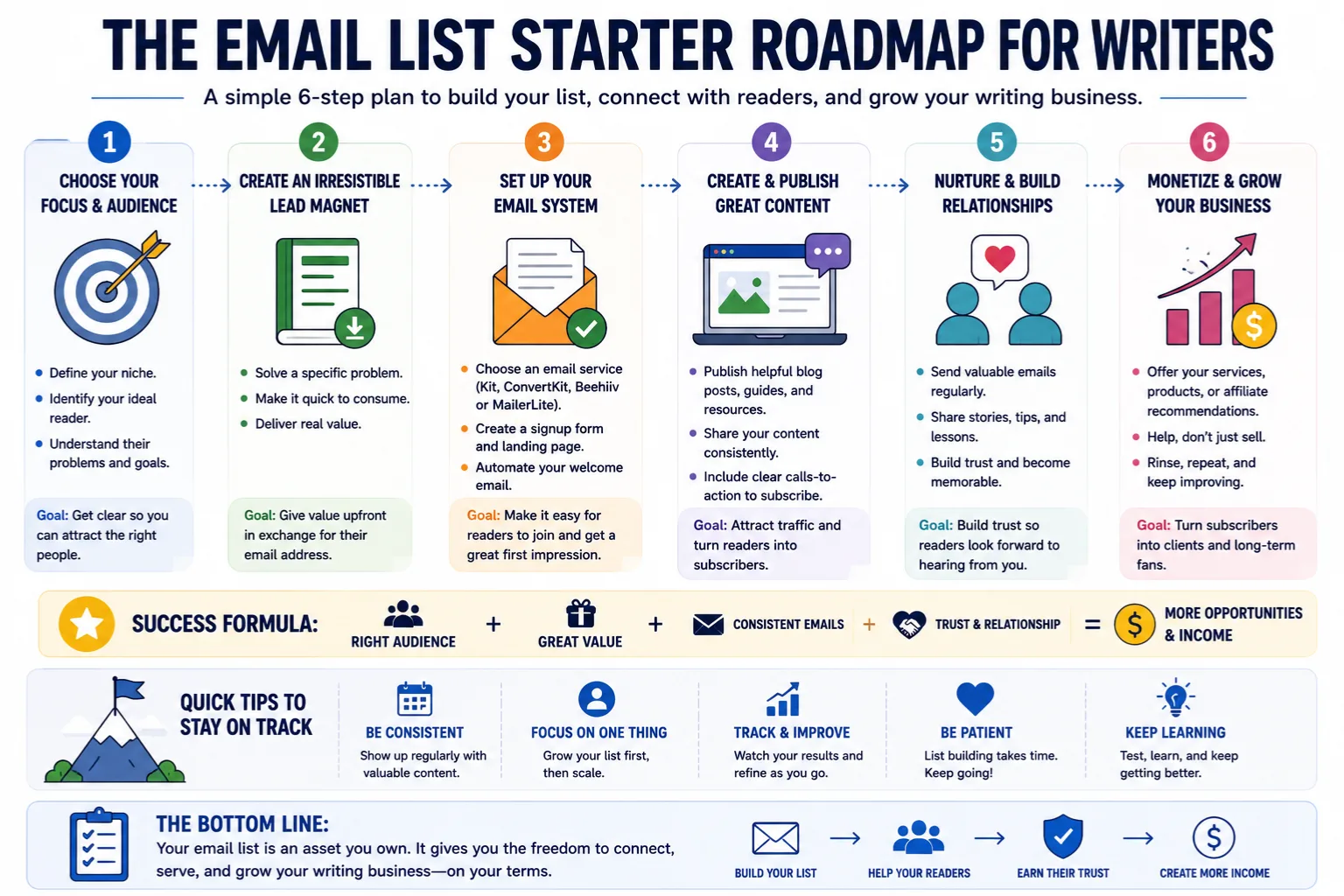
Simple Steps to Start an Email List Today
Starting an email list feels intimidating until you actually sit down and do it.
Then you realize the technical side is much simpler than your brain made it seem.
Honestly, most writers can get a basic email list running in a single afternoon if they stop overthinking everything. The hardest part is usually mental resistance, not the setup itself.
I remember delaying my first newsletter because I thought I needed a polished website, fancy branding, complicated funnels, and some genius lead magnet before starting. None of that was true. Looking back, I should have started with something simple much earlier.
That’s usually the best approach for writers.
Pick an email platform first.
You do not need the “perfect” tool. You just need something beginner-friendly that lets you collect subscribers and send emails consistently. Platforms like MailerLite, ConvertKit, or Beehiiv work well for most writers starting out.
Try not to get stuck comparing software for two weeks.
Seriously.
Writers sometimes spend more time researching email tools than building the actual list. Pick one, learn the basics, and move forward. You can always switch later if needed.
Once your platform is ready, create a signup form.
This is simply the box where readers enter their email address to subscribe. Most email platforms make this pretty easy now. Usually you choose a headline, customize a few fields, then copy and paste the form onto your website.
Keep the messaging simple.
Instead of generic lines like:
- Join my newsletter
- Subscribe for updates
…try explaining the actual benefit readers get.
Something like:
- Weekly writing tips for beginners
- Simple SEO lessons for bloggers
- Freelance writing advice without fluff
Specificity helps people understand why subscribing matters.
Adding a lead magnet makes signup forms perform much better too.
People are more likely to subscribe when they receive something useful immediately. This could be:
- Writing checklist
- Blog post template
- SEO guide
- AI prompt pack
- Freelance proposal example
- Mini email course
Honestly, your lead magnet does not need to be huge. Small practical resources often convert better than giant ebooks because readers can use them quickly.
One thing I learned over time is placement matters a lot.
Writers often hide signup forms in random places nobody notices. Then they wonder why subscriber growth feels slow. If readers never see the form, they obviously can’t subscribe.
Place signup forms where readers naturally pay attention:
- Inside blog posts
- At the end of articles
- On your homepage
- In sidebar sections
- Through popup forms carefully
- On dedicated landing pages
I’ve personally seen article-level signup forms work well because readers are already engaged with the topic when they appear.
Then comes something many writers ignore completely: the welcome email.
This matters way more than people think.
Your welcome email is often the first real interaction subscribers have with you after joining the list. It sets expectations and starts building trust immediately. You do not need anything complicated here either.
A simple welcome email can include:
- A quick introduction
- What subscribers can expect
- Your best articles or resources
- Why you started writing online
- Encouragement to reply
That last part matters.
Inviting replies makes newsletters feel more personal instead of robotic. Some of the best audience insights come from subscriber replies honestly.
After setup, the main goal becomes consistency.
This is where many writers struggle.
They get excited setting everything up, send one or two emails, then disappear for three months because they overcomplicated the process mentally. Consistency matters much more than perfection here.
You do not need brilliant essays every week.
Simple value-driven emails work surprisingly well:
- Writing lessons
- SEO tips
- Personal experiences
- Blog updates
- Useful tools
- Content tutorials
- Mistakes you learned from
The important thing is helping readers consistently in some way.
And honestly, the more human your emails feel, the better. Readers connect with clarity, honesty, and practical usefulness far more than polished corporate marketing language.
Finally, track a few basic metrics without obsessing over them.
Most email platforms show:
- Open rates
- Click rates
- Subscriber growth
- Unsubscribes
These numbers help you understand what readers respond to over time. For example, certain subject lines may consistently get higher opens. Some topics may attract more clicks. That feedback helps improve future newsletters naturally.
But try not to stare at analytics constantly.
A lot of writers turn email marketing into another stress source by obsessing over every percentage change. Focus more on building genuine relationships and sending useful content regularly.
That’s what grows strong email lists long term.
Not chasing perfect metrics every single week.
Key Takeaways
- Email lists help writers build direct relationships with readers without depending completely on social media or search engine algorithms.
- Email subscribers are usually more engaged and more likely to become clients, customers, or loyal readers than casual followers.
- Writers can use email marketing to promote blog posts, freelance services, affiliate products, digital downloads, and newsletters.
- Even small email lists can generate traffic, income opportunities, and long-term audience growth.
- Consistency matters more than perfection. Helpful and honest emails build trust faster than overly polished marketing.
- Starting an email list early gives writers long-term stability and creates an audience they actually own.
Conclusion
A lot of writers spend years chasing more traffic, more followers, and more visibility without realizing they’re building on platforms they do not control.
That’s the real reason email lists matter so much.
An email list gives writers something stable in an online world that constantly changes. Algorithms shift. Social reach drops. Search rankings fluctuate. Platforms come and go. But an email list creates a direct connection with readers that belongs to you.
That relationship becomes incredibly valuable over time.
And honestly, you do not need thousands of subscribers to benefit from email marketing. Small engaged lists can still bring freelance clients, affiliate income, blog traffic, digital product sales, and long-term audience growth.
The important thing is starting.
Most writers wait too long because they think they need:
- More experience
- More traffic
- Better branding
- Perfect newsletters
- Bigger audiences
But audience building works best when it grows gradually in the background while you continue writing and publishing content consistently.
Small actions compound.
One subscriber turns into ten. Ten turns into one hundred. Then suddenly you have readers opening your emails every week, replying to your messages, sharing your articles, and trusting your recommendations.
That does not happen overnight.
But it does happen through consistency.
And honestly, consistency matters much more than perfection in email marketing. Readers do not expect flawless polished essays every time. Most simply want useful, honest, and relatable content from someone they trust.
That’s why many successful writer newsletters feel surprisingly simple.
They focus on helping people.
So if you’ve been putting off starting an email list, this is probably your sign to stop waiting. Pick a simple email platform like MailerLite, ConvertKit, or Beehiiv, create a basic signup form, and begin building your audience one subscriber at a time.
You do not need to build everything perfectly today.
You just need to start building something you actually own.
Frequently Asked Questions About Email Lists for Writers
Do writers really need an email list?
Yes. An email list gives writers direct access to their audience without depending completely on search engines or social media algorithms. It helps bloggers, freelance writers, and content creators build long-term relationships, increase repeat traffic, and create more stable income opportunities online.
How many email subscribers do writers need?
Writers do not need huge subscriber numbers to see results. Even a small email list can generate freelance clients, affiliate sales, blog traffic, and loyal readers. A focused list of engaged subscribers is usually more valuable than a large audience that never opens emails.
What should writers email subscribers about?
Writers can send weekly writing tips, blog updates, SEO advice, content marketing lessons, personal experiences, useful tools, AI prompts, freelance writing insights, and behind-the-scenes stories. The best newsletters focus on helping readers consistently instead of constantly selling products.
Which email marketing platform is best for writers?
Many beginner writers choose platforms like MailerLite, ConvertKit, or Beehiiv because they are simple to use and built for creators. The best email marketing platform is usually the one that feels easy enough to use consistently while supporting signup forms, newsletters, and basic automations.
Can freelance writers get clients through email lists?
Yes. Email newsletters help freelance writers showcase expertise, stay visible with potential clients, and build trust over time. Many businesses hire writers after regularly reading their emails because the newsletter acts like ongoing portfolio proof and authority building.
Is email marketing still effective in 2026?
Yes. Email marketing remains one of the most effective ways for writers to build audience relationships, grow repeat traffic, promote services, and sell digital products. Unlike social media platforms, email lists give creators more ownership and long-term stability.