
Copywriting can feel confusing when you first hear the term. Many beginners wonder what it means, how to start, and whether it is still worth learning today.
The truth is simple. Copywriting means using words to persuade people to take action, whether that is buying, subscribing, booking, or clicking.
This guide answers the most common copywriting questions in plain English. You’ll learn what copywriting is, how beginners get started, what skills matter, and how people turn it into income.
Copywriting FAQs (Quick Summary)
- Copywriting means writing words that persuade readers to take action.
- It is used on websites, ads, emails, landing pages, and sales pages.
- Beginners can learn copywriting through practice and real examples.
- Strong copy focuses on reader needs, not clever wording.
- Copywriting can become a freelance skill or full-time career.
- This guide answers 50+ common copywriting questions clearly.
Table of Content
What Is Copywriting?
Many beginners hear the word copywriting and assume it means clever slogans or old-school ads. In reality, copywriting is a practical business skill used every day across websites, emails, sales pages, and marketing campaigns. It helps businesses explain value, build trust, and guide readers toward action. If you are new to the topic, these answers will help you understand the basics quickly.
What is copywriting in simple terms?
Copywriting means writing words designed to persuade someone to take action. That action could be buying a product, joining an email list, booking a call, or clicking a button.
Good copywriting focuses on the reader’s needs. It explains benefits clearly and makes the next step feel easy.
What does a copywriter do?
A copywriter writes marketing and sales messages for businesses. This can include website pages, landing pages, emails, ads, product descriptions, brochures, and social media captions.
They also research the audience, understand customer problems, and shape words that connect with the right people.
How is copywriting different from content writing?
Copywriting aims to drive action. Content writing often aims to educate, inform, or attract traffic through helpful articles.
For example, a blog post teaching SEO tips is content writing. A landing page asking readers to book a consultation is copywriting. Many businesses use both together.
Why is copywriting important in business?
Strong copy helps businesses communicate value. If visitors do not understand what you offer or why it matters, they often leave.
Clear copy can improve conversions, build trust, and reduce confusion. In simple terms, better words often lead to better results.
Where is copywriting used?
Copywriting appears almost everywhere online and offline. Common places include:
- Homepages
- Service pages
- Sales pages
- Email campaigns
- Facebook and Google ads
- Product pages
- Video scripts
- Brochures and flyers
Any place where words influence decisions can use copywriting.
Is copywriting just writing ads?
No. Ads are one part of copywriting, but the field is much broader.
Copywriting also includes websites, email sequences, sales letters, landing pages, checkout pages, product descriptions, and more. If words help move a customer forward, copywriting is involved.
What makes copywriting effective?
Effective copywriting understands the audience first. It speaks to real problems, offers clear benefits, and removes doubt.
Strong copy also uses simple language, clear structure, specific details, and a direct call to action. Fancy words matter less than clear meaning.
Can anyone learn copywriting?
Yes. Most people can learn copywriting with practice.
You do not need to be born with a special gift. You need curiosity, patience, and a willingness to study what works. Many strong copywriters started with zero experience.
Is copywriting hard to learn?
The basics are not hard to learn. The challenge comes from applying them well.
Anyone can learn headlines, offers, and structure. Becoming consistently good takes practice, testing, feedback, and understanding human behavior.
Do you need talent to be a copywriter?
Natural writing ability can help, but it is not required.
Copywriting is more about observation, empathy, research, and clear communication than raw talent. Many average writers become strong copywriters because they learn how buyers think.
How To Start Copywriting
Many beginners delay starting because they think they need years of experience, expensive courses, or perfect writing skills first. You do not. Most successful copywriters began confused, unsure, and inexperienced. The fastest path is to start small, practice often, and learn by doing.
How do I start copywriting with no experience?
Start by learning the basics of persuasive writing, headlines, offers, and customer psychology. Then practice by rewriting existing ads, emails, and landing pages.
Build three to five sample pieces for a simple portfolio. After that, pitch small businesses, friends, or freelance platforms for beginner projects.
What should I learn first in copywriting?
Focus on the foundations first. Learn how to write clear headlines, understand customer pain points, explain benefits, and create calls to action.
These skills matter more than advanced tactics. Strong basics can carry you much further than complicated theory.
How do I practice copywriting daily?
Practice by rewriting weak ads, studying landing pages, writing headlines, or creating mock email promotions. Even 20 to 30 minutes each day helps.
Consistency matters more than long sessions. Small daily reps build skill faster than rare bursts of effort.
Can I teach myself copywriting?
Yes. Many copywriters are self-taught through books, real-world practice, and studying successful campaigns.
You can learn a lot by reading strong sales pages, analyzing what works, and writing your own versions regularly.
Do I need a copywriting course?
No. A course can help shorten the learning curve, but it is not required.
Many beginners learn through free resources, books, practice, and feedback. Skill grows from writing and improving, not from owning a course.
What books help beginners learn copywriting?
Strong beginner choices include books on persuasion, direct response, and marketing psychology. Classics often teach timeless principles better than trendy content.
Look for books that explain headlines, offers, customer desire, and clear communication rather than gimmicks.
How long does it take to learn copywriting?
You can learn the basics in a few weeks, but real confidence comes through practice. Most people improve noticeably within a few months of steady work.
The timeline depends on how often you write, study, and apply feedback.
How do I build a beginner portfolio?
Create sample projects if you have no clients yet. Write a homepage, sales page, product page, email sequence, or ad set for imaginary or real businesses.
Keep the portfolio simple. Show clean work and explain the goal of each piece.
What should my first sample piece be?
A homepage rewrite or short landing page is a smart first project because it shows structure, clarity, and persuasion.
You can also write three emails or five ads for one product to show range.
How do I know if copywriting is right for me?
Copywriting may suit you if you enjoy words, psychology, business, and solving problems. It also helps if you like improving things through testing and feedback.
The best way to know is to try it for 30 days. Write daily, study examples, and see if the process feels energizing.
Copywriting Skills & Techniques
Many beginners think copywriting is about clever wording. In reality, strong copy comes from clear thinking, audience understanding, and proven structure. These skills can be learned with practice. The questions below cover techniques that help copy perform in the real world.
What skills do copywriters need most?
The most valuable skills are research, empathy, clear writing, persuasion, and editing. Great copywriters understand what readers want and explain solutions in simple language.
Headline writing, offer creation, and strong calls to action also matter because they directly affect results.
How do you write a strong headline?
A strong headline grabs attention and promises a clear benefit. It should make the reader curious or show a useful outcome quickly.
Good headlines are specific, easy to understand, and focused on the reader rather than the business.
What is AIDA in copywriting?
AIDA stands for Attention, Interest, Desire, and Action. It is one of the most popular copywriting frameworks.
You first capture attention, build interest, increase desire for the offer, then ask the reader to take action.
What are copywriting frameworks?
Copywriting frameworks are proven structures that help organize persuasive messages. They make writing easier because you are not starting from a blank page.
Popular examples include AIDA, PAS (Problem, Agitate, Solution), and Before-After-Bridge.
How do you write persuasive copy?
Start by understanding what the reader wants, fears, or struggles with. Then connect your offer to a clear result they care about.
Use benefits, proof, simple language, and a logical next step. Persuasion works best when it feels helpful, not pushy.
How do you understand customer pain points?
Listen to the words customers already use. Reviews, comments, support emails, forums, and sales calls often reveal frustrations clearly.
Look for repeated problems, desired outcomes, and objections. These patterns give you stronger messaging ideas.
How do you write copy that feels natural?
Write the way real people speak. Use clear sentences, everyday language, and direct explanations.
Avoid jargon, forced hype, and trying to sound overly smart. Natural copy feels human and easy to trust.
What mistakes hurt copy performance?
Common mistakes include vague headlines, focusing only on features, weak calls to action, and unclear offers.
Writing about yourself too much instead of the reader can also reduce results.
How do you improve weak copy?
Start by making the message clearer. Tighten headlines, sharpen benefits, remove extra words, and make the next step obvious.
Often, better copy is simpler copy. Small edits can create big improvements.
How do you write calls to action?
A call to action tells readers what to do next. Use clear action words such as start, book, download, or get.
Strong calls to action also remind readers of the benefit, such as “Get Your Free Guide” instead of “Submit.”
Copywriting Career & Income
Many people discover copywriting because they want more income options, flexible work, or a skill they can use online. Those are fair goals. Copywriting can become a side income or full career, but it helps to understand the realistic path before you begin.
How much do copywriters make?
Copywriter income varies based on skill, niche, results, and experience. Some beginners earn a few hundred dollars per project, while experienced specialists can charge thousands.
Freelancers often earn more as they improve positioning and client results. Salaried roles vary by country, company, and level.
Can beginners make money with copywriting?
Yes. Beginners can earn money with copywriting once they can solve simple business problems such as improving a homepage, writing emails, or creating ads.
Early income usually starts smaller. As skills and confidence grow, rates often rise.
Is copywriting still in demand?
Yes. Businesses still need clear messaging that attracts leads and drives sales. Every website, email campaign, product launch, and ad campaign needs words that work.
Demand shifts by market, but strong communication remains valuable.
Is copywriting a good side hustle?
Copywriting can be a strong side hustle because it can start part-time with low overhead. Many people begin evenings or weekends while keeping another job.
It rewards skill more than credentials, which makes it attractive for self-starters.
Can copywriting become a full-time career?
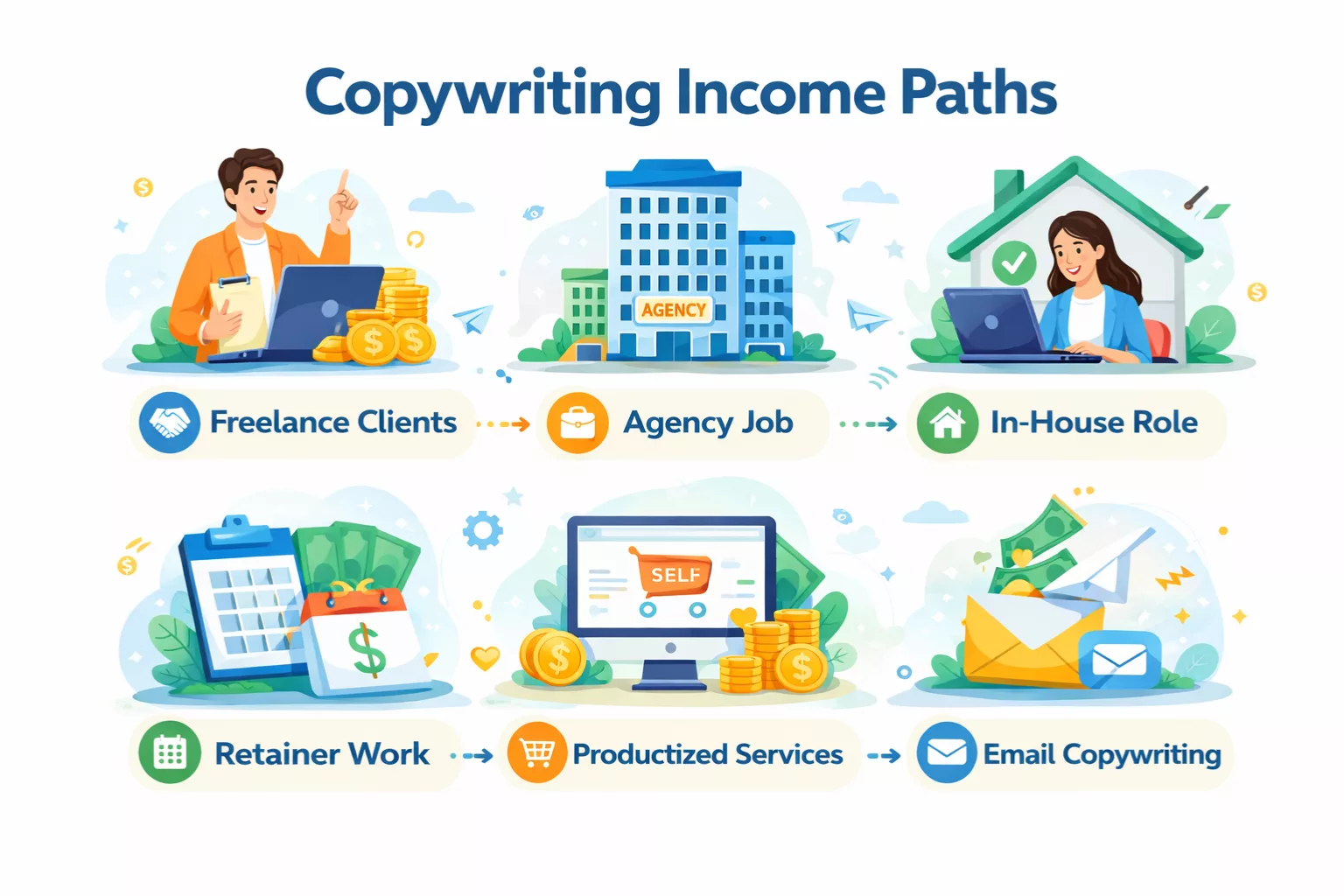
Yes. Many people build full-time careers through freelancing, agency work, in-house marketing roles, or their own client business.
The key is becoming consistently useful to businesses, not just calling yourself a copywriter.
What industries hire copywriters?
Many industries hire copywriters, including:
- Ecommerce
- Health and wellness
- Finance
- Software and SaaS
- Real estate
- Coaching and consulting
- Education
- Local service businesses
Any business that needs customers can benefit from strong copy.
Is AI replacing copywriters?
AI is changing how copywriters work, but it is not replacing strong human copywriters who understand strategy, emotion, and audience nuance.
Writers who rely only on basic output may struggle. Writers who guide strategy, edit well, and solve business problems remain valuable.
What separates high-paid copywriters?
High-paid copywriters usually understand offers, customer psychology, conversion goals, and business outcomes.
They do more than write words. They help generate results, which allows them to charge more.
How long before copywriting pays well?
That depends on practice, consistency, positioning, and outreach. Some people earn quickly, while others take months to gain traction.
Those who practice often, build samples, and pitch regularly tend to move faster.
Is copywriting worth learning in 2026?
Yes. Clear persuasive communication is still valuable and likely always will be. Businesses need sales messages, websites, emails, and offers that connect with real people.
Tools may change, but the ability to influence decisions with words remains useful.
Freelance Copywriting
Freelance copywriting appeals to many beginners because it offers flexibility, independence, and income potential. It also raises practical questions fast. How do you find clients, set prices, and stand out when you are new? These answers will help you start with a clearer path.
How do freelance copywriters get clients?
Freelance copywriters get clients through networking, referrals, cold outreach, content marketing, freelance platforms, and social media.
The most reliable method is consistent outreach paired with strong samples that show clear value.
Where do beginners find first clients?
Beginners often find first clients through local businesses, personal contacts, Facebook groups, LinkedIn, Upwork, or small business directories.
Many first projects come from simple offers to improve an existing website page or email campaign.
How should I price copywriting work?
Price based on the value of the project, complexity, research time, and expected business impact. Simple pages cost less than full funnels or sales pages.
As your skill grows, rates should reflect outcomes rather than hours worked.
Should I charge hourly or per project?
Per-project pricing is often better because clients care about results more than time spent. It also rewards efficiency as your skill improves.
Hourly pricing can work for revisions, consulting, or open-ended work.
How do I write a copywriting proposal?
A strong proposal explains the client problem, your solution, deliverables, timeline, price, and next steps.
Keep it clear and focused on business outcomes rather than long descriptions about yourself.
How do I handle revisions?
Set revision limits before the project begins. Two rounds is common for many projects.
Ask for clear feedback tied to goals, not vague comments. This keeps revisions productive and professional.
How do I keep repeat clients?
Deliver on time, communicate clearly, and make the client’s life easier. Reliable freelancers often win repeat work even before they become the most skilled.
Suggest useful next projects after success, such as follow-up emails or page improvements.
Should I choose one niche?
Choosing one niche can help you position faster and charge more because you become known for solving a specific type of problem.
Many beginners start broad, then narrow down once they notice patterns and strengths.
How do I stand out from other freelancers?
Stand out by being clear, reliable, easy to work with, and focused on results. Many freelancers lose clients through slow replies and weak communication.
Simple professionalism can separate you quickly.
What platforms help copywriters find work?
Popular platforms include Upwork, Fiverr, Contra, LinkedIn, and specialized writing job boards.
Platforms can help you start, but direct relationships and referrals often become stronger long-term sources of work.
Advanced Copywriting
Once you understand the basics, the next step is improving results. Advanced copywriting is less about clever phrases and more about strategy, audience insight, testing, and refinement. These questions cover the skills that often separate average copy from copy that performs.
How do you write copy that converts better?
Start by making the offer clearer and more relevant to the reader. Strong copy converts when readers quickly understand the value and trust the next step.
Better headlines, stronger proof, clearer benefits, and simpler calls to action often create the biggest gains.
What is split testing in copywriting?
Split testing means comparing two versions of copy to see which performs better. This is often done with headlines, buttons, offers, or email subject lines.
Real data removes guesswork and helps improve results over time.
How do you write for different audiences?
Adjust the message based on what each audience values most. One group may care about saving time, while another may care about reducing risk.
Use the reader’s language, priorities, and level of awareness.
What is brand voice in copywriting?
Brand voice is the consistent personality and tone a business uses in its messaging. It shapes how readers feel when they interact with the brand.
Some brands sound warm and casual. Others sound expert and direct. Consistency builds recognition and trust.
How does storytelling help conversions?
Stories help readers see themselves in the message. They make benefits easier to understand and more memorable.
A short story about a customer problem and result can often persuade better than plain claims alone.
How do you reduce friction in copy?
Remove confusion, doubt, and extra effort. Explain the offer clearly, answer objections, and make the next step feel simple.
Even small friction points such as vague pricing or unclear benefits can hurt conversions.
What makes sales pages work?
Strong sales pages combine clear headlines, benefits, proof, objections handling, and a logical flow toward action.
They guide readers from interest to trust to decision without feeling chaotic or overwhelming.
How do you write better email copy?
Focus on one message per email. Use a clear subject line, simple body copy, and one main call to action.
Emails usually perform better when they feel personal, useful, and easy to read.
How do top copywriters research customers?
They study reviews, comments, sales calls, forums, surveys, and support messages. Real customer language often reveals the best copy angles.
Patterns matter more than assumptions.
How do you keep improving as a copywriter?
Write often, study strong examples, seek feedback, and review results. Improvement comes from repetition and reflection.
The best copywriters keep learning because markets, tools, and customer behavior keep changing.
Recommended Next Step
Learning copywriting gets easier when you practice on real examples instead of only reading theory.
If you want to improve faster, download the free practice pack with exercises, prompts, and examples designed for beginners.
Download Free Copywriting Practice PackSimple exercises. Real practice. Better copywriting skills.
Final Thoughts
Beginners often overthink copywriting. They assume they need natural talent, advanced strategies, or years of experience before they can start.
The truth is much simpler. Copywriting is a skill that grows through practice, repetition, and learning what works.
Start with the basics. Write often. Improve one piece at a time.
Small progress adds up faster than waiting for the perfect moment.